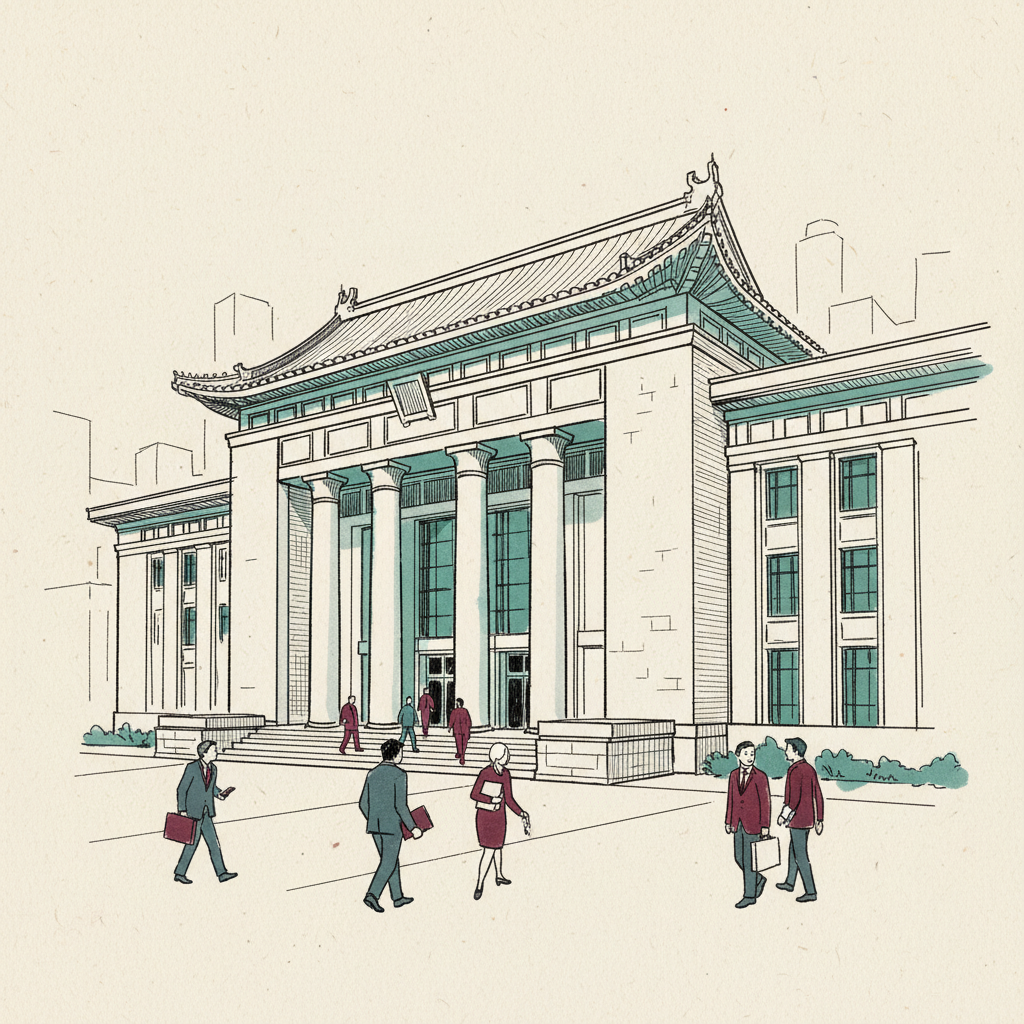
Beijing People's Court
Beijing court; ruled in December 2025 that AI automation risk falls on employers.
Last refreshed: 2 May 2026 · Appears in 1 active topic
Did a Beijing court set the first Chinese precedent against AI-driven sackings?
Timeline for Beijing People's Court
Mentioned in: WARN Act untested: four AI cuts, zero enforcement actions
AI: Jobs, Power & MoneyMentioned in: Brussels drops binding AI literacy duty in Digital Omnibus
AI: Jobs, Power & MoneyRuled employer's AI pivot was deliberate and predictable, placing legal risk on employer
AI: Jobs, Power & Money: Beijing's Liu ruling laid the doctrineBackground
A Beijing People's Court issued a ruling in December 2025 that an employer's decision to replace workers with AI constitutes "a deliberate, predictable strategy, not unforeseeable circumstances", making the employer liable for the legal consequences of that automation choice. The case involved map data entry worker Liu, employed since 2009, WHO was dismissed when the employer adopted AI-based data collection.
Beijing People's Courts are district-level civil courts operating within the Beijing municipal court hierarchy. District courts handle first-instance civil and Labour disputes, and their rulings carry persuasive authority across the city and beyond. The December 2025 ruling in the Liu case was the first known Chinese judgment to place the risk of employer-driven AI automation squarely on the employer side under the Labour Contract Law's major-change clause.
The Beijing precedent was reinforced five months later by the Hangzhou Intermediate People's Court, which upheld a similar ruling in the Zhou case in April 2026. The alignment of two geographically separate courts on the same interpretive principle suggests a developing consensus in Chinese labour jurisprudence on AI-driven dismissal.