AI Omnibus
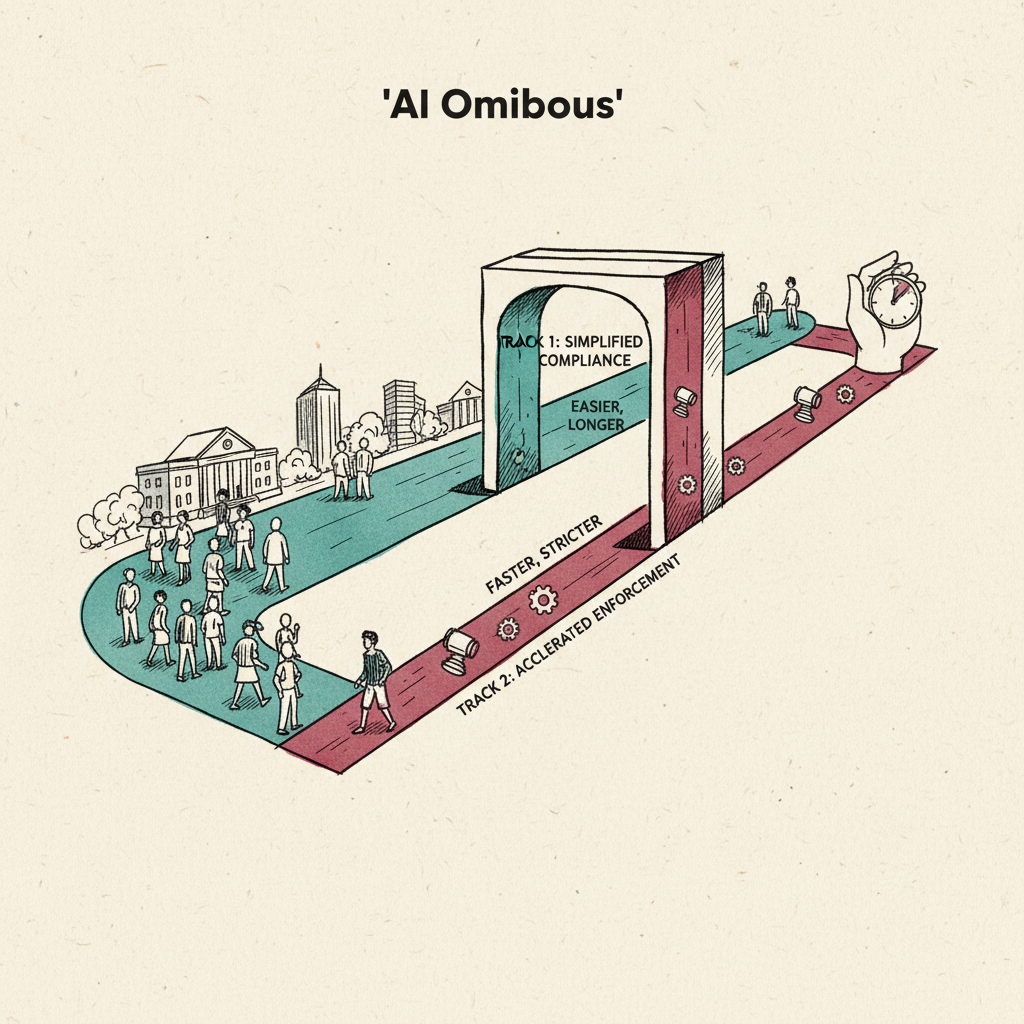
EU legislative package amending the AI Act; splits compliance into two Deadline tracks and grandfathers in-market AI systems for Article 50.
The AI Omnibus split EU AI Act enforcement into two speeds on 7 May 2026, pushing high-risk compliance from 2 August 2026 to December 2027 while leaving general-purpose AI providers' Deadline unchanged.
Last refreshed: 4 August 2026 · Appears in 2 active topics
What does the AI Omnibus grandfathering mean for broadcasters already using AI tools?
Timeline for AI Omnibus
Mentioned in: Cyber Resilience Act starts its clock
European Tech SovereigntyEntered into force, extending high-risk AI Act deadlines and widening AI Office reach
European Tech Sovereignty: Omnibus widens the AI Office's reachMentioned in: EU finalises its AI content-marking Code
Media's AI PivotMentioned in: France chairs G7 Digital Ministerial on 29 May
European Tech SovereigntyMentioned in: Mistral buys into the industrial stack
European Tech SovereigntyBackground
The Digital Omnibus on AI (AI Omnibus) is an EU legislative package that amends the 2024 EU AI Act as part of the Commission's Omnibus VII simplification agenda. Beyond the enforcement split, it added a new prohibition against AI-generated non-consensual intimate content and child sexual abuse material, and extended lighter documentation and penalty treatment to small and medium enterprises.
The Omnibus is a bellwether for how the EU balances innovation policy against its own regulatory apparatus: the two-speed approach was a concession to industry pressure without abandoning GPAI enforcement, which matters most for frontier model providers including Mistral AI, OpenAI, Google DeepMind and Anthropic operating in EU markets. Formal Council and Parliament adoption was required before 2 August 2026 to prevent the original high-risk Deadline from triggering.
It splits AI Act enforcement
The Council and Parliament struck a provisional deal on 7 May 2026 that moved the Annex III high-risk compliance date for stand-alone systems from 2 August 2026 out to 2 December 2027, with high-risk AI embedded in products following on 2 August 2028, while leaving the general-purpose AI enforcement deadline unchanged at 2 August 2026.
A further provision took effect on 27 July, widening the AI Office's authority so AI features inside major platforms and search engines answer to the same regulator as the underlying model itself, shutting a loophole platforms might otherwise have used to claim those features fell outside GPAI's own duties.
It grandfathers in-market AI content
An update agreed in May 2026 gave AI systems already deployed before 2 August 2026 a four-month extension to comply with the Omnibus's Article 50 content-labelling rules, moving their Deadline to 2 December 2026, while new deployments launched after 2 August face the requirement immediately with no grace period.
As of 10 June 2026 no EU broadcaster had signed the Commission's related AI content-marking Code of Practice, finalised that same week and due to apply from 2 August 2026, leaving the grandfathering window largely untested in practice so far.