Acequia
A communal irrigation channel and seniority-based water-rights institution rooted in Spanish colonial New Mexico.
Last refreshed: 7 July 2026
Why are centuries-old irrigation rights now blocking data-centre construction in New Mexico?
Timeline for acequia
Mentioned in: Santa Fe drops the bar to 1 MW
Data Centres: Boom and BacklashBackground
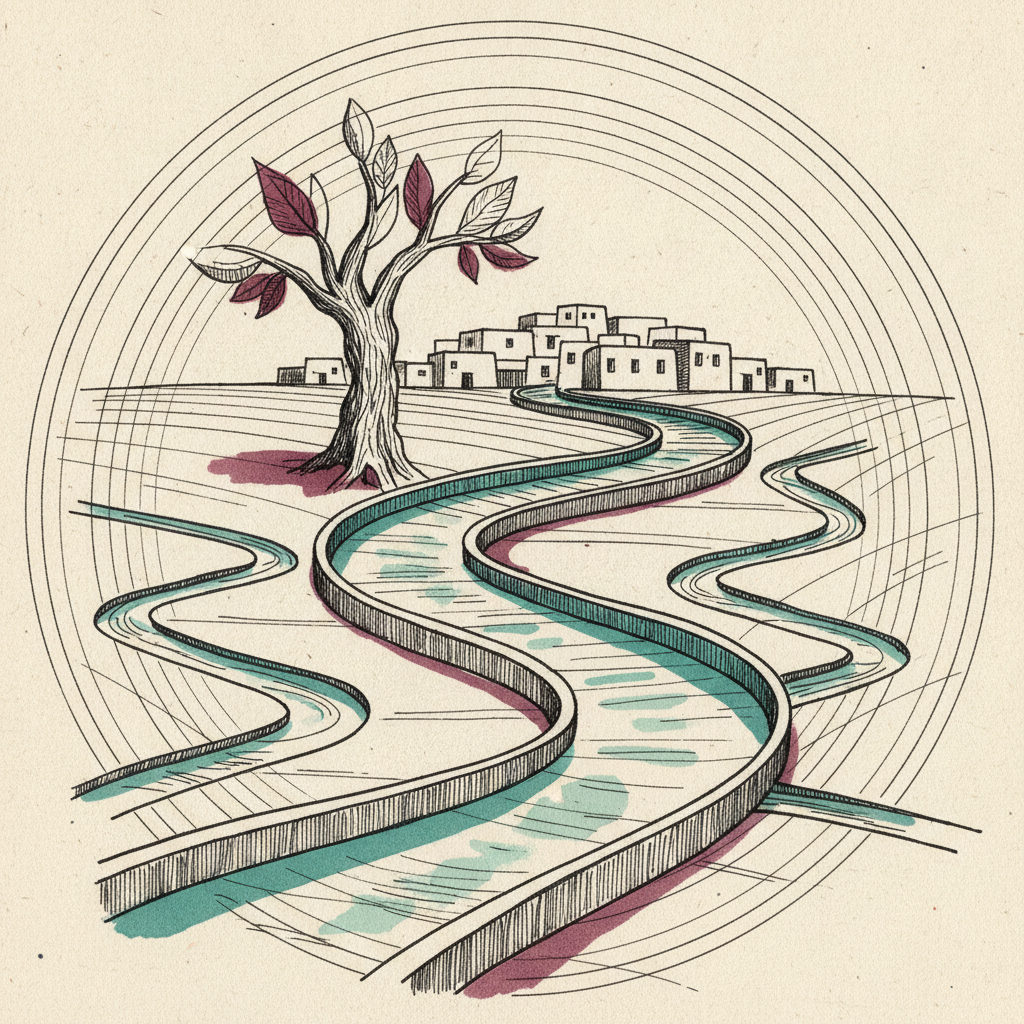
An acequia is a gravity-Fed, community-operated irrigation ditch, and the water-governance institution built around it: parciantes (rights-holding members) elect a three-person Commission and a mayordomo (ditch boss) WHO allocates water and runs the annual ditch-cleaning. The Andalusian Arabic name means water conduit, reflecting a technique refined under Islamic rule in medieval Spain and carried to the Americas by Spanish colonists, WHO established the first documented New Mexico acequias near the Rio Chama and Rio Grande from 1598. Pueblo communities already irrigated these valleys before Spanish arrival, so the surviving acequia culture fuses Moorish-Spanish law with existing Indigenous practice. Its water rights predate New Mexico's 1907 territorial water code, and acequia associations are recognised as political subdivisions with authority over ditch easements, though not to tax; costs fall on the parciantes. Around 700 acequia associations still operate in New Mexico.
acequia water rights became a headline argument against data-centre expansion in July 2026, when Santa Fe County, New Mexico's Board of County Commissioners voted unanimously on 2 July for an 18-month moratorium on new data centres, lowering the threshold from a proposed 100 MW to just 1 MW during deliberation, the lowest of any US county or state moratorium tracked. No data-centre project was pending in the county; commissioners Hank Hughes and Lisa Cacari Stone framed the pause as pre-emptive, citing groundwater depletion and protection of the acequia irrigation commons alongside grid strain and cooling-system noise.