The DCCC, the House Democrats' campaign arm, raised a cycle-record $45.3 million in the second quarter, edging its own 2024 record of $44 million, on self-reported figures that face the FEC filing deadline of 15 July1. On the Senate side, the DSCC outraised the NRSC in June, $8.3 million to $8.0 million2. The Democratic committee lead, already the widest this cycle after April's $12.6 million swing, has widened again.
The same committees filed their brief against NRSC v. FEC in this window. That case asks the Supreme Court to strike the FECA caps, the Federal Election Campaign Act limits on how much a party may spend in coordination with its own candidates, which run from roughly $61,800 to $3.7 million per race. Coordinated party money is qualitatively different from super-PAC money because it can be aimed straight into a named candidate's strategy. That is the lever the NRSC argues it is denied and the lever Democratic committees are defending.
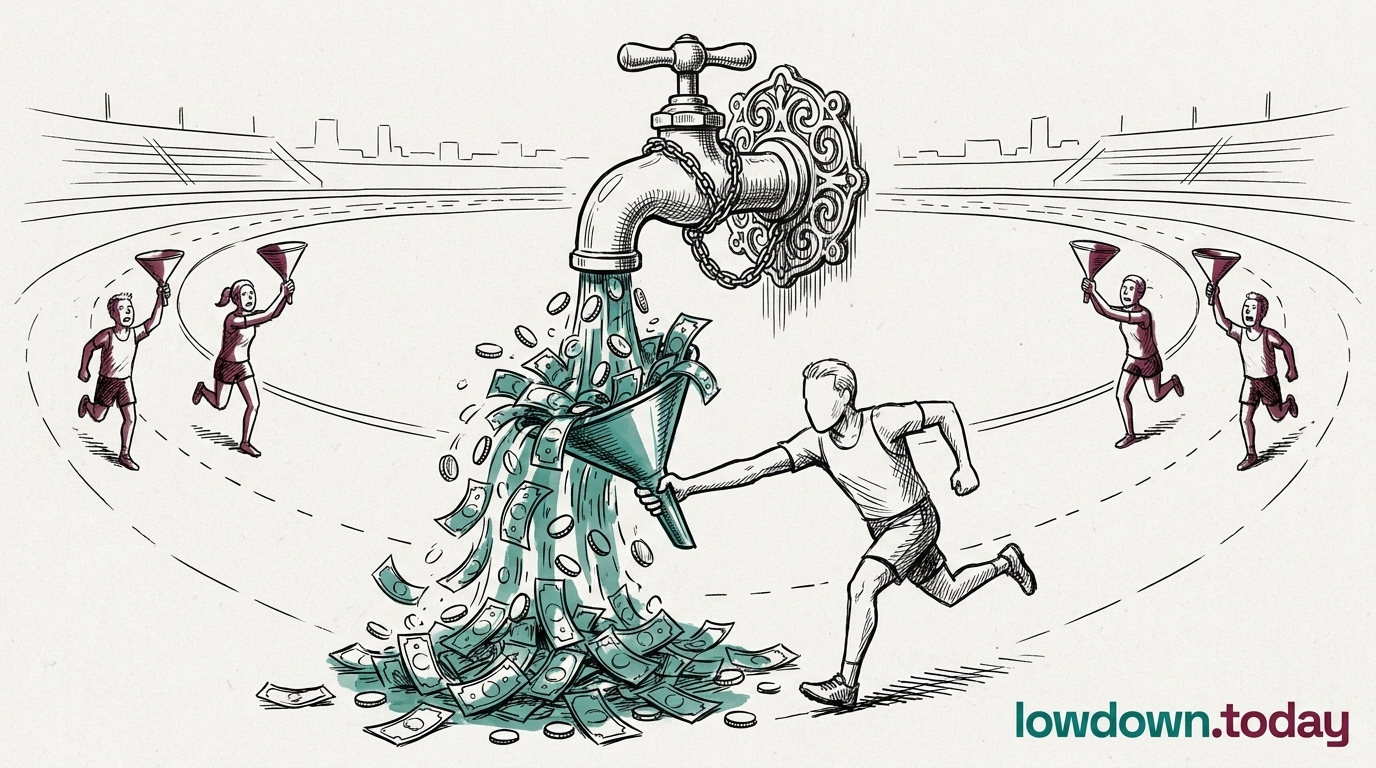
Strike the caps, and Republican committees could deploy unlimited coordinated money, at which point a quarterly fundraising lead stops deciding much. A single end-of-term ruling could neutralise the $45.3 million edge Democrats spent the quarter building. Until any ruling lands, that total still funds the ground game, the field offices and voter-registration drives, that super PACs are barred from running. The NRSC's counter is that the caps are an unconstitutional limit on political speech, not a structural favour to either party; the liberal justices warned at December's argument that lifting them invites corruption.



