Skip to content
Briefings are running a touch slower this week while we rebuild the foundations.See roadmap
UK Startups and Innovation
22APR

FCA and PRA cut SM&CR certification by 15%

3 min read
17:16UTC

Phase one of a 50% reduction target. The single biggest regulatory overhead on small authorised fintechs has finally started to shrink.

TechnologyDeveloping
Key takeaway

UK fintech's single biggest compliance overhead is shrinking for the first time since 2019.

The Financial Conduct Authority (FCA) and Prudential Regulation Authority (PRA) cut certification roles under the Senior Managers and Certification Regime (SM&CR) by 15% on 22 April 2026, phase one of a 50% reduction target. The two regulators also confirmed that the Certification Regime will be removed from primary legislation over time, a structural change rather than a temporary loosening.

SM&CR requires authorised financial firms to individually certify fitness and propriety for every senior and customer-facing employee, each year, with personal regulatory accountability attached to the sign-off. Since its 2019 expansion to all authorised firms, it has been the single largest compliance overhead for small fintechs; a twenty-person payments startup runs the same certification cycle as a 200-person bank. Removing 15% of roles from scope is the first material reduction in that overhead in six years. Phase two takes the cut to 50%.

The FCA and PRA timed the cut to land in the same week as the AI Live Testing second-cohort expansion and alongside the British Business Bank direct-investment mandate . The combined signal to UK fintech is coherent: lower authorised-firm overhead, wider permitted AI experimentation scope, continuing authorisation pipeline capacity. Founders running authorised fintechs at sub-50-headcount will see the concrete effect at the next compliance cycle renewal.


Deep Analysis

In plain English

The Senior Managers and Certification Regime (SM&CR) is a set of rules that requires financial services companies to personally certify that their key staff are fit and proper for their roles, and to hold specific senior managers personally accountable for regulatory failures. It was created after the 2008 financial crisis to ensure that individual bankers could be held responsible rather than just the banks themselves. For small fintech startups, it became a significant administrative burden. The 15% reduction announced this week means fewer roles need to be formally certified, which reduces some paperwork and legal costs for smaller authorised firms.

Deep Analysis
Root Causes

The SM&CR 2019 extension to solo-regulated firms created certification obligations for roles; including some client-service and operations roles at small fintechs; that had no equivalent in the banking sector regime the scheme originally targeted; removing those roles in phase one is a correction of an over-extension rather than a deregulatory choice.

The FCA's Growth and Competitiveness objective, added to its statutory mandate by the Financial Services and Markets Act 2023, creates an explicit duty to consider the competitive impact of regulation; the SM&CR reform is the first material action taken under that duty in fintech, and the scale of the first phase (15% of roles) reflects caution about moving ahead of a 2026-27 Parliamentary review of the Financial Services and Markets Act.

What could happen next?
  • Consequence

    The 50% total certification-role reduction target requires a further 35-percentage-point cut beyond today's phase one; HMRC's autumn 2026 consultation on the Certification Regime's removal from primary legislation is the mechanism for that reduction, and the outcome of that consultation will determine whether the 50% target is reached before the next election.

  • Opportunity

    Fintech firms that currently maintain inflated certification-role counts to protect against regulatory interpretation risk; a common practice identified in Linklaters' survey; will use the phase-one reforms as an opportunity to normalise their compliance structures, producing a one-off audit and legal spend in 2026 followed by structural cost savings from 2027.

First Reported In

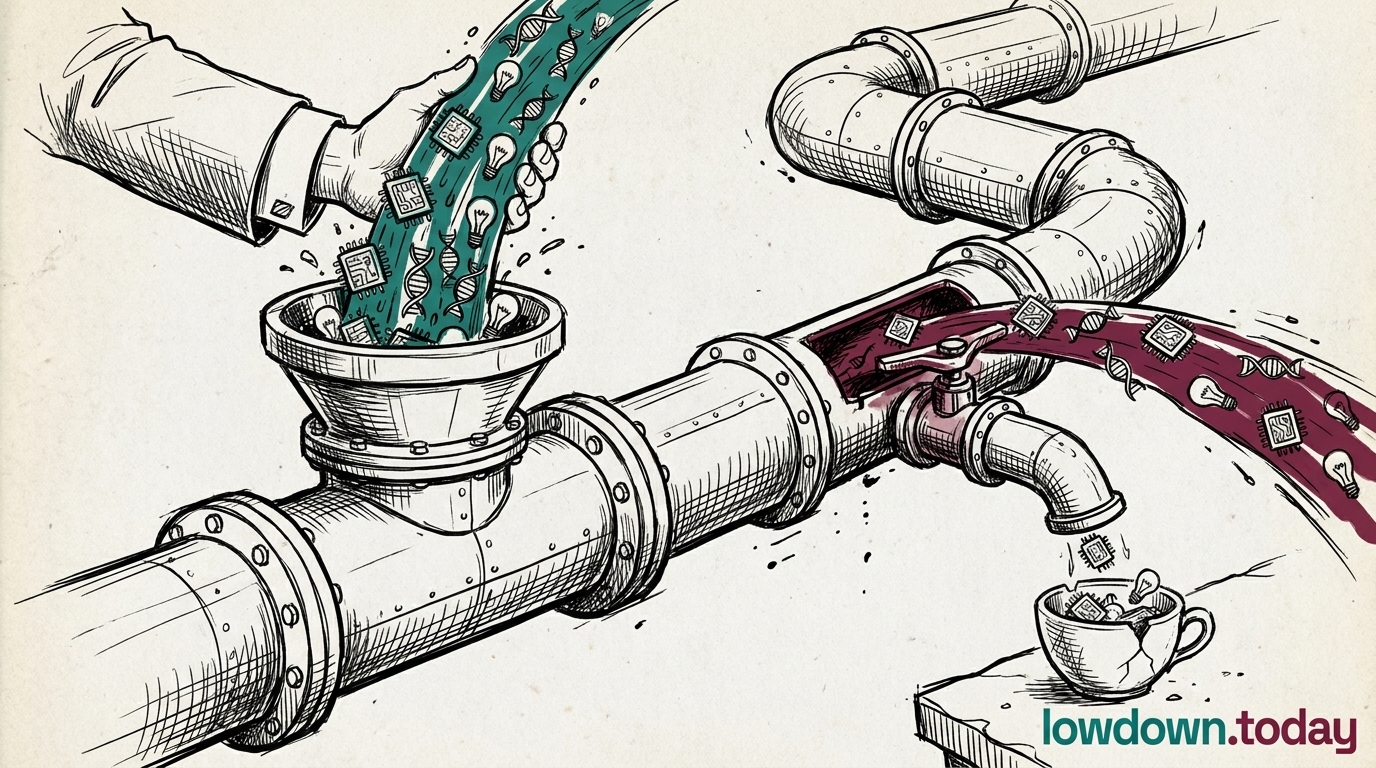
Update #2 · Britain's innovation pipe leaks at both ends

CNBC· 22 Apr 2026
Read original
Different Perspectives
Beauhurst / UK startup data analysts
Five sub-£50m rounds closed in nine days with zero VCT-backed angel networks on any cap table, confirming the post-cut investor map is forming fast in the £4m–£40m band. The gap is structural: 36.7% of university spinouts raised below £500,000 in 2025, a tier neither the SAIU nor the BBB direct mandate touches.
BVCA / UK VC industry body
The post-VCT investor map has sorted into three non-overlapping pools with no ladder between them; the £500k–£2m band VCTs historically anchored now has no obvious replacement. Beauhurst data showing 36.7% of spinout fundraisings below £500,000 in 2025 suggests the pipeline narrows at the base, compounding within three to five years.
European Commission / EU industrial policy observers
The EC approved €211m of Italian state aid for CamGraPhIC in the same week Britain named five AI hardware startups without specifying a capital instrument. Brussels' willingness to write an industrial-scale factory cheque contrasts with London's pre-announcement of a plan whose mechanism remains unspecified until June.
Sequoia Capital / Lightspeed Venture Partners
Sequoia and Lightspeed co-led Ineffable's $1.1bn seed on research credibility alone, with no product and no revenue; the SAIU minority stake followed their commitment. For US growth funds, the sovereign validator reduces political risk and accelerates LP approval for non-revenue European bets.
HM Treasury / DSIT
HM Treasury / DSIT
DSIT withheld the SAIU cheque size as commercially sensitive, framing the unit's second equity investment as proof sovereign capital can mobilise private-led syndicates. Kendall's RUSI address positioned the SAIU and ARIA as instruments of sovereign control, raising the political commitment attached to the June AI Hardware Plan.
Balderton Capital / Atomico / Index Ventures (UK growth-stage VCs)
At Series B and above, the UK ecosystem is in a strong position: $7.8bn in Q1 is 41% of European VC, seven unicorns were minted in three months, and London remains the deepest late-stage capital market outside the United States.