Skip to content
Welcome, thoughtbot's Giant Robots listeners!Start here
UK Local Elections 2026
20NOV

Essex audit unit meets the spend wall

3 min read
09:22UTC

Essex County Council named former Morgan Stanley vice-president Bo Davis to run an efficiency unit over a roughly £2bn budget that statute has already spoken for.

PoliticsDeveloping
Key takeaway

Around 98% of Essex spend is statutory, 71.6% adult social care, leaving an efficiency unit almost nothing legal to cut.

Essex County Council confirmed Peter Harris as leader at its annual meeting on Thursday 28 May and handed the council's finances to Bo Davis, a former Morgan Stanley vice-president and Barclays director, to run a DOGE (department of government efficiency) unit. The unit's target is waste across a budget of roughly £2bn serving 1.5 million residents. Most of that budget is locked by law. The Institute for Government (IfG, a Whitehall-focused think tank) puts statutory adult social care alone at about 71.6% of comparable county spending⁠1. Add children's services, special educational needs and waste collection, all of them legal duties, and roughly 98% of the budget is committed by statute, leaving under 2% a council can genuinely choose to cut.

Reform won Essex on a pitch to strip out waste, taking 53 of 78 seats and far outrunning the 1,448 English seats it took nationally. Davis now inherits the gap between that pitch and the ledger. Adult social care, children's services, special educational needs and waste collection are duties Parliament imposes, and a council cannot vote to stop providing them. The line Davis can move sits in the low single figures, and nine Reform councils have already reached for the easier lever and raised council tax.

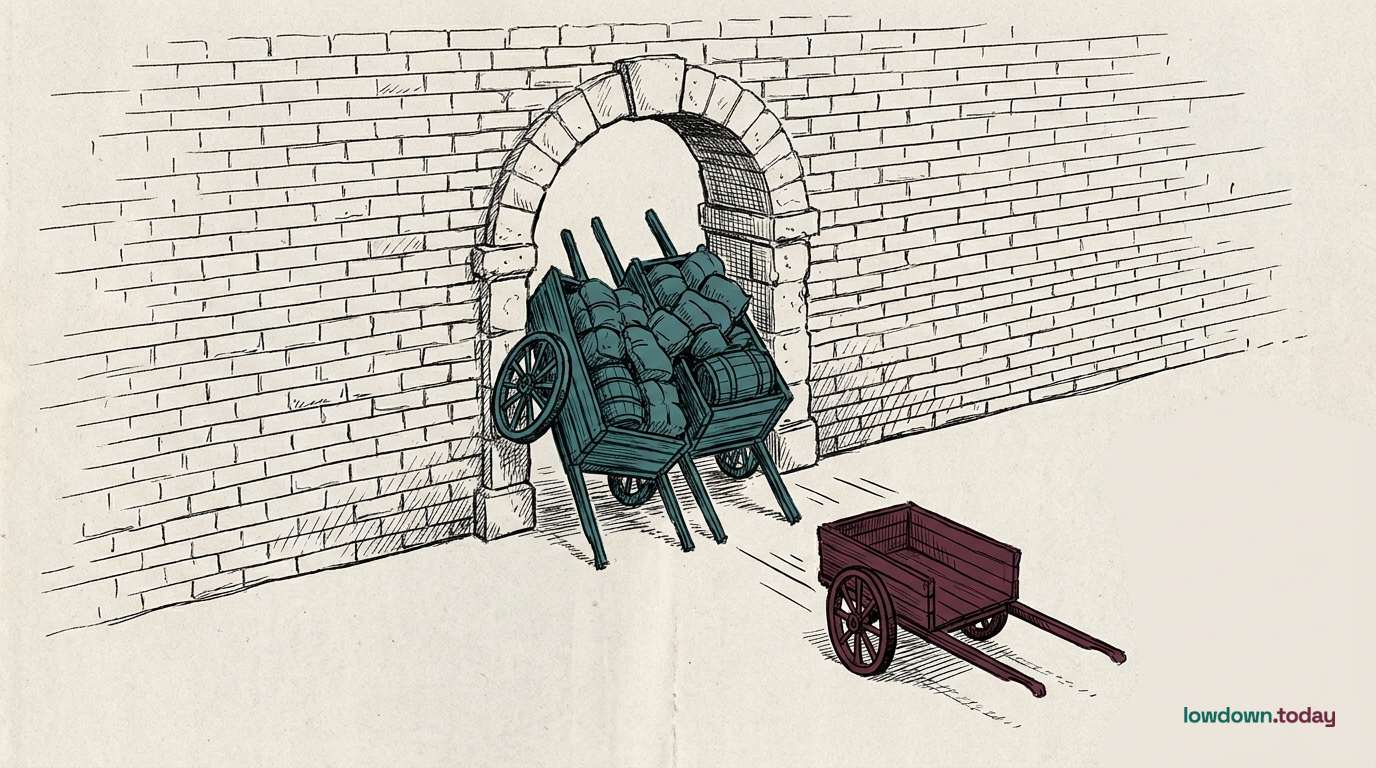
A corporate audit assumes discretion: find the underperforming cost centre, close it, book the saving. A county council's largest cost centre is a legal obligation with a rising caseload, not a line item. Thurrock shows where the squeeze ends when it goes wrong, run by Reform since 7 May while government commissioners still control its £1.5bn Section 114 (the notice a council issues when it cannot balance its books) budget after effective bankruptcy. Davis is importing a model built for firms that can shed divisions into an institution that cannot.

Deep Analysis

In plain English

Essex County Council is one of England's largest councils, covering about 1.5 million people and spending roughly £2bn a year. After winning the May elections, Reform UK put a former City banker in charge of an efficiency drive, promising to cut waste the way a company might. Parliament has passed laws saying councils must pay for adult social care (help for elderly and disabled people), children's services, and similar needs for everyone who qualifies. Those legal duties take up about 98p in every £1 Essex spends. A company can close an underperforming division; a council cannot stop providing legally mandated care. The new DOGE unit can only move the other 2p.

Deep Analysis
Root Causes

The Care Act 2014 established a statutory duty for councils to meet all eligible adult social care needs, regardless of cost. Combined with rising longevity and a real-terms reduction in core government grant since 2010, this has converted adult social care from a variable budget line into a demand-led entitlement that grows automatically with the eligible population.

Adult social care in England receives no ringfenced grant of its own. Schools receive hypothecated funding that tracks pupil numbers; adult social care does not. County councils must absorb demand growth from within a general pot that also covers highways, libraries, and waste, so rising care costs crowd out every other service and then crowd out the political conversation about what genuine savings are possible.

What could happen next?
  • Risk

    If the DOGE unit fails to produce visible savings, Reform faces a credibility gap between its 7 May mandate and the statutory constraints it inherited, mirroring the Thurrock trajectory.

    Short term · Assessed
  • Consequence

    Adult social care demand growth will continue to crowd out discretionary spending regardless of the administration's political programme, leaving Essex with structural deficits absent additional central government grant.

    Medium term · Assessed
  • Precedent

    Essex is the largest test case for whether a DOGE-model efficiency unit can function inside English statutory local government; its outcome will inform how other Reform-controlled counties frame their own efficiency programmes.

    Medium term · Assessed
First Reported In

Update #10 · Reform's audit unit hits the spend wall

Essex County Council· 3 Jun 2026
Read original →
Different Perspectives
Lancashire County Council
Lancashire filed in the Administrative Court before the 16 October limit, and its full council called for a legally binding referendum before any reorganisation. Ministers withdrew the Lancashire decision on 29 October, so the Reform-run county council keeps its current structure for now.
Kent County Council
Kent County Council
Kent announced judicial review proceedings before the 16 October limit against splitting Kent and Medway into four unitary councils. Ministers withdrew the Kent and Medway decision on 29 October, so the Reform-run county council keeps its current structure for now.
Conservative Party / Donald Walmsley
Walmsley, an East Sussex county councillor, left Reform UK in November and joined the Conservatives, citing ITV's undercover footage of Reform councillors and the leadership's response. His move came as the Conservatives gained four council seats from 22 October to 12 November and lost none.
UK Government / Jim McMahon (MHCLG) and Lord Wilson of Sedgefield
MHCLG said on 29 October it is "minded to" create unitary councils in five English areas from 2029, and McMahon argues no area will want two tiers back once they exist. In the Lords on 2 November, Lord Wilson refused to put a deadline for automatic registration into the Representation of the People Bill.
Huw Irranca-Davies, Llywydd of the Senedd
Irranca-Davies ruled on 10 November that Joe Martin's request for a statement on the "demographic replacement of white British people" was discriminatory and offensive. Martin will not be called to speak until he apologises to the chamber, and Reform's free-speech motion of 18 November cannot overturn the ruling.
Reform UK / Nigel Farage and Helen Jenner
Reform's 33 Members of the Senedd left their benches empty at Plenary on 17 November over the Llywydd's ruling on Joe Martin, which Farage called "ridiculous and outrageous". Welsh leader Helen Jenner says meaningful debate and scrutiny cannot happen until the Presiding Officer reverses his decision.

Written with AI from Lowdown's published reporting. Not individually reviewed by an editor. Editorial standards.