Skip to content
Welcome, thoughtbot's Giant Robots listeners!Start here
UK Local Elections 2026
12AUG

Crime agency to investigate its own data leak

2 min read
14:07UTC

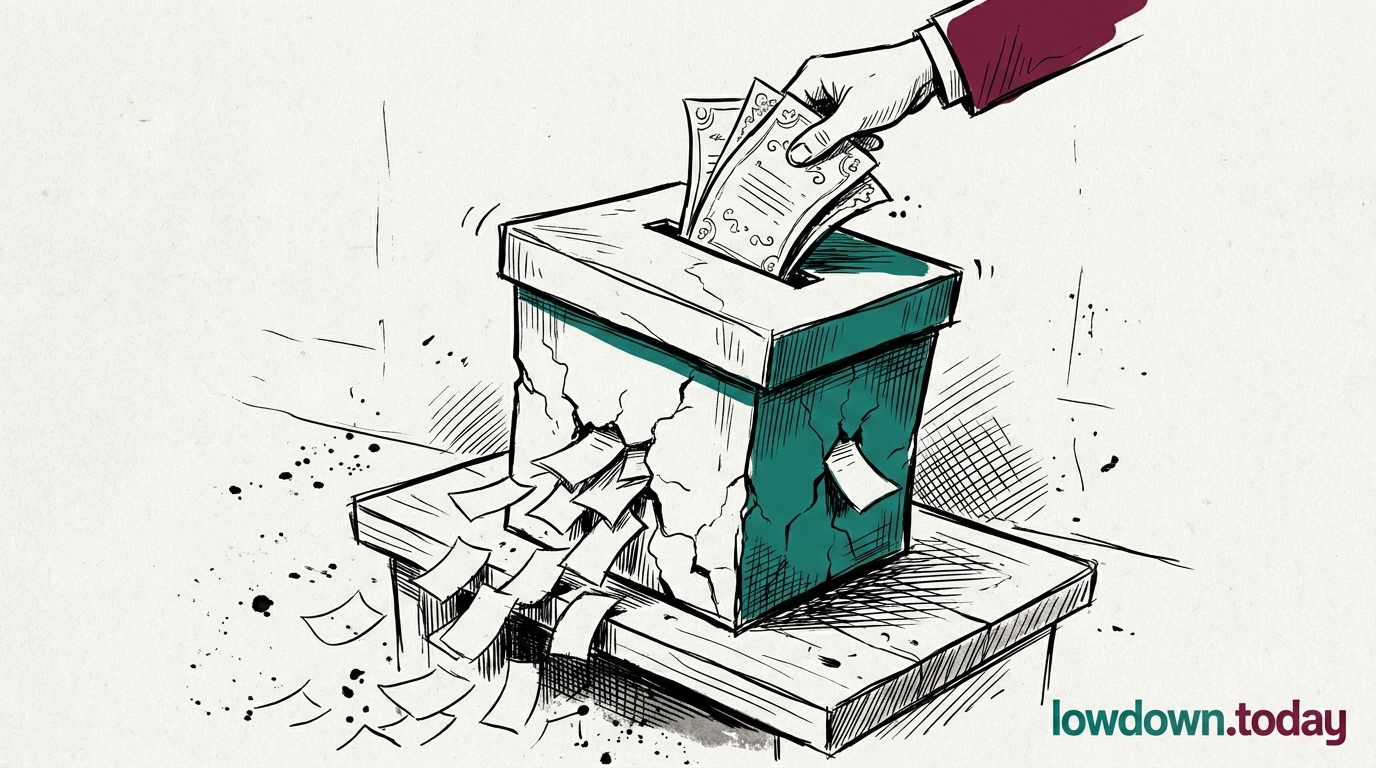
The National Crime Agency referred itself to the police watchdog over the leak of Reform figures' bank data. The watchdog sent the complaints straight back for the agency to handle internally.

PoliticsDeveloping
Key takeaway

The watchdog handed the complaint back, so the agency will report on itself.

The National Crime Agency made a voluntary referral of itself to the Independent Office for Police Conduct on 24 July over the leak of Reform figures' bank data, after complaints from Richard Tice and Nigel Farage⁠1. The IOPC, the watchdog for police and law-enforcement complaints in England and Wales, determined that the complaints were suitable for local investigation by the NCA's own Professional Standards Unit. That leaves the NCA examining its own conduct rather than the IOPC examining it.

The leaked material reached the Guardian and The Sunday Times and covered an £80,000 loan from George Cottrell to Tice's company Tisun Investments, plus a £1m donation from Cottrell's mother to a think tank Tice owns, both reported in July⁠2. The payments themselves have not changed. Tice and Farage dispute how records of them reached two newsrooms.

Banks file suspicious activity reports under the Proceeds of Crime Act 2002, at a volume running to several hundred thousand a year, and the NCA's own guidance stresses that a report is not a finding against anyone. That is the substance of the Reform complaint: material carrying no allegation reached two newsrooms. The counter-argument, which Reform does not make, is that the agency was never the only holder. Banks, their compliance contractors and the UK Financial Intelligence Unit all touch the same file.

Because the finding will be reported by the NCA about the NCA, neither side will be able to lean on it very hard. Farage gains a grievance that survives whatever happens to the separate integrity threads around Reform's finances, including the standards inquiry paused in early July. If the Professional Standards Unit concludes the leak came from inside, every future report touching a political party becomes harder for the agency to act on.

Deep Analysis

In plain English

The National Crime Agency (NCA) is the UK's lead law-enforcement body for serious and organised crime. The Independent Office for Police Conduct (IOPC) is a separate watchdog that reviews complaints about police and law-enforcement bodies. When Reform UK figures' bank data leaked, the NCA reported the leak to the IOPC itself rather than waiting to be complained about. The IOPC did not open its own investigation into the leak; instead, it sent the complaints back for the NCA's own Professional Standards Unit, an internal disciplinary team, to look into. That is a routine outcome for this kind of case, not a sign the IOPC investigated and cleared anyone.

Deep Analysis
Root Causes

The IOPC decides whether to run an 'independent investigation' itself or return a case for 'local investigation' based on statutory severity thresholds under the Police Reform Act 2002 as amended. A data leak, absent evidence that an individual officer acted with criminal intent, typically falls below the bar for the watchdog to retain the case directly, which is why the complaint went back to the NCA's own Professional Standards Unit rather than being investigated externally.

The leak itself sits downstream of an active police financial investigation into Reform UK donations opened in July, meaning the same donation data under scrutiny for compliance reasons is also the material whose unauthorised disclosure is now under review.

What could happen next?
  • Risk

    An internal Professional Standards Unit inquiry into the NCA's own data leak carries less external verification than an IOPC-led investigation would, leaving the outcome dependent on the unit's own published findings.

  • Consequence

    The leak exposes financial details from an active donations investigation (ID:4977), meaning any future prosecution risk turns partly on how that leaked material was handled internally.

First Reported In

Update #14 · Bev Craig wins under a revived voting system

GB News· 3 Aug 2026
Read original →
Different Perspectives
Lancashire County Council
Lancashire filed in the Administrative Court before the 16 October limit, and its full council called for a legally binding referendum before any reorganisation. Ministers withdrew the Lancashire decision on 29 October, so the Reform-run county council keeps its current structure for now.
Kent County Council
Kent County Council
Kent announced judicial review proceedings before the 16 October limit against splitting Kent and Medway into four unitary councils. Ministers withdrew the Kent and Medway decision on 29 October, so the Reform-run county council keeps its current structure for now.
Conservative Party / Donald Walmsley
Walmsley, an East Sussex county councillor, left Reform UK in November and joined the Conservatives, citing ITV's undercover footage of Reform councillors and the leadership's response. His move came as the Conservatives gained four council seats from 22 October to 12 November and lost none.
UK Government / Jim McMahon (MHCLG) and Lord Wilson of Sedgefield
MHCLG said on 29 October it is "minded to" create unitary councils in five English areas from 2029, and McMahon argues no area will want two tiers back once they exist. In the Lords on 2 November, Lord Wilson refused to put a deadline for automatic registration into the Representation of the People Bill.
Huw Irranca-Davies, Llywydd of the Senedd
Irranca-Davies ruled on 10 November that Joe Martin's request for a statement on the "demographic replacement of white British people" was discriminatory and offensive. Martin will not be called to speak until he apologises to the chamber, and Reform's free-speech motion of 18 November cannot overturn the ruling.
Reform UK / Nigel Farage and Helen Jenner
Reform's 33 Members of the Senedd left their benches empty at Plenary on 17 November over the Llywydd's ruling on Joe Martin, which Farage called "ridiculous and outrageous". Welsh leader Helen Jenner says meaningful debate and scrutiny cannot happen until the Presiding Officer reverses his decision.

Written with AI from Lowdown's published reporting. Not individually reviewed by an editor. Editorial standards.