Skip to content
Welcome, thoughtbot's Giant Robots listeners!Start here
Russia-Ukraine War 2026
27MAR

AeroVironment opens two more NATO markets

2 min read
20:48UTC

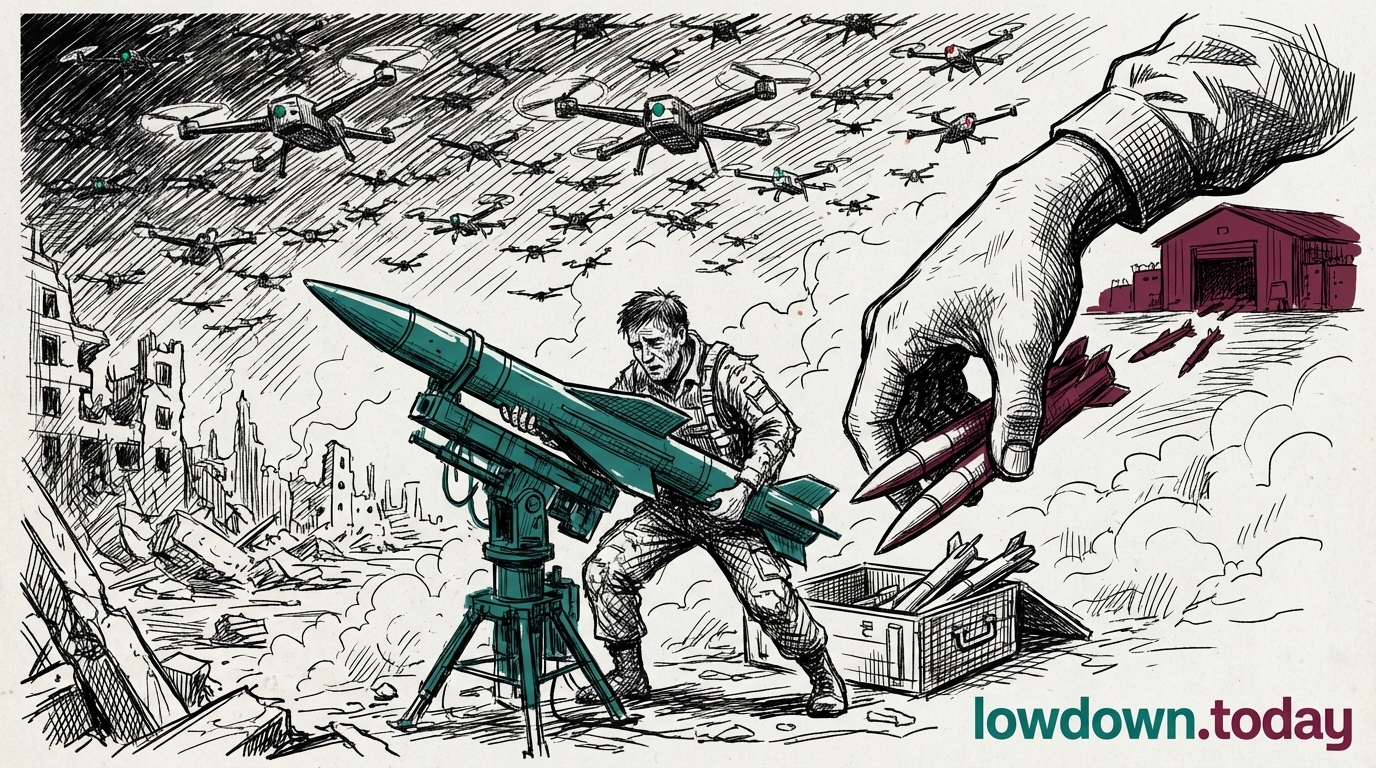
AeroVironment routed a $30m order into Germany's LARUS programme through NATO's procurement agency on 7 July, then won an Italian MQ-31A type designation on 13 July, its first programme-of-record foothold in Italy.

ConflictDeveloping
Key takeaway

AeroVironment reached German and Italian buyers in one week through NATO's shared procurement rail and an Italian type designation.

AeroVironment routed a $30 million Puma Systems Stack order into Germany's LARUS counter-drone programme through the NATO Support and Procurement Agency (NSPA) on Tuesday 7 July. Six days later, on Monday 13 July, the Italian Ministry of Defence granted the company an MQ-31A type designation. Both count as European market access, not US federal revenue, and that distinction is the point.

NSPA is the multi-vendor cross-border rail that lets a US maker sell into an individual NATO member without negotiating a bilateral foreign military sale, the slower government-to-government route. It is the same channel Red Cat used for its Black Widow order, so AeroVironment is following a path already worn by a smaller rival rather than cutting a new one.

The Italian designation goes further than the German order. A type designation is the regulatory approval that lets an air arm field and sustain a platform under its own programme of record, the gate a sale alone does not clear. Italy has not bought from AeroVironment on this beat before, so the MQ-31A stamp turns a prospective customer into one that can now operate and support the aircraft for years. NSPA delivered the order, the Italian ministry delivered the licence to fly it, both inside a single week.

Deep Analysis

In plain English

AeroVironment makes drones and counter-drone systems for the US military and is now expanding into Europe. In Germany, it sold $30 million worth of equipment into a German air-defence programme called LARUS, using a NATO agency called NSPA that lets member countries buy from an approved list of suppliers without negotiating a one-off government-to-government deal each time. Separately, in Italy, the defence ministry gave one of AeroVironment's aircraft an official type designation, MQ-31A, which works like a formal certification for use by that country's armed forces. Together, these show a single American company opening two new European government customers in the space of a week.

Deep Analysis
Root Causes

AeroVironment's simultaneous German and Italian market entry within a single week is possible because NSPA and national type-designation processes are separate approval tracks that do not require sequencing: a vendor can clear a NATO agency's multi-vendor catalogue in one country while a bilateral defence ministry runs its own certification in another, with neither approval waiting on the other.

That parallel-track structure, not any single national decision, is what let AeroVironment open two markets in the same week rather than one country at a time.

What could happen next?
  • Consequence

    NSPA-routed sales let AeroVironment scale into new NATO markets without separate bilateral government-to-government negotiations for each country.

  • Precedent

    Italy's MQ-31A type designation gives AeroVironment a formal certification precedent that could ease its access to other NATO members' domestic type-approval processes.

First Reported In

Update #15 · Two $500m drone deals, still no winner

AeroVironment· 14 Jul 2026
Read original →
Causes and effects
This Event
AeroVironment opens two more NATO markets
A type designation clears the regulatory gate to field and sustain a platform, so Italy becomes a standing buyer rather than a one-off sale.
Different Perspectives
Government of Latvia
Latvia abstained on 22 September when the EU renewed its individual sanctions for 36 months at the price of delisting Alisher Usmanov and Mikhail Fridman, and promised national sanctions of its own. Riga's abstention marks how far a frontline member state will go to keep listed names listed.
India's Ministry of External Affairs
After the House passed the Graham bill on 16 September, India's foreign ministry said it would keep buying energy on market terms and protect its trade. Russia supplied 30.3% of India's crude imports in fiscal 2026, so the tariff decision due around 18 October falls directly on New Delhi.
Kaja Kallas, EU foreign policy chief
Kallas answered the US licence on 10 October by saying Europe would not ease pressure, and EU ministers adopted a 22nd package of nearly 1,600 listings two days later. Brussels is tightening as Washington loosens, though TASS reported the package adds no significant new trade restrictions.
Donald Trump and the US Treasury
The Treasury licensed Russian diesel imports until 7 April 2027 on the day of Trump's call with Putin, and Trump then told reporters Ukraine should find a new leader. Washington is trading sanctions relief for fuel supply while pressing Kyiv to halt the refinery strikes behind the shortage.
Kremlin and Deputy Prime Minister Alexander Novak
After the 9 October call the Kremlin said Russia was ready to supply oil and petroleum products to American and global markets, and Novak brought forward the end of diesel export curbs. Moscow is selling the shortage back as goodwill, with volumes that Decree No. 686 now hides from outside checks.
Volodymyr Zelenskyy, President of Ukraine
Zelenskyy called GL 135 an investment in prolonging the war and offered to stop striking Russian refineries if Russia stops destroying Ukraine's energy system. Answering Trump's call for a new leader, he set a total 60-day ceasefire as the condition for elections, which puts the next move on Moscow.
