Skip to content
You can now search across every topic, entity and event.What's new
Russia-Ukraine War 2026
13JUL

82nd Airborne deploys; 50,000 in theatre

1 min read
10:28UTC

Pentagon's rapid-deployment paratroopers head to the Gulf while the president says the war is nearly over.

ConflictAssessed
Key takeaway

Deploying America's premier rapid-reaction force contradicts victory claims and signals ground-operation planning.

The 82nd Airborne Division (the US Army's rapid-deployment paratroopers) received orders on Monday to deploy its headquarters to the Middle East . Maj. Gen. Brandon Tegtmeier will lead approximately 1,000 paratroopers. Combined with 8,000 Marines en route aboard the USS Boxer amphibious ready group, more than 50,000 US personnel are now committed to the theatre 1.

Donald Trump told reporters the same day that the US has "won the war" 2. The Pentagon's deployment schedule says otherwise. Paratroopers are not sent to wind down conflicts. The 82nd Airborne Division is the Army's primary rapid-reaction force, historically the first conventional unit into a new theatre.

The combination of Iran's Kharg Island fortification (preparing to defend) and the 82nd's deployment (preparing to attack) points toward a ground confrontation. Whether the deployment is coercive signalling or operational preparation, it moves the war closer to American boots on Iranian soil.


Deep Analysis

In plain English

The president says the war is nearly over. The same day, the Pentagon sends its top rapid-deployment force to the Middle East alongside thousands of Marines. Paratroopers are not sent to wind down wars; they are sent to start ground operations.

Deep Analysis
Escalation

Combined forces create ground-operation capability. Execution depends on whether Kharg seizure is authorised.

What could happen next?
  • Risk

    Ground operations would produce US casualties and transform domestic politics

  • Precedent

    First 82nd HQ deployment since Afghanistan

First Reported In

Update #48 · Iran rejects ceasefire; Kharg fortified

Washington Post· 26 Mar 2026
Read original
Different Perspectives
Turkey
Turkey
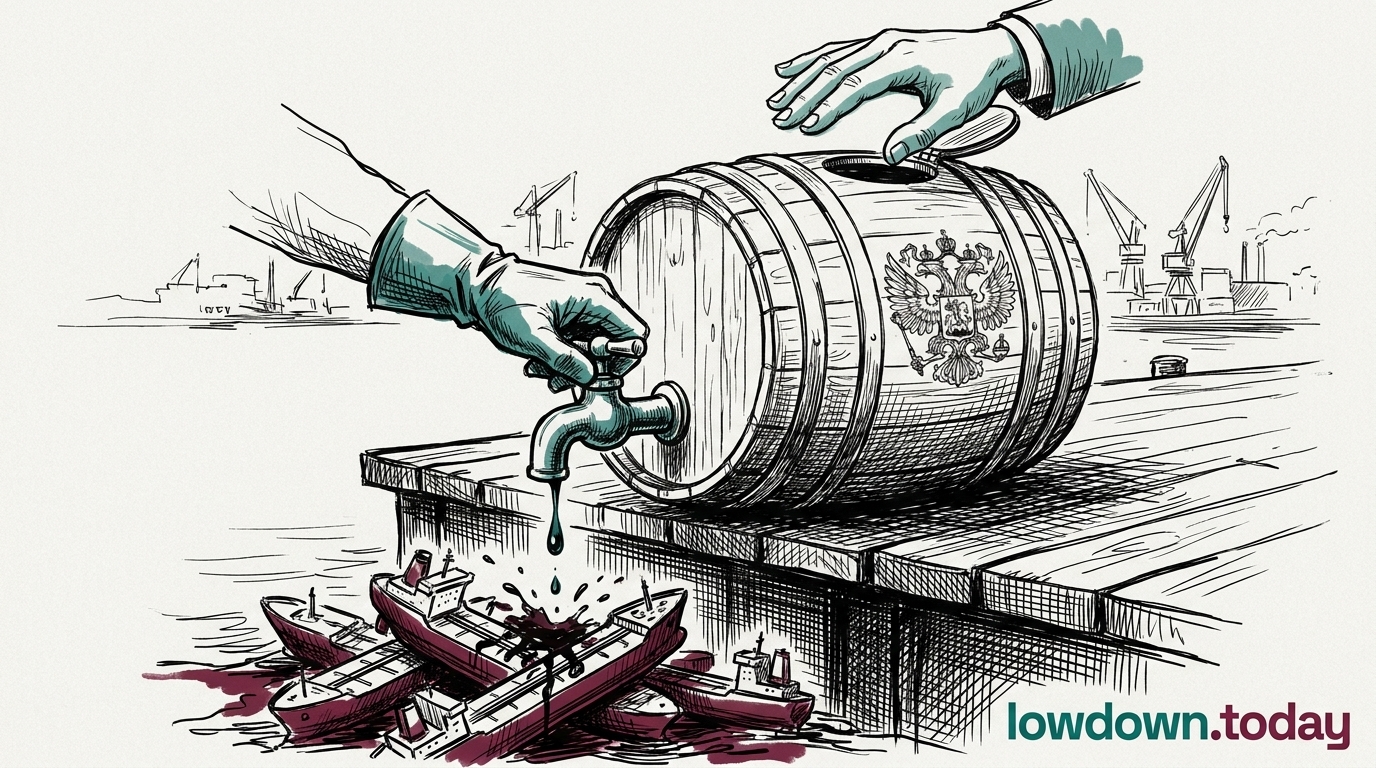
Turkey, a major buyer of Russian diesel cargoes, loses that access under Moscow's first producer-binding export ban, in force from 8 July to 31 July. Ankara hosted the same week's NATO summit pledging EUR 70bn to Ukraine, sitting on both sides of the fuel-and-alliance ledger.
NATO
NATO
NATO leaders meeting in Ankara on 7 and 8 July pledged EUR 70bn in equipment, assistance and training for Ukraine across 2026, with a 2027 sustainment commitment and a $40bn Drone Edge counter-drone initiative. European allies now fund the vast majority of that package, filling the gap left by Washington's idled crude waiver.
India
India
India's state refiners continued buying discounted Urals crude as June's price fell to $63.18 a barrel, insulating New Delhi from the OFAC waiver gap still constraining Western buyers. Indian refiners could pick up diesel-export share as Russia's producer-binding ban shuts out its former customers.
China
China
China's independent refiners kept importing discounted Urals crude through June as the price fell to $63.18 a barrel, down 26% month-on-month per CREA. Beijing has said nothing on Moscow's new diesel ban, leaving Chinese refiners a likely beneficiary if Turkish and Brazilian buyers seek replacement cargoes.
United States
United States
No successor licence has been issued since General License 134C lapsed on 17 June, leaving a 26-day gap, the longest of the war, in the Russian crude waiver. Washington's silence is tightening the channel without any stated decision, as Treasury weighs whether to let it die.
Ukraine
Ukraine
Ukraine's long-range strike campaign shifted from refineries to seaborne fuel tankers crossing the Sea of Azov, cutting tracked vessel traffic 55% between 30 June and 11 July, per Starboard Maritime Intelligence. The shift targets Russia's export revenue directly rather than just domestic supply, adding pressure alongside the collapsing Urals price.



