Skip to content
You can now search across every topic, entity and event.What's new
Russia-Ukraine War 2026
16JUN

ACER lifts price cap to EUR 99,999

3 min read
10:25UTC

ACER will widen cross-border marginal-price limits to plus or minus EUR 99,999/MWh after July, opening a REMIT reporting consultation on 16 July as a Danish hoarding fine sets the enforcement tone.

ConflictDeveloping
Key takeaway

A higher cross-border cap sharpens winter tail risk as REMIT enforcement nears.

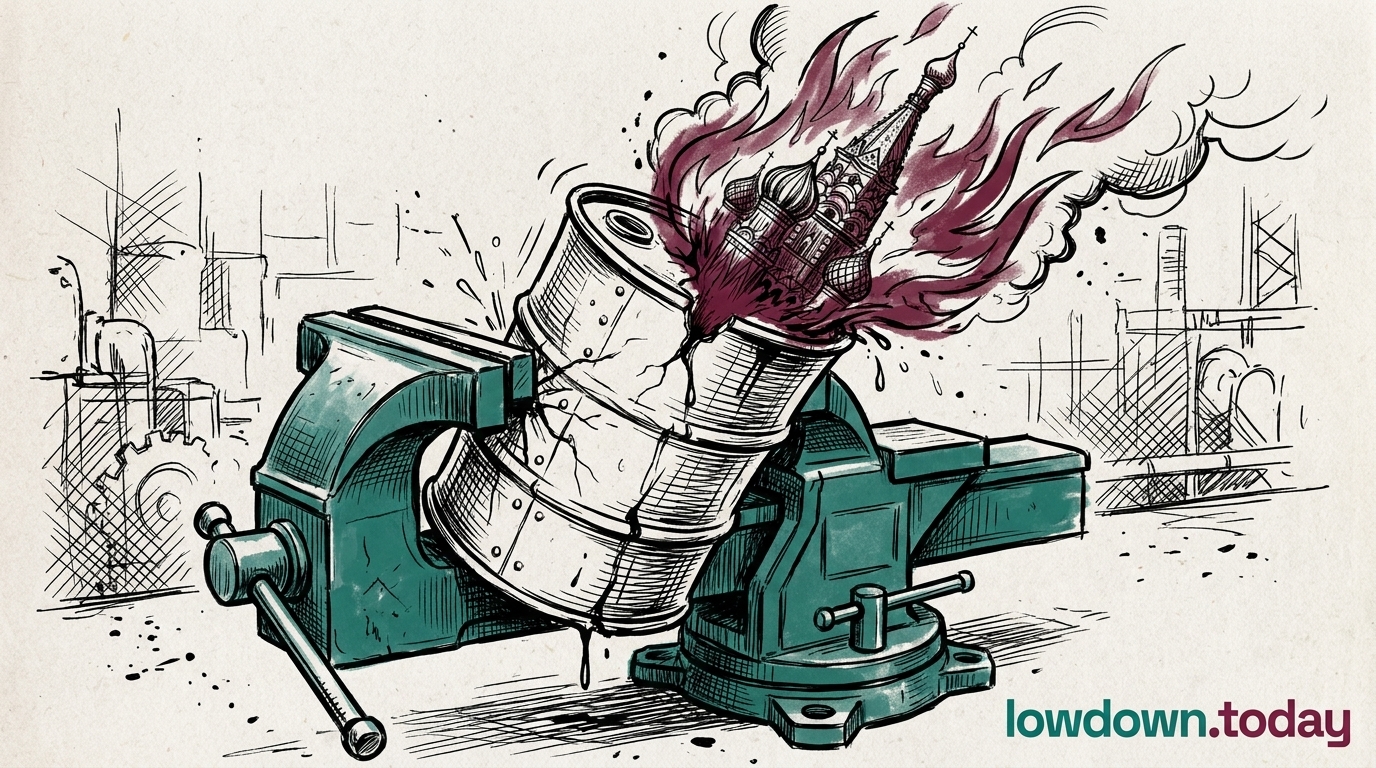
ACER, the EU agency that coordinates national energy regulators, will widen cross-border marginal-price limits from plus or minus EUR 15,000 to plus or minus EUR 99,999/MWh after July, removing the transitional cap on cross-zonal clearing extremes 1. The cap sets how high a price can clear when capacity is allocated across borders; lifting it lets scarcity register at its true level rather than being truncated.

The timing matters against a market already tracking a wider winter balance. A higher ceiling does nothing on a normal day, but in a genuine scarcity event it lets cross-border prices spike to levels the old cap suppressed, sharpening the tail risk on any winter position.

A second strand runs in parallel. ACER's REMIT transaction-reporting Annex consultation opens on 16 July, covering energy derivatives . REMIT is the EU's wholesale market-integrity regulation, and the agency gained direct cross-border investigatory powers under its 2024 revision; those powers are due to activate in the fourth quarter of 2026.

No ACER cross-border enforcement case exists yet, so the Danish regulator's capacity-hoarding fine functions as the national curtain-raiser, a REMIT-style action that signals the enforcement posture ahead of ACER taking the cross-border lead 2. Desks should treat the fine as the template for how the agency's own first case is likely to look.


Deep Analysis

In plain English

ACER is the EU's energy regulator; the body that oversees electricity and gas markets across European borders. When electricity is traded across countries, there are rules about how high or low prices can go. Currently, the maximum price for cross-border electricity trades is EUR 15,000 per unit. After July, ACER is raising that ceiling to EUR 99,999 per unit. This sounds alarming, but the reasoning is technical: in an extreme shortage, prices need to rise very high to ration the limited supply and signal where it should go. If the cap is too low, the market cannot clear; meaning trades cannot be settled; which is actually worse than an extreme price. The concern is that this rule change takes effect before ACER's ability to detect price manipulation at the new levels is fully operational. REMIT is the EU's market-integrity regulation for energy trading; broadly similar to financial markets regulation. ACER opened a consultation on 16 July to update REMIT's reporting requirements to cover energy derivatives, but that consultation will not produce binding rules until 2027.

What could happen next?
  • Risk

    The EUR 99,999 cap takes effect in August, months before the REMIT Annex consultation produces binding derivative-reporting rules; a scarcity event in October or November 2026 would occur under the new cap but without the full enforcement coverage the consultation is designed to create.

    Short term · Assessed
  • Precedent

    The Danish capacity-hoarding fine establishes national REMIT enforcement as a live regulatory instrument ahead of ACER's Q4 cross-border activation, providing a deterrence signal to generators across the EU single energy market.

    Immediate · Assessed
  • Consequence

    The REMIT Annex consultation covering energy derivatives from 16 July will require trading counterparties to report a wider set of financial instruments; compliance costs for energy traders are estimated at EUR 2-5 million per firm for system updates.

    Medium term · Assessed
First Reported In

Update #20 · Spark spread now feeds the winter deficit

ACER· 22 Jun 2026
Read original
Different Perspectives
Belgium
Belgium
Belgium blocked outright confiscation of the roughly EUR 210bn in frozen Russian assets held at Euroclear in December 2025, because Euroclear would carry the legal liability. Ukraine has since proposed moving custody to the EU instead.
European Commission
European Commission
The Commission said on 2 September that Ukraine has drawn EUR 3.2bn against an EUR 8.35bn annual target, and that a revenue-mobilisation law stuck in the Rada is one of twelve conditions for the next EUR 3.7bn payment.
Steve Witkoff and Jared Kushner
The US envoys met Putin in Moscow on 5 September and Zelenskyy in Kyiv on 6 September without an announced result from more than three hours of talks. Their mediation continues with no public outcome to show for this round.
Robert Brovdi
Robert Brovdi
Brovdi said on 12 September that his Unmanned Systems Forces struck 285 Russian tankers in ten weeks. His own monthly breakdown sums to 79, and he has given no account of the remaining 206.
Sergei Lavrov
Sergei Lavrov
Lavrov said on 12 September that Russia is ready to negotiate but will not suspend military operations while it does. He treats talking and fighting as compatible policies, ruling out a ceasefire as a precondition for further talks.
Belarus
Belarus
Minsk announced completion of its own 37th Separate Airborne Assault Brigade near Gomel, under plans dating to August 2025 rather than a response to any single frontline event this window, keeping its hedge of hosting the war without formally joining Russia's mobilisation drive.


