Skip to content
Briefings are running a touch slower this week while we rebuild the foundations.See roadmap
Russia-Ukraine War 2026
22MAY

Majlis codifies Hormuz toll in law

2 min read
10:57UTC

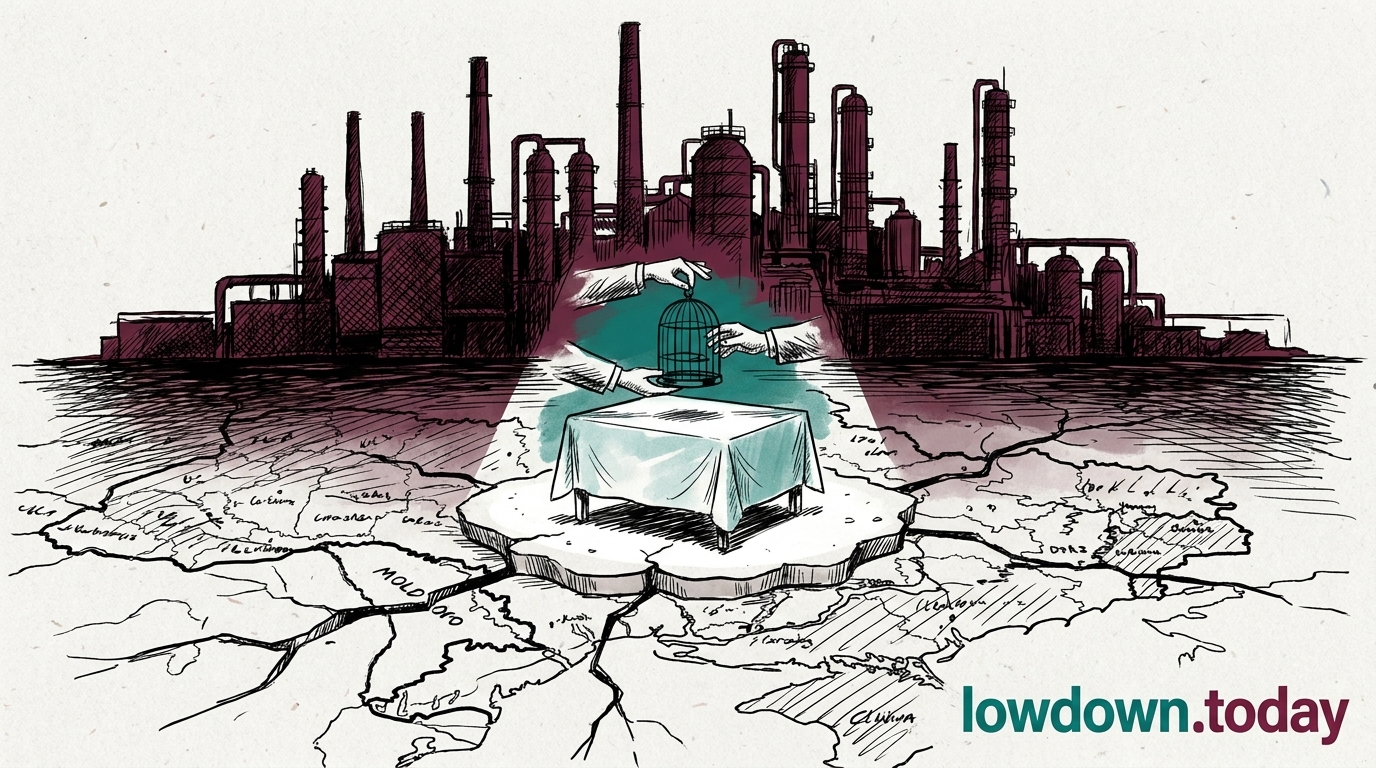
The blockade that began as a military measure is becoming domestic legislation, with projected revenues reaching $800 million per month.

ConflictDeveloping
Key takeaway

Iran is converting a wartime blockade into permanent law, making reversal a sovereignty question.

Iran's Majlis began drafting legislation on 31 March to codify the IRGC's Hormuz toll into permanent domestic law. 1 A vote was expected before the end of March but cannot proceed until parliament reconvenes. At projected scale, revenue estimates reach $600 million to $800 million per month from oil tankers and LNG carriers combined.

The legislative step matters because it changes the nature of what the toll is. An operational wartime measure can be reversed by the military that imposed it. A law can only be reversed by the parliament that passed it, with Guardian Council approval, after a political process that no Iranian politician has incentive to initiate. Shadow fleet vessels already account for 80% of Hormuz transits , and the toll is being paid by state-backed Chinese container ships. The infrastructure is built. Legislation is the lock.

The last time a state imposed transit fees on a major international waterway was the Ottoman Empire's Bosphorus tolls, abolished by the 1936 Montreux Convention. Iran's version is being codified in real time during an active war. The NPT withdrawal bill remains frozen in the same parliament : the Majlis has not sat in 31 days, with no reconvening date announced. When it does sit, both bills advance simultaneously.

Deep Analysis

In plain English

Iran's parliament is writing a law to permanently charge ships a toll to cross the Strait of Hormuz. The law has not passed yet because parliament has not met in over a month. The difference between a wartime toll and a permanent law is significant. A wartime toll can end when the war ends. A law can only be changed by parliament, which means it could last for decades regardless of how the war ends. The last time a country charged transit fees on a major international waterway was the Ottoman Empire, which charged Bosphorus tolls until a 1936 international agreement abolished them. Iran is trying to do the same thing in 2026.

What could happen next?
  • Precedent

    If enacted, this would be the first domestic law codifying a sovereign charge on an international strait in modern maritime history, challenging UNCLOS innocent passage rights.

    Long term · 0.85
  • Consequence

    Reversing the toll post-war becomes a sovereignty dispute requiring treaty revision rather than a military question, making it functionally permanent.

    Medium term · 0.8
  • Risk

    When parliament reconvenes, both the toll bill and the NPT withdrawal bill advance simultaneously, presenting the international community with two irreversible legislative facts at once.

    Short term · 0.7
First Reported In

Update #53 · Trump drops Hormuz goal; toll becomes law

NBC News / Lloyd's List· 31 Mar 2026
Read original
Different Perspectives
Rafael Grossi, IAEA Director General
Grossi's Update 349 of 7 May recorded a drone strike on ZNPP's radiation monitoring laboratory on 3 May. Rosatom's 17 May public attack on the Secretariat's neutrality degrades the diplomatic ground Grossi needs for the sixth repair ceasefire at day 60 on the single backup line.
Indian Government / Embassy Moscow
The Indian Embassy in Moscow confirmed on 18 May that an Indian national was killed and three hospitalised at a refinery construction site in the 17 May barrage. India is among the largest buyers of discounted Russian crude; the fatality forces a diplomatic protest without changing the purchasing posture.
Recep Tayyip Erdogan, Turkish President
Erdogan met Zelenskyy in Ankara for nearly three hours on 15 May before the Istanbul session, recovering Turkey's 2022 mediator role and reducing Trump's leverage by hosting bilateral talks without Washington in the room. Turkey hosts the NATO Ankara summit on 7-8 July; the Istanbul format gives Erdogan standing at both tables simultaneously.
Viktor Orban / Hungarian Government
Budapest's new cabinet, formed 12 May, holds the institutional veto point on the EU tranche disbursement ahead of the first-half June window. Hungary has previously leveraged EU loan tranches to extract bilateral concessions; the combination of a fresh cabinet and a tight disbursement timeline makes Budapest the single highest-leverage actor in the EU track this fortnight.
European Council / Commission
The Commission is preparing a three-document disbursement package for the 9.1-billion euro first tranche of the EU loan to Ukraine, targeting first-half June, but delivery depends on the Magyar cabinet, which formed on 12 May, not blocking the mechanism. The 20th sanctions package remains in force against Russia.
Donald Trump / US Treasury
Treasury issued GL 134C with a 48-hour gap after GL 134B expired, confirming the waiver series functions as permanent monthly management rather than a wind-down instrument. Washington was absent from the Istanbul room; Treasury Secretary Bessent framed the Cuba carve-out as protecting 'most vulnerable nations', maintaining the fiction that the 30-day bridge has a humanitarian rationale.
