Skip to content
Welcome, thoughtbot's Giant Robots listeners!Start here
Is Britain Actually Broke?
22OCT

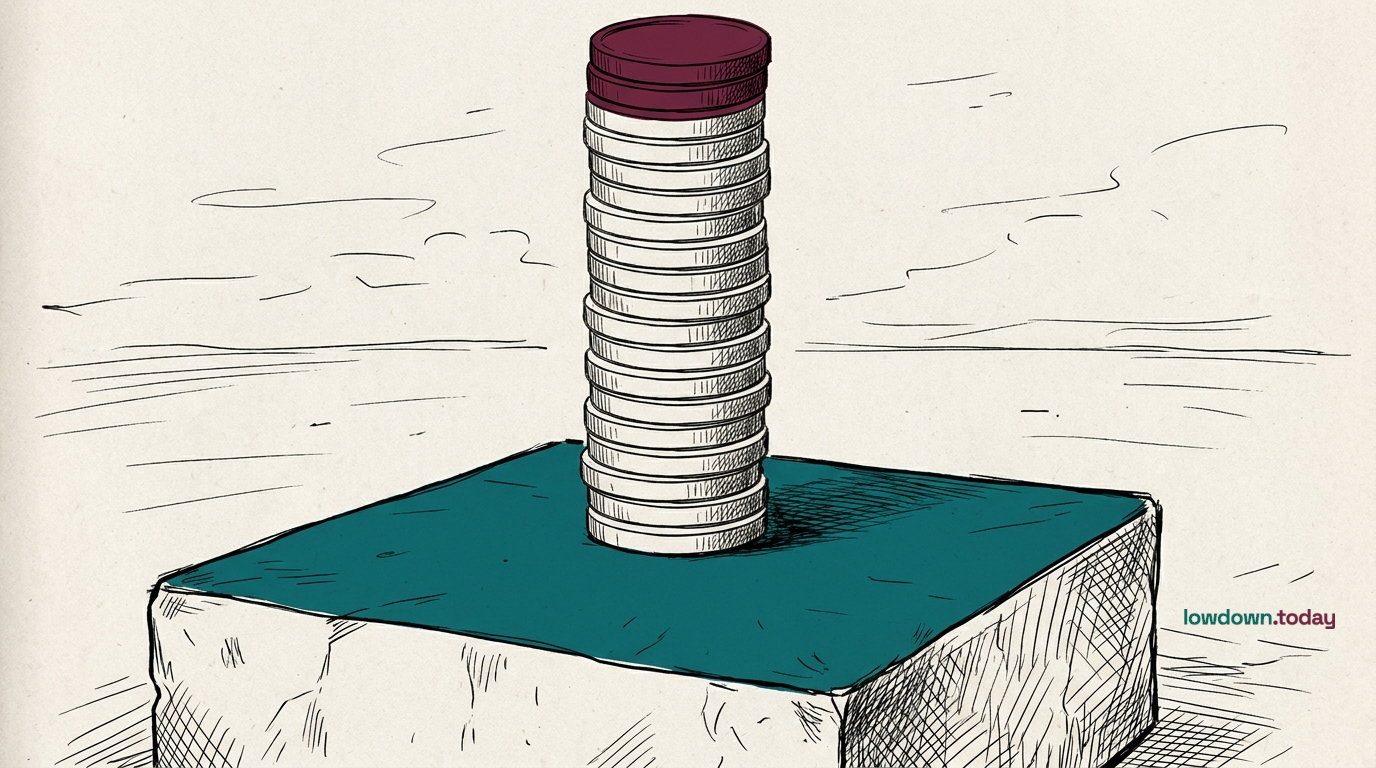
Britain owes 95p for every £1 it makes

3 min read
16:23UTC

The Office for National Statistics put public sector net debt at £2,989.9bn at the end of June 2026, and then revised the previous month down by £8.3bn.

EconomicDeveloping
Key takeaway

Debt at 94.9% of GDP is real, but the interest bill matters more than the headline total.

The Office for National Statistics put public sector net debt at £2,989.9bn at the end of June 2026, equal to 94.9% of everything the economy produces in a year⁠1. The ONS publishes this figure monthly as the UK's national statistics institute. Net debt means what the state owes after subtracting the liquid assets it holds, which is the UK's own measure rather than the one the International Monetary Fund uses for cross-country comparison. Hold on to the 95% framing: for every £1 the economy makes in a year, the state owes about 95p.

Divide that across roughly 28.4 million households and it comes to about £105,000 each. That is our arithmetic on the published total, not a figure the ONS prints, and it is the sort of number that travels further than it deserves.

The vintage matters as much as the level. The ONS had first reported end-May net debt at about £2,984bn, then cut it by £8.3bn to £2,976.0bn after a Bank of England data update⁠2. A total this large moves by billions on a routine correction, so a headline built on a first print can be stale within a month. June borrowing, meanwhile, came in at £16.0bn against the £16.3bn the Office for Budget Responsibility, the government's independent forecaster, had pencilled in back in March⁠3. Borrowing slightly less than the forecaster expected is the quiet result buried under the debt headline.

Central government paid £11.8bn in debt interest in June alone and £33.3bn across April to June, down 31.0% on the same month a year earlier and still the fourth-highest June on record before adjusting for inflation⁠4. The ONS attributes that volatility specifically to index-linked gilts, government loans whose payments rise automatically with inflation. Two different numbers get confused here constantly: new issuance is now about 10% index-linked, down from about 25% a decade ago⁠5, but the outstanding stock carries a far larger share and shifts far more slowly. The flow has been de-risked. The exposure has not.

Lenders, meanwhile, keep turning up to the auctions. The Debt Management Office offered £4,250m of a gilt maturing in 2036 on 16 July 2026 and received £13,299.5m of bids, a bid-to-cover ratio of 3.13x at a yield of about 5.04%⁠6. Bid-to-cover is money bid divided by money on sale, and roughly three pounds chased every pound available. Britain pays more to borrow than it did five years ago, and still finds three times the money it needs at auction.

Deep Analysis

In plain English

Gross domestic product (GDP) is the total value of everything the UK economy produces in a year. Public sector net debt at 94.9% of GDP means the government owes an amount close to a full year of the country's economic output. Unlike a household mortgage, this debt never has to be paid off by a fixed date. The government issues new bonds, called gilts, to replace old ones as they mature, over and over, indefinitely. That works as long as investors keep agreeing to lend, which is why the auction 'cover ratio', how many pounds of bids divided by pounds on offer, matters more than the headline debt total. On 16 July, roughly three pounds of bids chased every pound the government offered, a sign lenders are still willing, even if they now charge more to do it.

Deep Analysis
Root Causes

A meaningful share of the gilt stock was issued in the near-zero-rate 2020 to 2022 period, when the Bank of England was buying bonds and yields sat close to 0%. That stock now matures into a market pricing gilts around 5%, so debt interest rises simply from refinancing, independent of any new borrowing decision.

The average maturity of the gilt stock, 13.9 years, cushions the pace of that refinancing but cannot stop it. A shorter average maturity would already have forced more of the stock to reprice; a longer one would have deferred more of the shock. Britain sits in between, which is why the debt-interest bill is rising steadily rather than jumping in a single year.

What could happen next?
  • Risk

    Gilts issued near-zero-rate between 2020 and 2022 will keep maturing into a market pricing debt around 5%, raising the interest bill mechanically over the coming years regardless of new borrowing choices.

  • Risk

    A sudden yield spike could still trigger LDI-driven forced gilt sales, the same mechanism behind the September 2022 crisis, even though today's auction cover shows no sign of it.

First Reported In

Update #1 · The distress moved from banks to councils

Office for National Statistics· 27 Jul 2026
Read original →
Causes and effects
This Event
Britain owes 95p for every £1 it makes
This is the headline number every outlet runs, and on its own it says almost nothing about which British balance sheet is actually in trouble.
Different Perspectives
Pension Protection Fund
Acting chief actuary Aaron Pang put the rise to 135.0% funded down to liabilities falling 2.1% against a 1.0% fall in assets, reflecting higher gilt yields. On Lowdown's reading, the yields that lift the Treasury's interest bill leave 4,838 company schemes with a £280.7bn surplus that does not reduce state borrowing.
Torsten Bell
Torsten Bell
The Labour figure wrote on 14 October that the IMF's October figures show the fastest fiscal consolidation in the G7. The IMF forecasts the UK deficit falling from 3.8% of GDP in 2026 to 1.4% in 2031, a squeeze still to be delivered through taxes and spending.
Tax Justice UK
Tax Justice UK
The left-leaning campaign group says ten tax reforms would raise over £60bn a year for public services, and on 22 October asked why higher taxes on extreme wealth remain politically difficult. It offers the tax-led exit to the IEA's cuts; the £60bn is its own claim, not an official costing.
Institute of Economic Affairs
The free-market think tank's Alternative Budget of 19 October would suspend the state pension triple lock for three years, freeze welfare in cash terms and move tax onto a wider VAT. It claims the day-to-day budget returns to surplus in 2027-28, its own projection rather than an official costing.
Resolution Foundation
The living-standards think tank said welfare spending ran about £2.5bn above expectations in September, City AM reported on 21 October, and its economist Greg Thwaites urged targeted energy support. Its figure lands as a Chancellor who calls welfare cuts a moral duty finalises the 28 October Budget.
Institute for Fiscal Studies
Director Helen Miller said a steady-as-she-goes Budget is not an option, with the IFS putting 2029-30 headroom at about £20bn, The Independent reported on 12 October. The IFS puts the cost of avoiding cuts and funding higher defence at around £35bn of tax rises or benefit cuts, more than any headroom estimate in circulation.

Written with AI from Lowdown's published reporting. Not individually reviewed by an editor. Editorial standards.