Skip to content
Iran Conflict 2026
14APR

B-52s over Iran; 50,000 US troops in

2 min read
09:22UTC

US forces have begun flying B-52 strategic bombers overland into Iran for the first time in the conflict, quadrupling ordnance-per-sortie while Pentagon planners weigh options including seizing Kharg Island. The tactical picture and Trump's victory speech describe two different wars.

ConflictAssessed
Key takeaway

B-52 overland flights confirm US air superiority over Iran and quadruple per-sortie ordnance capacity.

Gen. Dan Caine confirmed on 1 April that CENTCOM has begun flying B-52 Stratofortress bombers on overland missions inside Iran, lifting a 30-day restriction to standoff-only strikes. Bunker-busters had struck Isfahan ammunition depots the previous night , and the B-52 overland authorisation signals that the degradation of Iran's air defences has now crossed the threshold that makes large, slow aircraft survivable.

The B-52 is not a stealth aircraft. Flying one over hostile territory is a statement: CENTCOM has suppressed Iranian air defences sufficiently that it can send the most visible aircraft in its inventory over Iranian territory and expect it to survive. The shift from standoff to overland dramatically increases ordnance per sortie. A B-52 carries roughly 70,000 lbs of bombs versus approximately 18,000 lbs for an F-35. With 200 dynamic strikes logged on Monday alone, CENTCOM has the targeting intelligence and the delivery capacity to accelerate the campaign.

CENTCOM had already logged 9,000 targets through Day 25 and reported 10,000-plus targets struck with 92% of Iran's largest naval vessels destroyed before today's confirmation. The B-52 authorisation is the operational expression of that accumulated attrition.

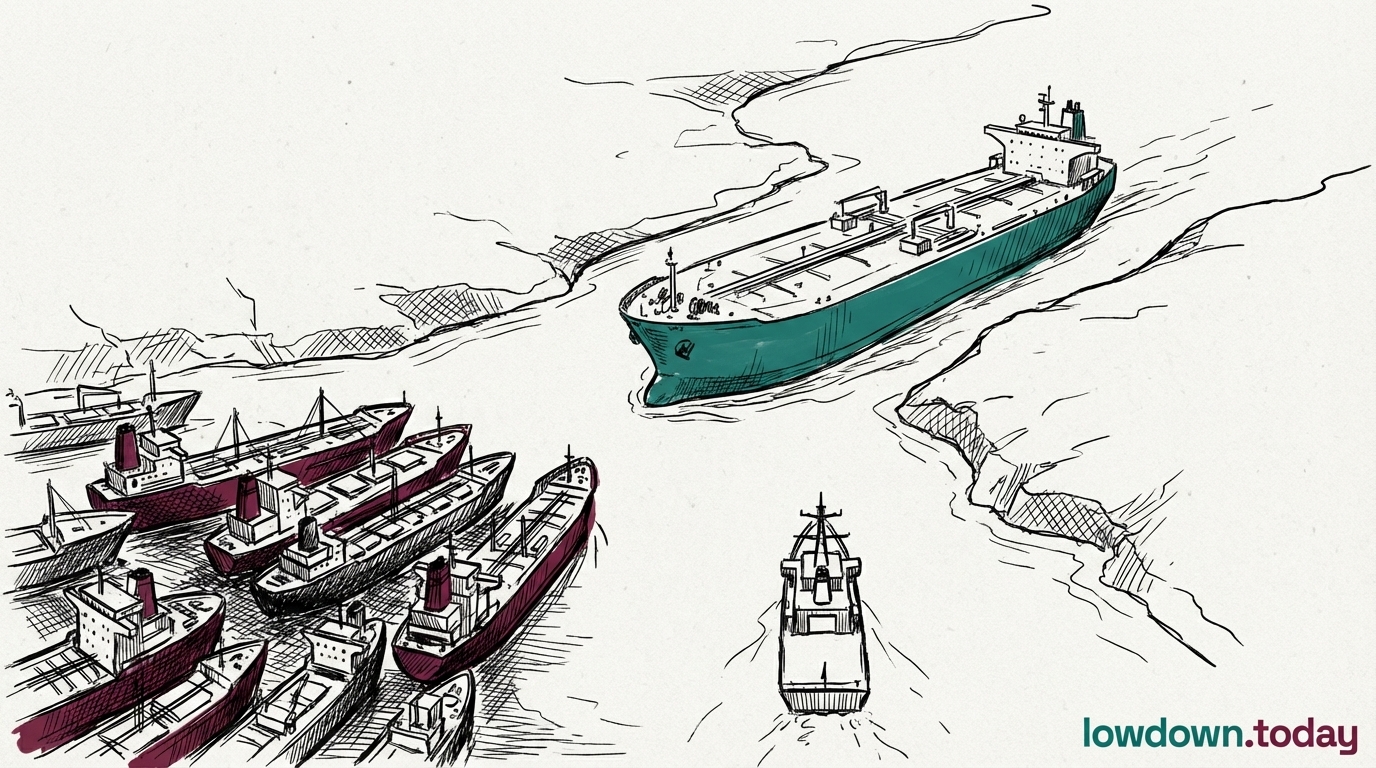
The SOF deployment compounds the picture. Hundreds of Navy SEALs and Army Rangers, options including seizing Kharg Island (which handles 90% of Iran's oil exports), and 3,500 Marines aboard USS Tripoli are assets relevant to a ground phase, not a withdrawal. The Pentagon had drawn up Kharg seizure plans weeks ago. The tactical picture and Trump's victory speech describe two different wars.

Deep Analysis

In plain English

B-52s are enormous American bombers built during the Cold War that can carry vast amounts of weapons. For the first 30 days of the war, they were only allowed to fire missiles from far away, outside Iranian airspace. Now they are flying directly over Iran. This tells us two things: first, the US military believes Iran can no longer shoot them down, meaning Iran's air defences have been severely degraded. Second, each B-52 can carry four times as many bombs as a modern fighter jet. At the same time, hundreds of special forces soldiers have arrived in the region, and Pentagon planners are reportedly considering seizing Kharg Island ; the port that handles 90% of Iran's oil exports. This is not what a military winding down looks like.

Deep Analysis
Root Causes

Iranian air defence degradation results from 30 days of systematic targeting by Operation Epic Fury, which struck over 11,000 targets including radar installations, SAM sites, and command nodes.

The shift from standoff to overland B-52 missions reflects CENTCOM's assessment that remaining Iranian air defences cannot threaten slow, high-altitude aircraft.

Escalation

The combination of B-52 overland flights, 50,000 troops, SOF deployment, and USS Tripoli Marines constitutes a full pre-invasion force posture. Whether this represents actual preparation or coercive signalling, the military infrastructure for a Kharg Island seizure is now in place.

What could happen next?
  • Risk

    B-52 overland flights and SOF deployment signal a potential ground phase that would extend the conflict well beyond Trump's two-to-three-week withdrawal timeline.

    Short term · Assessed
  • Precedent

    Confirming air superiority over Iran means CENTCOM can now target any location in the country, including underground facilities not accessible to standoff missiles.

    Immediate · Assessed
  • Consequence

    Seizing Kharg Island would remove 90% of Iran's oil export capacity and fundamentally alter the economic calculus of the conflict.

    Short term · Reported
First Reported In

Update #54 · Trump declares victory and withdrawal

Reuters / Free Malaysia Today· 1 Apr 2026
Read original
Different Perspectives
Global South governments (Indonesia, Brazil, South Africa)
Neutrality was possible when the targets were military. 148 dead schoolgirls made it impossible — no government can explain that away to its own citizens.
Trump administration
Oscillating between claiming diplomatic progress and threatening escalation, while deploying additional ground forces to the Gulf.
Israeli security establishment
Fears a rapid, vague US-Iran agreement that freezes military operations before the IDF achieves what it considers full strategic objectives. A senior military official assessed the campaign is 'halfway there' and needs several more weeks.
Iraqi government
Iraqi government
Iraq's force majeure is the position of a non-belligerent whose entire petroleum economy has been paralysed by a war between others — storage full, exports blocked, production being cut with no timeline for resumption.
Russia — Ambassador Vassily Nebenzia
Moscow calibrated its position between Gulf states and Iran: abstaining on Resolution 2817 rather than vetoing it, signalling it would not block protection for Gulf states, while refusing to endorse a text that ignores the US-Israeli campaign it regards as the conflict's proximate cause. Russia proposed its own ceasefire text — which failed 4-2-9 — allowing Moscow to claim the peacemaker role while providing Iran with satellite targeting intelligence, a duality consistent with its approach in Syria.
France — President Macron
France absorbed its first combat death in a conflict it has publicly declined to join. The killing of Chief Warrant Officer Frion in Erbil forces Macron to choose between escalating involvement and accepting casualties from the margins.