Skip to content
Briefings are running a touch slower this week while we rebuild the foundations.See roadmap
Iran Conflict 2026
6APR

Lebanon: 294 killed in Israeli strikes

2 min read
09:43UTC

The toll from Israeli strikes jumped by 77 in a single reporting cycle on Friday — driven by a commando raid on a cemetery and continued bombardment across the south and Bekaa Valley.

ConflictDeveloping
Key takeaway

Lebanon's casualty rate is running significantly faster than the 2006 war, but international pressure mechanisms have not activated at comparable speed, suggesting a structural shift in the threshold for intervention.

Lebanon's Ministry of Public Health reported 294 killed and 1,023 wounded since Israeli strikes began on Monday 2 March — a sharp jump from the 217 deaths reported earlier on Friday. The 77 additional fatalities in a single reporting cycle were driven by two concurrent factors: the commando raid on Nabi Chit, which killed 41, and continued Israeli strikes across southern Lebanon and the Bekaa Valley.

The toll has compounded rapidly. Earlier in the week, Lebanese authorities confirmed 123 killed ; by Friday morning, that figure stood at 217 . The leap to 294 by evening means the rate of killing accelerated through the week rather than stabilising. The 1,023 wounded place additional strain on a Lebanese health system already under direct pressure — the WHO has documented 13 verified attacks on healthcare facilities in Iran since 28 February , and Lebanese paramedics have also been killed in Israeli strikes this week.

The geography of the dead has shifted. Early-week casualties concentrated in southern Lebanon, where IDF ground forces are present in Kfar Kila, Houla, Kfar Shouba, Yaroun, and Khiam . Friday's toll spread into the Bekaa Valley — historically Hezbollah's strategic depth — with the Nabi Chit operation accounting for a substantial share of the day's dead. The geographical expansion echoes the 2006 war, when Israeli operations moved from the border zone into the Bekaa after the first week.

Six days of strikes have now killed nearly 300 people in a country that is not the primary belligerent, has no functioning air defence, and whose government has no capacity to either restrain Hezbollah or negotiate its own protection. The 1,023 wounded — many of whom will require sustained medical care — represent a second, slower crisis unfolding behind the headline death count.


Deep Analysis

In plain English

Since Israeli strikes began on Monday, 294 people have been killed in Lebanon in five days. To put that in context: the 2006 Lebanon War — which the world treated as a major humanitarian crisis and which ended after UN intervention — killed around 1,200 Lebanese over five weeks. The current pace is more than twice as fast. The jump from 217 to 294 in a single afternoon was driven largely by one operation: the helicopter raid on a cemetery near Nabi Chit. That means individual military decisions — not just sustained bombardment — are producing sharp spikes in the toll.

Deep Analysis
Synthesis

The Nabi Chit operation illustrates that non-combat military objectives — remains recovery, symbolic operations, intelligence verification — are generating casualty spikes disproportionate to any operational gain. A cemetery search has contributed more to Lebanon's five-day death toll than any equivalent period of conventional strikes. This creates a specific analytical problem: casualty trajectories cannot be modelled from strike tempo alone when one-off special operations produce comparable single-event mortality.

Escalation

The jump of 77 killed in approximately five and a half hours — driven by a single commando operation rather than sustained bombardment — indicates casualty figures will continue to spike non-linearly with each discrete Israeli action rather than accumulating at a predictable daily rate. This makes casualty forecasting and humanitarian pre-positioning structurally difficult.

What could happen next?
  • Risk

    At the current rate, Lebanon's cumulative toll could surpass the entire 2006 war's Lebanese fatalities within ten to twelve days, crossing a threshold that historically prompted UNSC emergency action — though whether that mechanism remains functional under current great-power dynamics is unclear.

    Short term · Suggested
  • Consequence

    The healthcare system in Lebanon, already functioning at minimum capacity after years of economic collapse and the 2020 Beirut port explosion, faces trauma surge conditions across southern Lebanon and the Bekaa simultaneously.

    Immediate · Assessed
  • Risk

    Non-linear casualty spikes driven by individual operations — rather than sustained bombardment rates — will complicate UN OCHA and ICRC humanitarian pre-positioning, as resource deployment based on strike tempo will consistently underestimate actual need.

    Short term · Assessed
First Reported In

Update #27 · Israel kills 41 on failed 1986 airman raid

Express Tribune· 7 Mar 2026
Read original
Causes and effects
This Event
Lebanon: 294 killed in Israeli strikes
The 77 additional deaths in a single reporting cycle show the killing rate accelerated through the week rather than stabilising. Ground operations in the Bekaa Valley — particularly the Nabi Chit commando raid — expanded the geography of casualties beyond the southern border zone where early-week deaths concentrated.
Different Perspectives
Oil markets / Lloyd's underwriters
Futures markets priced CENTCOM's strikes-complete statement as a de-escalation signal and pushed Brent down 1.7 per cent to $94.71, even as the IRGC declared Hormuz closed. Lloyd's war-risk premiums held elevated because institutional de-listing requires a UN Security Council resolution that Russia and China have just shown they will block.
Pakistan (mediator)
Pakistan (mediator)
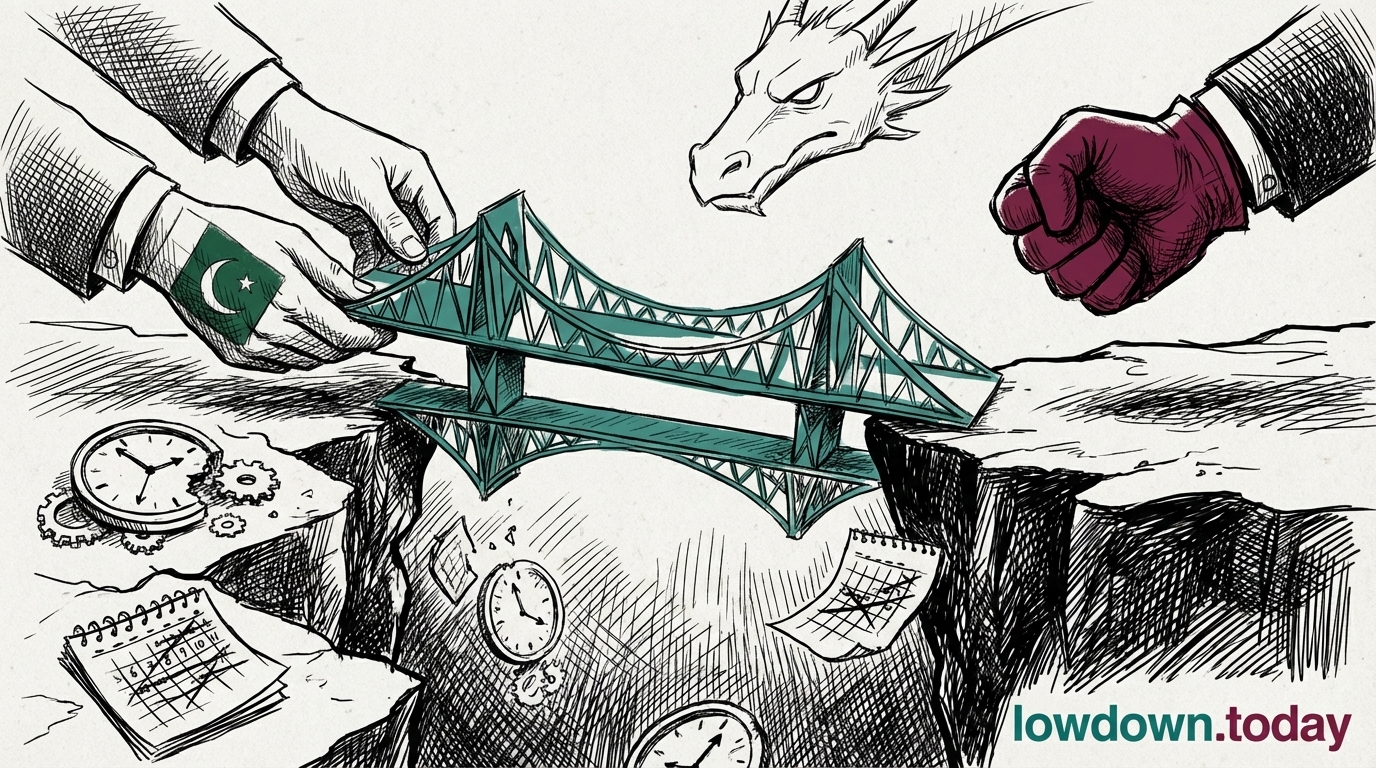
Interior minister Mohsin Naqvi carried dual civilian and military letters to Mojtaba Khamenei in Tehran on 6-7 June with no public response. The IRGC's Hormuz closure on 11 June shows the corps is acting independently of the channel Pakistan is using, making the mediation structurally unable to produce a binding commitment without direct IRGC access.
Russia and China
Russia and China
Russia and China voted against GOV/2026/40 at the IAEA Board, following through on the blocking position coordinated with Grossi in Geneva on 5 June; both states continue to oppose Western institutional pressure on Iran at every multilateral venue.
E3 and IAEA (UK, France, Germany)
The E3 co-sponsored IAEA resolution GOV/2026/40, adopted 21-3-10 on 10 June, demanding Iran disclose 440.9 kg of unaccounted HEU and admit inspectors to four denied facilities. The 10 abstentions and Russia-China noes leave any Security Council referral without a viable enforcement path.
IRGC / Iran military command
The corps declared Hormuz closed to all traffic on 11 June and claimed two vessels struck, overriding the MoU its own civilian negotiators were pursuing through Pakistan. The closure order used the Persian Gulf Strait Authority apparatus to convert a toll mechanism into a military prohibition.
Trump administration / CENTCOM
CENTCOM completed a second day of strikes on Tehran, Sirik and Minab, rejected the IRGC Hormuz closure as inconsistent with observed transit, and said strikes were complete. Hegseth framed the bombing explicitly as the negotiation: the method is coercive deal-making with no stated pause threshold.



