Skip to content
You can now search across every topic, entity and event.What's new
Iran Conflict 2026
6APR

Budapest blocks two of Ukraine's clusters

2 min read
09:43UTC

Hungary refused to back opening EU accession Clusters 2 and 3 for Ukraine at a Brussels working party on 17 July, offering to open Cluster 3 for Moldova alone.

ConflictDeveloping
Key takeaway

A working party that never votes in public can cost Kyiv a summer without anyone casting a veto.

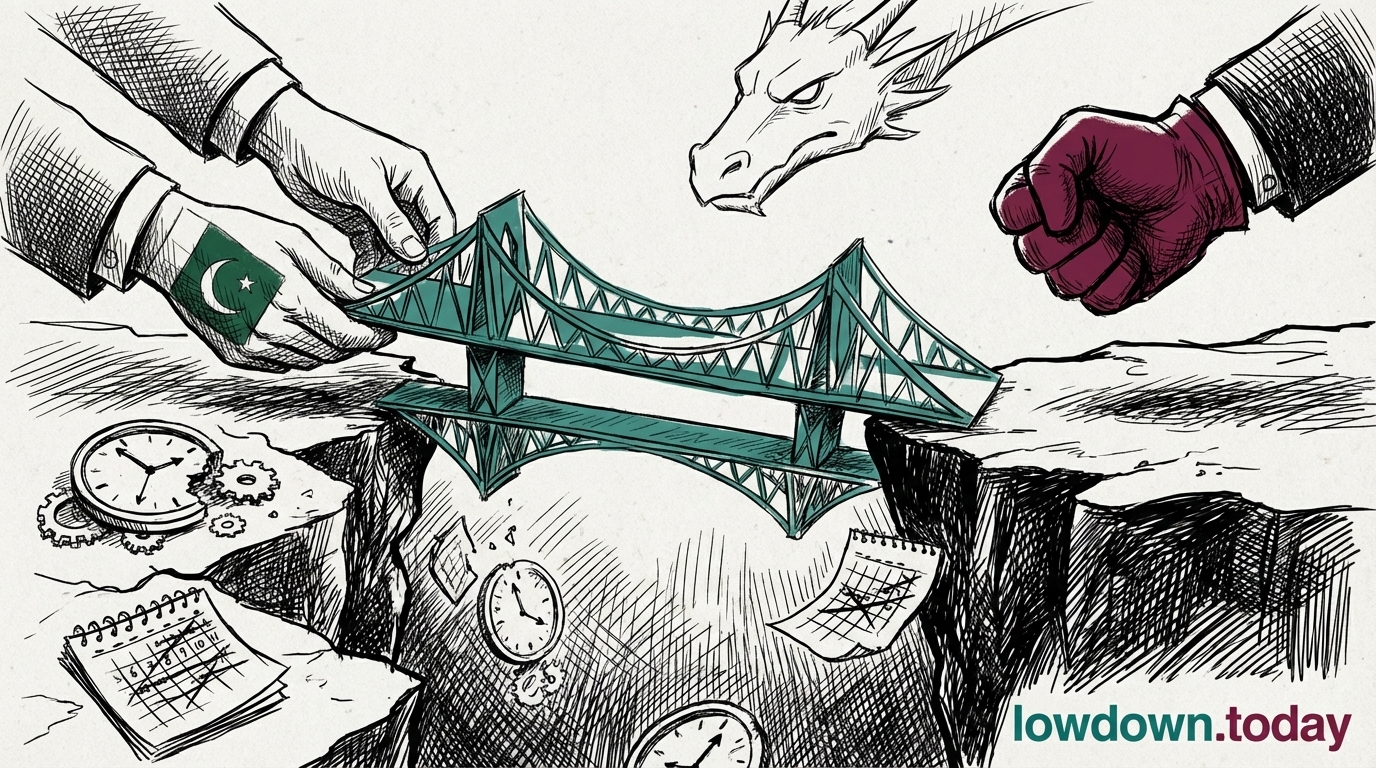
Hungary refused to back the opening of EU accession negotiating Clusters 2 and 3 for Ukraine at COELA, the Council's enlargement working party, on 17 July, offering instead to open Cluster 3 for Moldova on its own 1. Most member states rejected decoupling the two candidates, so nothing was decided. The question returns to COELA on Wednesday 22 July, the last meeting before the summer recess.

Péter Magyar's Tisza government came to power partly by ending Viktor Orbán's blanket veto on the EUR 90bn loan to Ukraine, and Kyiv's accession conference opened in June on that basis . Budapest has released the money and kept the procedure, which is a narrower obstruction than Orbán's but sits at a more awkward point. Clusters 2 and 3 carry the rule-of-law and territorial chapters, and an EU-friendly Hungarian government's enthusiasm for Ukrainian accession runs into its own electorate precisely there.

Accession clusters open by unanimity in a working party most voters have never heard of, which is what makes the block durable. No summit vote is needed, no veto has to be announced, and a single delegation withholding agreement in a room in Brussels is enough to stop a candidate's file moving. Miss 22 July and nothing reconvenes until September, so a procedural hesitation lasting an afternoon costs Ukraine roughly two months.


Deep Analysis

In plain English

The European Union is negotiating Ukraine's membership in stages, called "clusters", each covering a group of policy areas Ukraine has to align with EU rules on before moving forward. Hungary refused to back opening two of these clusters, covering rule of law and territorial issues, for Ukraine at a meeting in Brussels on 17 July. It offered instead to open one of the two clusters for Moldova alone, but most other EU countries rejected splitting the two candidate countries apart. The issue will come back for another vote on 22 July, the last EU meeting before the summer break. This matters because Hungary's government changed earlier this year, and its new leader had promised to stop blocking Ukraine, which makes this block notable even though it is procedural rather than a return to Hungary's old blanket veto.

Deep Analysis
Root Causes

Clusters 2 and 3 carry the rule-of-law and territorial chapters, precisely where a Hungarian government campaigning on EU-friendliness runs into its own electorate's sensitivities on those issues. The constraint here is domestic political cost, not alignment with Moscow as under Orbán, a structurally different source of friction from the loan veto it replaced.

Hungary's offer to open Cluster 3 for Moldova alone, while withholding it from Ukraine, is a split-track manoeuvre most member states have already rejected; pairing the two countries' accession tracks was itself a prior EU decision Budapest is now trying to unpick procedurally rather than reopen as a formal proposal.

First Reported In

Update #24 · Fedorov sacked as the front stands still

Ukrainska Pravda· 19 Jul 2026
Read original
Different Perspectives
Oil traders
Oil traders
Sent Brent down 2.29 per cent to $98.38 a barrel on reports that mediation was reviving, moving the price on CENTCOM's quiet night rather than on Trump's same-day promise of a bigger operation with no deadline attached.
Iran
Iran
An Iranian official called the same mediation account completely misleading, denying it received any US proposal via Baghdad on the same day Iraq denied delivering one, leaving neither denial able to settle what actually passed between the two capitals.
Iraq
Iraq
Called groundless the New York Times account that its prime minister carried a US ceasefire proposal to Tehran, a denial that also protects Baghdad's effort to avoid becoming a party to a war fought by aircraft it does not control.
OHCHR
OHCHR
Recorded 17 civilian seafarer deaths since the war began, a population neither the Pentagon nor Iran's Health Ministry counts in its own tally, and called for urgent action on 6,000 crew stranded across roughly 400 vessels in the Strait of Hormuz.
Houthis
Houthis
Enforced the blockade on Saudi-linked shipping it declared on 20 July by hitting the NCC Masa and then an Aramco facility at Jazan, moving from radio warnings to strikes on land after four days without a confirmed hit.
Saudi Arabia
Saudi Arabia
Struck Houthi military sites near Hodeidah the same day the NCC Masa was hit, while its coalition spokesman insisted Hodeidah, Ras Issa and Salif all remain open to navigation. The distinction protects the ports Yemen's population depends on for food and fuel even while punishing the group behind the tanker strike.



