Skip to content
You can now search across every topic, entity and event.What's new
Iran Conflict 2026
31JUL

Arrow-3 stocks hit 81 per cent drain

2 min read
09:24UTC

RUSI data shows the missile shield protecting Israel and the UAE will be materially degraded by mid-April. Rebuilding takes years.

ConflictDeveloping
Key takeaway

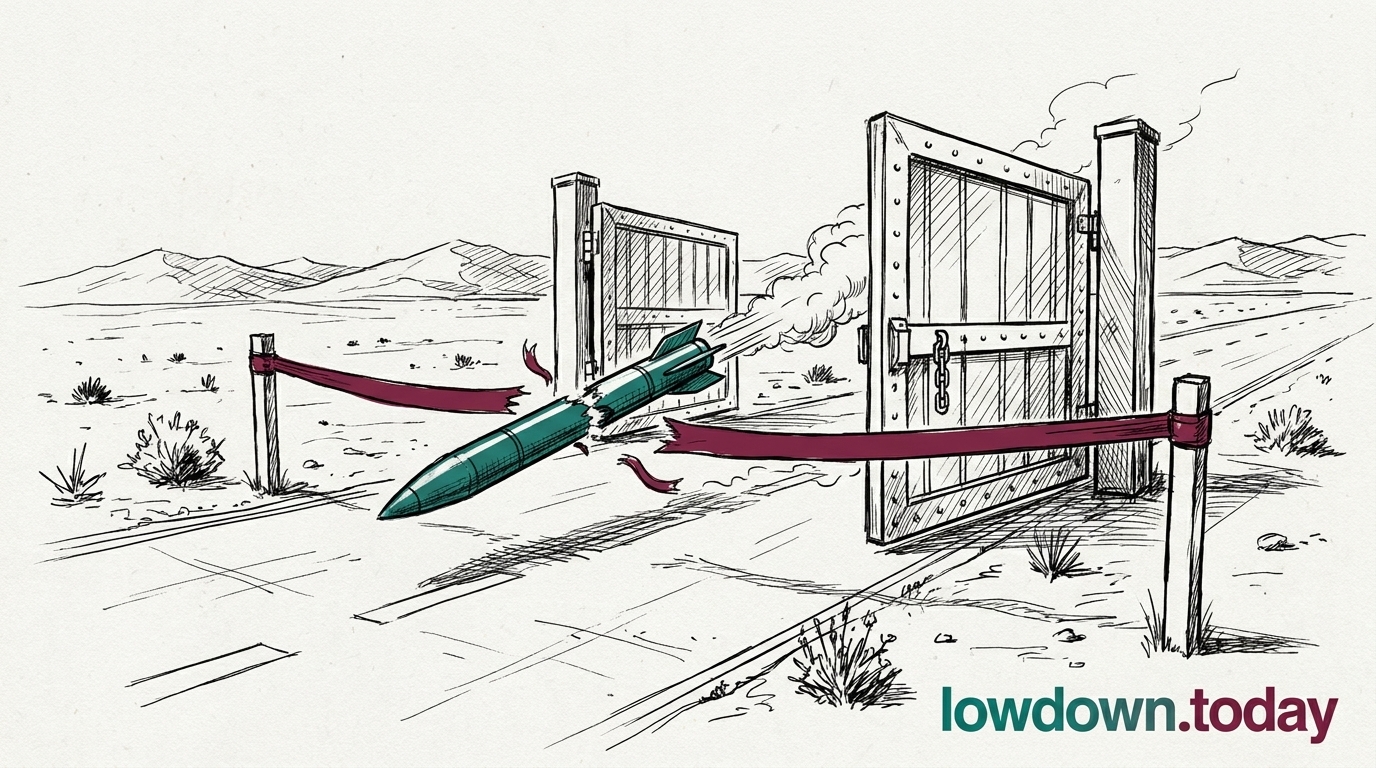
Iran does not need to win the air war; it needs to outlast the interceptors.

RUSI's "Command of the Reload" report documented 11,294 munitions expended in the campaign's first 16 days at an estimated cost of $26 billion. Arrow-3 interceptors are at 81% depletion by end of March. THAAD stocks are "approximately one month or less" from exhaustion at current expenditure rates . 1

Replenishment is not a logistics problem; it is an industrial one. A single Arrow-3 interceptor costs $2 to $3 million and takes months to produce. Full stock rebuild: two to three years. The missile defence architecture protecting Israel, the UAE, and US forces will be materially degraded by mid-to-late April.


Deep Analysis

In plain English

The US and Israel have been intercepting Iranian missiles and drones using expensive specialist rockets called interceptors. Each intercept uses one up. RUSI, a respected defence think tank, calculated that Israel's best interceptors are 81% exhausted. The US's top-tier system, THAAD, is roughly one month from running out. Each interceptor costs $2-3 million and takes months to produce. Rebuilding the full stock takes 2-3 years. Iran does not need to win the air war; it just needs to keep firing until the defensive rockets run out.

What could happen next?
  • Risk

    Arrow-3 exhaustion in mid-April degrades Israeli protection against Iran's long-range ballistic missiles at the moment THAAD is also near exhaustion.

  • Consequence

    Interceptor depletion creates a forcing function for all other deadlines: the 6 April grid deadline, the Kharg timeline, and the War Powers clock all operate inside a window shaped by shield degradation.

First Reported In

Update #58 · First US aircraft fall over Iran

Pentagon / The Intercept / Novara Media· 4 Apr 2026
Read original
Different Perspectives
United States
United States
OFAC gazetted two wind-down licences expiring four days apart and adopted a presumption of denial for new Iran sanctions requests, while the State Department separately sanctioned Kataib Hezbollah and Hezbollah financial networks. Washington is closing legal channels on a published calendar rather than all at once.
United Arab Emirates
Crown Prince Sheikh Khaled bin Mohamed bin Zayed Al Nahyan met Iran's president in New Delhi, the first known face-to-face since the war began, weeks after cutting all Emirati trade and financial dealings with Iran. Abu Dhabi is running economic pressure and diplomatic contact at the same time.
Houthis
Houthis
Houthi forces completed the capture of Yemen's Red Sea coast and Mayun island this week, an offensive a Houthi official confirmed alongside Yemeni government officers. The gain locks in the Bab al-Mandeb closure to Saudi crude declared as an embargo on 23 July.
Iran
Iran
Foreign Ministry spokesman Esmail Baghaei credited Iranian diplomacy backed by military strength for pushing neighbours to negotiate, citing the Oman safe-passage talks, while addressing none of the pipeline strike, the Iraqi dismissals or Saudi restraint directly.
Iraq
Iraq
Prime Minister Ali al-Zaidi sacked two Maysan officials, closed and reopened three Iran border crossings inside three days, and approved a joint inquiry with Tehran into the launch site on his own territory. He is managing a militia network he does not fully control rather than confronting it.
Saudi Arabia
Saudi Arabia
Riyadh's Foreign Ministry confirmed the Petroline strike, named no attacker, and said it would hold off retaliating at Iraq's request while reserving the right to act on its own sovereignty. It expects Baghdad's inquiry, not a Saudi strike, to be the next move.



