Skip to content
You can now search across every topic, entity and event.What's new
Iran Conflict 2026
28JUL

Capacity law faces 24 June hearing

4 min read
09:28UTC

Germany's StromVKG capacity-market law goes to a public expert hearing on 24 June, with a Greens motion and Federal Cartel Office concerns in play before the first 4.5 GW auction targeted for 1 September.

ConflictDeveloping
Key takeaway

The 24 June hearing decides whether the 1 September capacity auction date holds.

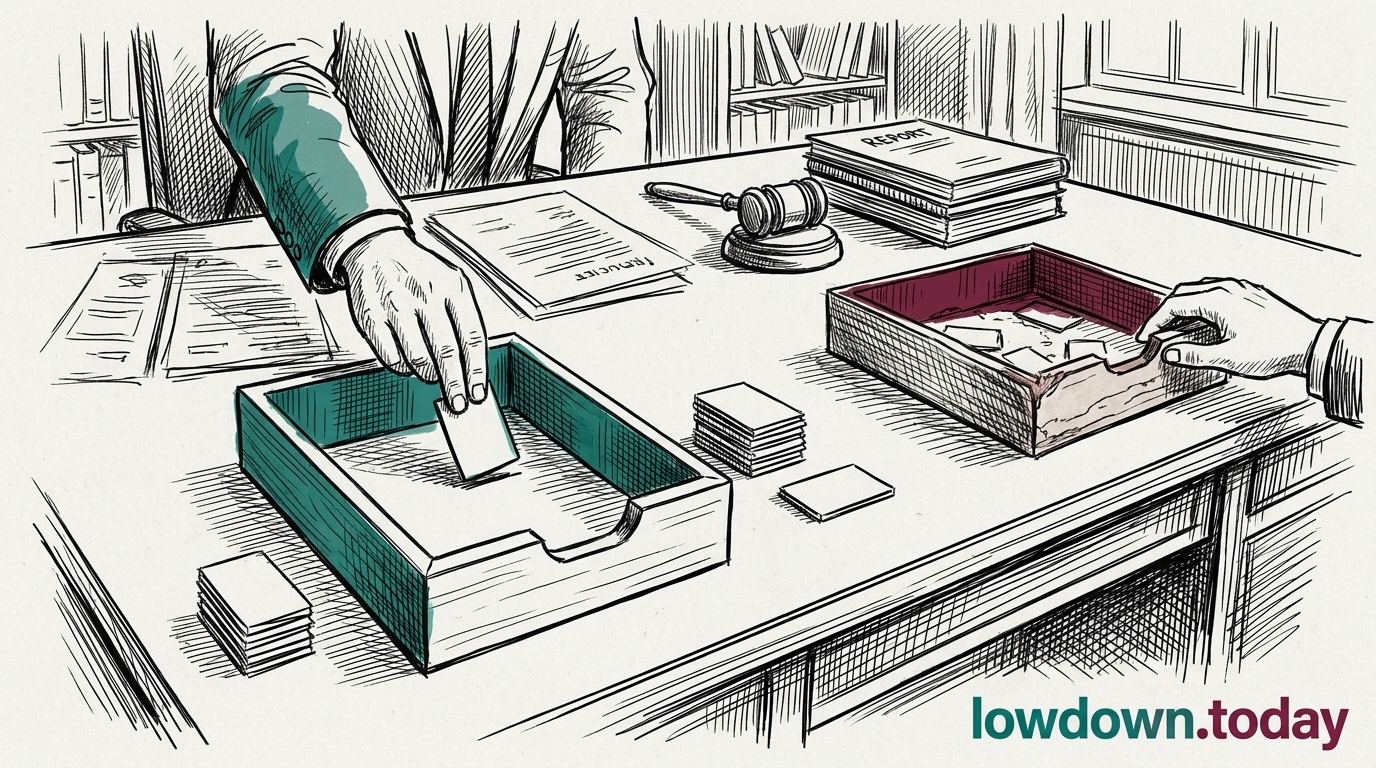
The StromVKG, Germany's electricity capacity-market law, goes to a public expert Anhoerung (hearing) at the Paul-Loebe-Haus on 24 June 1. A capacity market pays plants to be available rather than for the power they sell, the instrument Germany is using to keep dispatchable gas capacity on the system as renewables grow.

The Greens motion 21/6369 demands technology-neutral auction criteria and clarity on how the levy is financed , carrying forward the hydrogen-conversion push the group raised in committee on 17 June. The Federal Cartel Office, Germany's competition authority, has flagged market-concentration concerns in the design. The bill reached this stage after the Bundestag's first reading and committee referral advanced it under accelerated procedure .

The first 4.5 GW long-duration auction is targeted for 1 September, a second 4.5 GW for 8 December, with a ten-hour continuous-output rule that excludes batteries from the opening tranche. That rule is the design choice with the sharpest market consequence: it hands the first auctions to long-duration thermal plant and shuts storage out of the initial capacity payments.

The hearing is where the 1 September date either holds or slips. The timing connects directly to the spark: CCGTs that have just turned profitable to run are the same plants the capacity auctions are meant to underwrite, so any delay leaves their forward economics resting on the spread alone.


Deep Analysis

In plain English

Germany is creating a capacity market: a system to pay gas power stations to stay available as a backup for when wind and solar are not generating enough electricity. The law establishing it, the StromVKG, passed its first parliamentary reading in June 2026. On 24 June, the German parliament held a public hearing on the StromVKG design. The Greens party wants the rules to be technology-neutral, asking that batteries and other clean technologies also be eligible for capacity payments, rather than gas stations alone. Second, Germany's competition watchdog, the Federal Cartel Office, is worried that the programme would mostly pay money to a small number of big energy companies that already own most of the gas power stations. The first auction is planned for 1 September 2026, with a second in December. Whether those dates hold depends on what comes out of the hearing on 24 June.

What could happen next?
  • Risk

    A successful legal challenge to the ten-hour battery exclusion rule, via either a Cartel Office formal proceeding or an EU Commission state-aid opening, would delay the September auction and leave Germany without the capacity mechanism framework through the current heating season.

    Short term · Suggested
  • Consequence

    If the September auction proceeds on schedule and awards contracts to existing CCGT plant, the gas power stations currently generating at +EUR 30 spark spread receive both a market margin and a capacity payment; double compensation that the Cartel Office's concentration concern addresses.

    Medium term · Assessed
  • Precedent

    Germany's battery exclusion replicates the UK T-4 2014 design error; the EU Commission is likely to require technology-neutral admission within two to three years as occurred in the UK.

    Long term · Assessed
First Reported In

Update #20 · Spark spread now feeds the winter deficit

Deutscher Bundestag· 22 Jun 2026
Read original
Different Perspectives
Iran's Supreme Leader's office and Iranian households
A letter published through state media named Lebanon's territorial integrity and an end to Israeli operations there as the war's ending condition; the same week, spokesperson Mohajerani cut the subsidised petrol ration from 70 to 50 litres a month. Iranian agencies still disagree on who inside the office signed the letter.
Oman
Oman
Muscat proposed a voluntary-funded coalition to police Hormuz, the corridor its own coastline gives it standing to manage, while Iran wants control and toll rights over shipping and Washington insists on free navigation. Oman's remit stops at the strait; it has no comparable claim over Iraq, the Caspian, or Lebanon.
Kyiv
Kyiv
President Volodymyr Zelenskyy confirmed the Caspian strike on an Iranian vessel carrying military cargo from Russia's Astrakhan region, opening a front that ties Iran's war to its supply relationship with Moscow rather than to anything the Gulf mediators are discussing.
Riyadh
Riyadh
Maj Gen Turki Al Malki named Iraq as the launch point for drones intercepted over the Eastern Province and Riyadh, the first time this war has reached Saudi Arabia from that direction rather than from Yemen. Nothing landed, but a second launch geography aimed at Saudi oil now exists alongside the Houthi front.
Baghdad
Baghdad
Iraq's Foreign Ministry summoned its own ambassador in Riyadh after Saudi Arabia's Defence Ministry said the drones came from Iraqi territory, while the same day drones struck Iranian-Kurdish opposition camps inside Iraq. Baghdad is disowning attacks it did not launch from territory it does not fully control.
The Pentagon and Congress
Acting press secretary Joel Valdez attributed the toll's reversal to site anomalies, the same explanation the department gave for the opposite cut on 24 July; Representative Thomas Massie called the category change an absurd ruse designed to reset the war's legal clock. Neither side agrees on which explanation, or which war, is real.



