Skip to content
Welcome, thoughtbot's Giant Robots listeners!Start here
Iran Conflict 2026
28JUL

Army awards Anduril $20 billion Lattice

2 min read
09:28UTC

A single enterprise contract consolidates 120 separate procurement actions into one ordering mechanism. Every future Pentagon counter-drone buy can now bypass competitive tendering.

ConflictDeveloping
Key takeaway

Anduril now holds the default procurement position for all US counter-drone purchases.

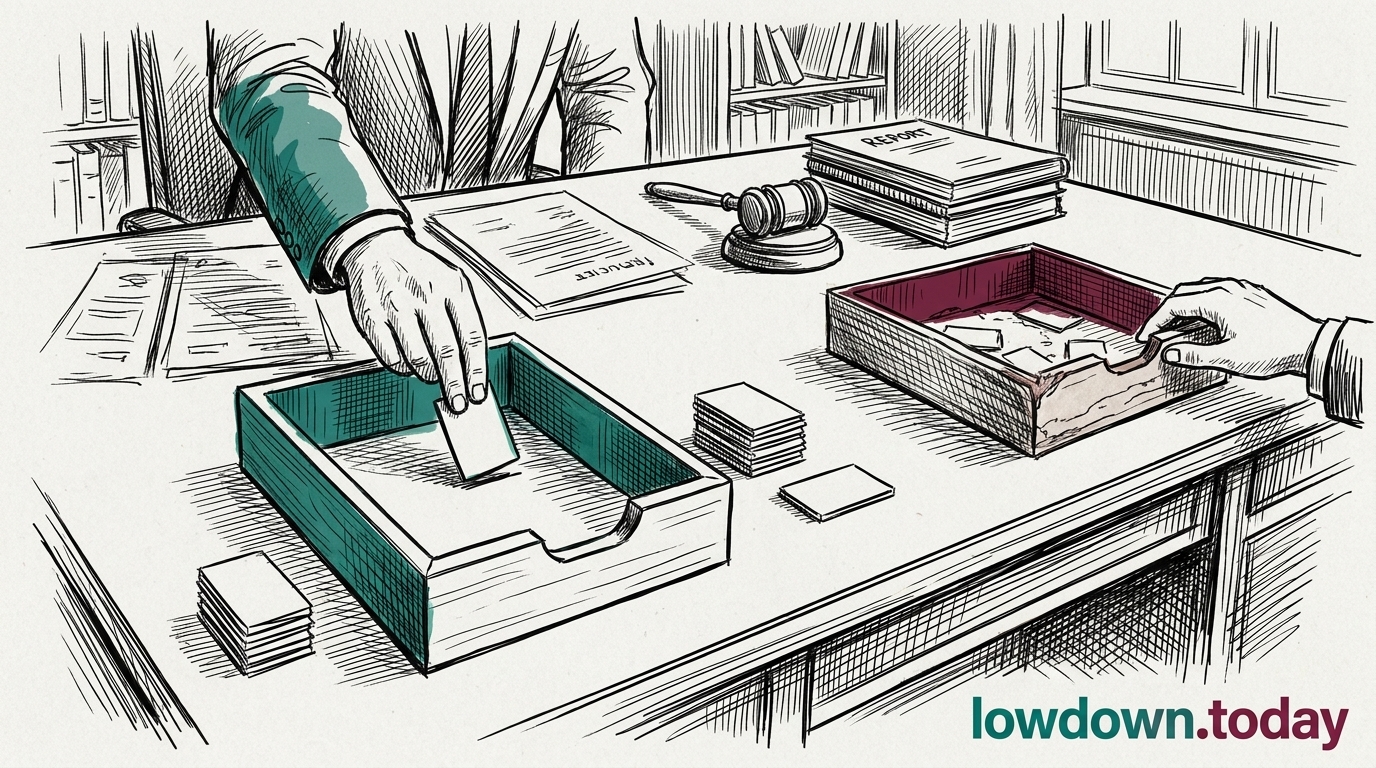
Army Contracting Command at Aberdeen Proving Ground awarded Anduril Industries a 10-year, $20 billion enterprise contract vehicle on 14 March, with an optional five-year extension to 2036.⁠1 The vehicle consolidates more than 120 separate procurement actions into a single mechanism. Any federal buyer can now order the Lattice counter-drone platform without a fresh competition.

The $87 million task order for JIATF-401 that surfaced two weeks earlier was not a standalone award. It was the first purchase against this master agreement. Brian Schimpf, Anduril's president, called the arrangement "an ordering guide," a description that frames Lattice less as a product to be evaluated and more as a catalogue to be browsed.

Enterprise vehicles of this scale are common in Pentagon procurement, and ceilings are rarely reached. But the structural effect matters more than the headline figure. Every future Department of Defense Counter-UAS requirement can be routed through Anduril without competitive tendering. For rivals, the barrier to displacement has risen by an order of magnitude. The closest analogy is the JEDI cloud contract, where platform selection proved more consequential than any individual task order.


Deep Analysis

In plain English

Imagine the US Army previously had to run a separate tender every time it wanted to buy counter-drone equipment. Each one took 18 months and generated a stack of paperwork. This contract collapses all of that into a single agreement. Now any part of the US military that needs counter-drone equipment can simply place an order with Anduril, much like a corporate purchasing department ordering from a pre-approved supplier catalogue. The upside is speed. The downside is that Anduril now effectively has a monopoly on US military counter-drone procurement for the next decade, which removes the competitive pressure that typically keeps costs in check.

Deep Analysis
Root Causes

The consolidation reflects Pentagon frustration with the acquisition cycle. Counter-UAS threats evolved faster than the 18–24 month procurement timelines that govern competitive re-tendering under standard FAR rules.

Anduril's position was further entrenched by Lattice's dual role: it is simultaneously a command-and-control platform and an interface layer that creates switching costs analogous to enterprise software lock-in. Once a command architecture integrates Lattice, replacing it requires replacing the software stack that manages all connected systems.

What could happen next?
  • Consequence

    Anduril becomes the de facto monopoly provider for US counter-drone procurement for up to 15 years, dramatically raising the barrier for rivals.

    Immediate · High
  • Risk

    Enterprise vehicle concentration creates a single point of failure in US counter-drone capability if Anduril underperforms or faces legal challenges.

    Medium term · Medium
  • Opportunity

    Other US defence firms can position complementary capabilities — sensors, munitions, training — as add-ons within the Lattice ecosystem rather than competing for the platform itself.

    Short term · Medium
  • Precedent

    If the vehicle model succeeds, it will become the template for all major US drone and autonomy procurement, fundamentally reshaping how the Pentagon buys military technology.

    Long term · Medium
First Reported In

Update #3 · Anduril wins $20 billion counter-drone deal

DefenseScoop· 30 Mar 2026
Read original →
Different Perspectives
United States (Joint Maritime Information Center)
The JMIC, the US-led naval reporting cell, rated the Hormuz threat "severe" in its 25 October advisory, as reported by gCaptain, and warned of possible renewed mining. Eight days earlier it found no substantiation for the Guards' mine claims, while US-facilitated transits ran at about 34 a day.
United Kingdom (CPS and Counter Terrorism Policing)
The CPS charged two men under the National Security Act 2023 over the RAF Fairford incident, and Counter Terrorism Policing said it believes the foreign intelligence service involved is Iran's, LBC reported. The case now runs through the courts; both men are charged, not convicted.
Aden and Yemen's recognised government
The Houthis told people to leave Aden airport, in the government-held south, before a missile fell there on 28 October, AFP reported, and police reported a second attack that afternoon. The fight between Riyadh and the Houthis is landing on the south's main civilian airport.
Qatar (mediators)
Qatar (mediators)
Qatar-led mediators put new terms to Iran this week, which an Iranian official called "ideas, not a proposal". Riyadh framed the Tehran meeting as support for Qatari and Pakistani mediation, keeping Doha at the centre of the indirect channel.
Korea Shipowners' Association
The association said the ships Iran listed were sub-chartered to an overseas oil company, not owned by Sinokor, carried no South Korean crew, and that Sinokor was unaware of the warning. South Korea's shipowners are contesting whose vessels the notice covers before it takes effect.
Kuwait (foreign ministry)
Kuwait summoned Iran's ambassador, Mohammad Toutounji, and handed him a protest note over the embassy's denial that its citizen took part in the alleged plot against Interior Minister Fahad Al-Yousef. Kuwait is answering through its courts and a diplomatic protest, citing international law and the UN Charter.

Written with AI from Lowdown's published reporting. Not individually reviewed by an editor. Editorial standards.