Skip to content
You can now search across every topic, entity and event.What's new
Iran Conflict 2026
21JUL

Insurers hold the line on Hormuz risk

2 min read
10:16UTC

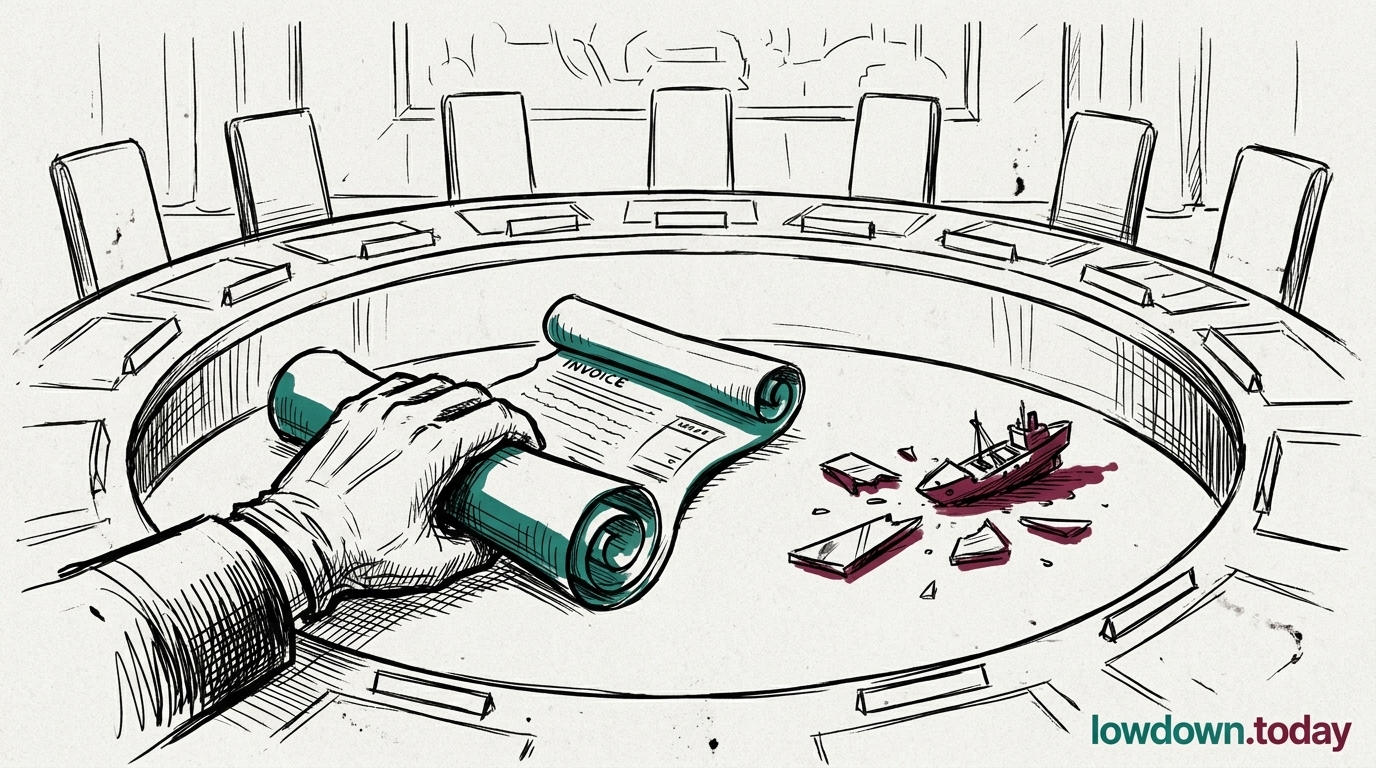
The International Group of P&I Clubs held its Hormuz war-risk exclusion in force through the entire shipping recovery, and now has a burning gas carrier off Limah to cite in keeping it.

ConflictAssessed
Key takeaway

One strike near Limah lets insurers keep the whole strait priced as a war zone.

The International Group of P&I (protection and indemnity) Clubs, a mutual association insuring roughly 90% of world merchant tonnage, kept its Hormuz war-risk exclusion in force through the whole recovery, even as London hull war-risk premiums fell to about 2% of a vessel's value 1. That figure is still around twenty times the pre-conflict baseline, so cover had cheapened without the strait ever being treated as safe.

Marine war cover in the Gulf runs through mutual pooling. The Group's clubs share losses above a retention, so no single club can quietly price one Gulf cargo back into Hormuz without the whole pool re-underwriting the strait. Owners had been carrying that risk themselves as traffic recovered ; now the clubs have a burning carrier off Limah to point to, and the decision to reopen or hold the exclusion falls on all of them at once rather than one underwriter at a time.

Deep Analysis

In plain English

Insurance companies that cover cargo ships, called P&I clubs, had kept a special exclusion in place for the Strait of Hormuz, meaning they would not pay out for war-related damage there even as day-to-day shipping picked up again. These insurers work together as a group and share big losses, so one company acting alone has no power to start covering the risky route again; they all have to agree. Now that a gas tanker has actually been hit, the case for keeping the exclusion in place got much easier for the whole group to make.

Deep Analysis
Root Causes

The International Group of P&I Clubs operates through mutual pooling: member clubs share catastrophic losses above a set retention, so any one club's decision to reopen Hormuz cover effectively commits the whole pool to shared exposure, which requires group-wide, not individual, agreement.

That structure means a single incident, like the Al Rekayyat fire, can reset the exclusion for every member simultaneously, even for clubs with no vessels anywhere near the strike, because the pooling mechanism does not distinguish between a club's own claims history and the group's collective risk.

What could happen next?
  • Consequence

    Continued exclusion keeps commercial insurance out of reach for most Hormuz transits, pushing owners toward self-insurance or state-backed guarantees like the underused US Development Finance Corporation facility.

First Reported In

Update #148 · Iran shoots the Hormuz route it rejected

The National· 7 Jul 2026
Read original
Causes and effects
This Event
Insurers hold the line on Hormuz risk
Mutual pooling means one hit reprices the strait for every owner, not just the cargo that was struck.
Different Perspectives
International Group of P&I Clubs
The Group has kept its Hormuz war-risk exclusion in force through the entire shipping recovery, even as London hull war-risk premiums fell to about 2% of vessel value. A burning LNG carrier off Limah is now the fresh case for holding that line, with mutual pooling meaning one hit reprices the strait for every owner at once.
Jordan
Jordan
Jordan's government said no threats existed at Aqaba hours before Iranian missiles landed there, and has not addressed the IRGC's claim that Jordanian civilians and soldiers supplied targeting intelligence for the strike. Amman hosts forces it does not command and is saying as little as it can.
United States (CENTCOM)
The Pentagon named two of the seventeen American dead, 1st Lieutenant Tyler Feehan and Private Isabella Gonzales, both killed at Jordan's Muwaffaq Salti Air Base, days after its Amman embassy had warned citizens away from Aqaba's airport and seaport. Washington is naming its own cost while flagging threats it declines to attribute publicly.
Iran
Iran
Iran said on Monday it disabled two oil tankers crossing the Strait of Hormuz without its permission, asserting a right to license passage through the strait it borders. Tehran named neither vessel, and CENTCOM had already denied a comparable Iranian claim on 18 July.
Qatar
Qatar
Qatar moved from summoning Iran's deputy ambassador on 8 July to a dated written claim at the UN Security Council thirteen days later, citing Resolution 2817 and reserving its Article 51 right of self-defence. Doha is building a permanent record while still hosting CENTCOM's forward headquarters and mediating with Tehran.
CENTCOM
CENTCOM
CENTCOM confirmed a third American service member died in northern Iraq on 19 July clearing unexploded ordnance from a downed Iranian drone, and recovered unidentified remains at Muwaffaq Salti Air Base in Jordan. The Pentagon has framed its Khuzestan strikes as degrading IRGC capacity, a rationale that stretches to explain a reactor foundation with no nuclear material in it.