Skip to content
You can now search across every topic, entity and event.What's new
Iran Conflict 2026
6JUL

Oil jumps as Hormuz calm breaks

2 min read
09:30UTC

Brent crude rose toward $73 and West Texas Intermediate above $69 within hours of the strike, erasing five sessions of calm in which tankers had cleared Hormuz at pre-war rates.

ConflictDeveloping
Key takeaway

Brent and WTI jumped within hours, unwinding a five-session calm over the Hormuz strait.

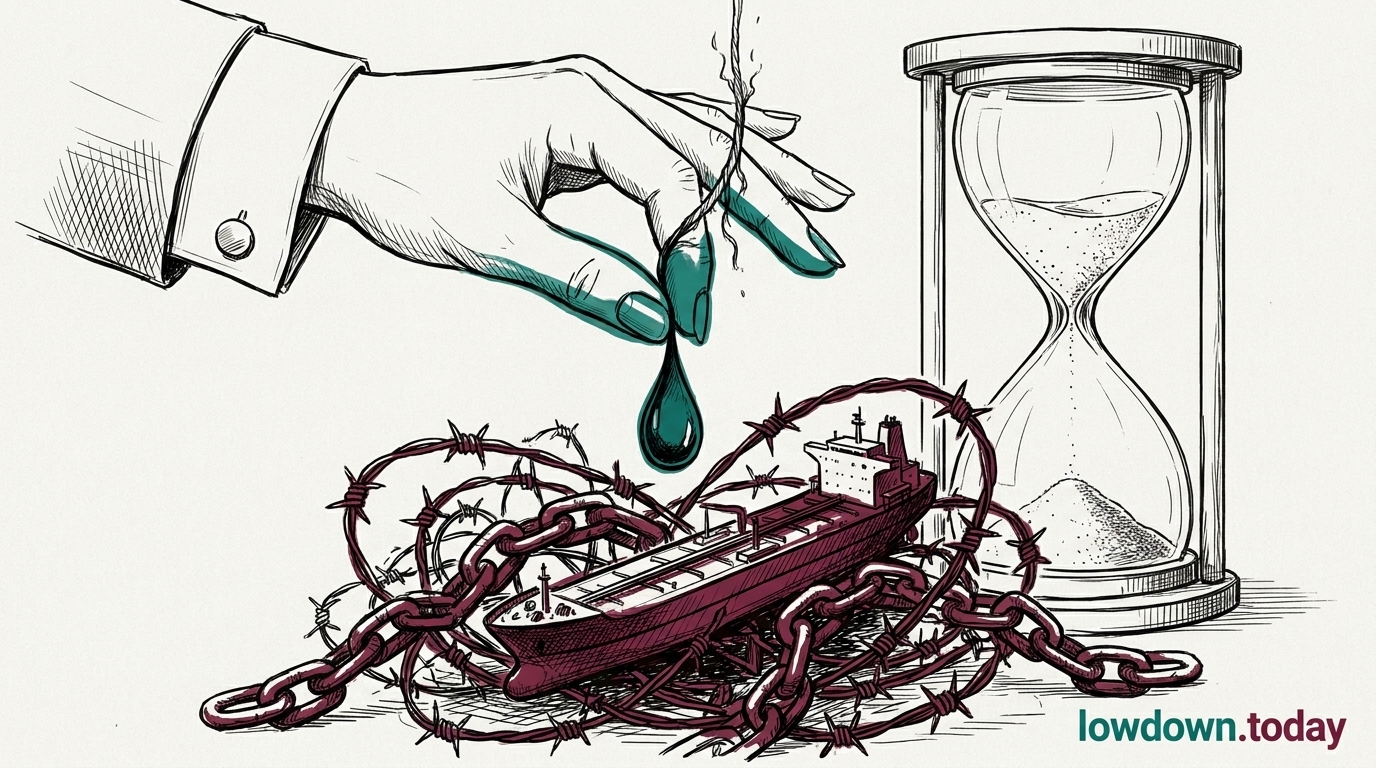
Brent Crude rose toward $73 a barrel and West Texas Intermediate above $69 within hours of the Hormuz strike 1, unwinding a calm that had settled over five trading sessions. Brent is the benchmark that prices roughly two-thirds of the world's traded crude; WTI is its US counterpart. Both had drifted lower as the corridor reopened and traders wrote down the war premium.

That calm had gone further than a lull. Thirty-five tankers cleared the strait at pre-war rates on 2 July, the first such count of the conflict , and Saudi Arabia had pushed 34 million barrels through Hormuz since the June truce 2. The recovery rested on shipowners absorbing risk their insurers still refused to price down, which is why a single hit could take it back in an afternoon.

The transmission runs straight to the pump. Al Rekayyat was carrying gas, not crude, so the strike put liquefied natural gas alongside oil in the price risk for the first time in the corridor dispute, and both feed household petrol and heating bills.

Deep Analysis

In plain English

Oil prices went up right after the missile strike on the tanker. Brent crude, the main global oil price benchmark, moved toward $73 a barrel, and the US benchmark, West Texas Intermediate, went above $69. Prices had been calm for almost a week because ships were moving through the strait again at close to normal rates. One attack was enough to undo that calm quickly, because oil traders had priced in safety that turned out not to be guaranteed.

Deep Analysis
Root Causes

Thin northern-hemisphere summer trading volume amplifies any single headline; a strike landing on a five-session calm moves price further than the same news would during a liquid winter session.

Options positioning built up during the calm, when traders had sold volatility on the assumption the truce would hold; the strike forced rapid buy-backs of that short-volatility exposure, adding a mechanical push on top of the news itself.

What could happen next?
  • Consequence

    A sustained price rise above $75 would test whether OPEC+ spare capacity, not just Gulf transit volume, becomes the market's next reference point.

First Reported In

Update #148 · Iran shoots the Hormuz route it rejected

The National· 7 Jul 2026
Read original
Different Perspectives
Oil market and P&I insurers
Brent cleared $87 intraday only once CENTCOM's blockade became physical rather than declared, even though P&I Clubs had already excluded Hormuz war risk a week earlier on 7 July: capital hedged ahead of enforcement, but prices moved only after it.
UAE reporting
UAE reporting
UAE reporting placed the Omani tanker deaths at one seafarer against the International Maritime Agency's count of two, the first time in this war that a Gulf state's casualty figures have diverged from an international monitor's.
Jordan
Jordan
Iranian strikes reached Jordan again on 14 July as part of the Gulf-wide retaliation for the Hormuz blockade, extending the conflict's geographic footprint to a state with no direct stake in the strait itself.
Bahrain
Bahrain
Bahrain sounded air-raid sirens on 14 July during Iran's Gulf-wide retaliation, the same day CENTCOM's blockade order and fourth night of strikes pushed the conflict's physical reach into the wider Gulf littoral.
Kuwait
Kuwait
Kuwait intercepted Iranian missiles and drones on 14 July as Tehran's blockade retaliation reached Gulf states beyond Iran's immediate shoreline, confirming Kuwaiti airspace now sits inside Iran's retaliatory envelope.
Oman
Oman
Oman absorbed the war's first tanker casualties in its own waters on 14 July, with two supertankers disabled and seafarers killed, putting the sultanate's shipping lanes directly in the path of the blockade fight for the first time.