Skip to content
You can now search across every topic, entity and event.What's new
European Oil Markets
15JUN

Global Energy Bodies Declare Historic Supply Shortage

3 min read
11:33UTC

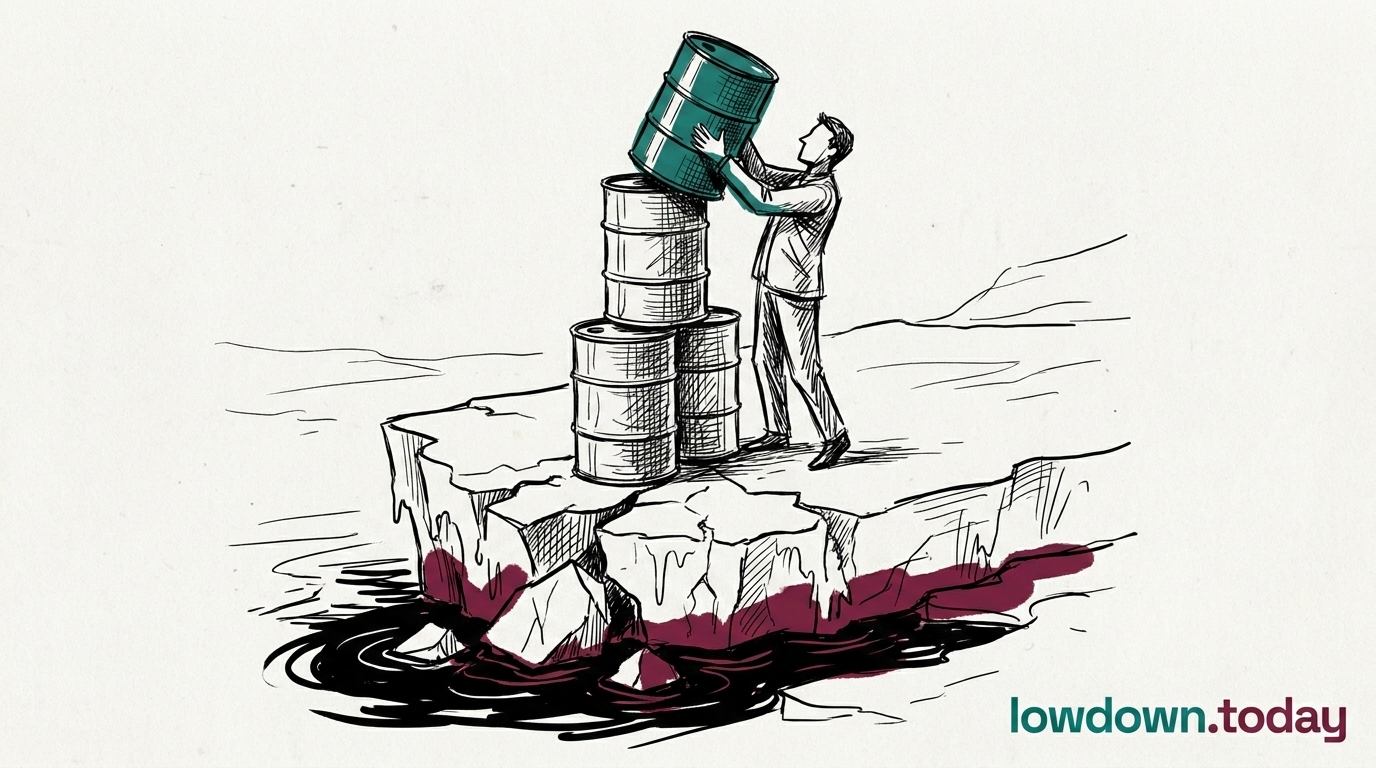
The IEA, IMF, and World Bank issued a rare joint statement. They announced three coordinated actions and zero specific commitments.

EconomicAssessed
Key takeaway

Three global institutions confirmed the energy crisis but committed nothing specific to fix it.

The IEA, IMF, and World Bank issued a joint statement on 4 April calling the conflict "one of the largest supply shortages in global energy market history," with impact described as substantial, global, and highly asymmetric. 1 Three coordinated actions were announced: data sharing, targeted policy advice with concessional financing, and stakeholder mobilisation. No specific numerical commitments were made.

Emily Holland at War on the Rocks calculated that American households face $857 more in petrol costs if the Hormuz disruption continues through April. 2 Analysts warned $150 per barrel is possible if the strait stays closed another month. Brent Crude had already risen to $109.24 after the 40-nation summit produced no steps . The joint statement puts institutional weight behind what oil markets have been pricing in for weeks, but it offers no mechanism to change the supply picture.


Deep Analysis

In plain English

Three of the most powerful economic organisations in the world, the International Energy Agency, the International Monetary Fund, and the World Bank, issued a joint statement calling this conflict the biggest disruption to energy supplies in the history of global markets. They announced they would share data, give advice, and bring people together to discuss the problem. They did not announce any specific action to fix it. One calculation estimates that American households will pay roughly $857 more for petrol if the shipping lane stays blocked through April. In the UK, fuel prices are already rising, with more to come if the lane does not reopen.

First Reported In

Update #59 · Day 37: A Ground War Inside Iran That Nobody Will Name

International Energy Agency· 5 Apr 2026
Read original
Different Perspectives
Sanctions compliance officer reviewing a Lukoil International GmbH bid
OFAC's amended FAQ 1224 gives a compliance desk its first published standard: full severance from Lukoil and a US-jurisdiction blocked account for sale proceeds. The conditions name neither ISAB nor Italy, so a Priolo Gargallo-linked bid answers a different question than a Neftochim Burgas or Petrotel Ploiesti one.
Managed-money funds on Brent Last Day
CFTC data for the week to 21 July showed managed money flipping 74,400 contracts to a net long of 15,665 against 1,410 short on the Brent Last Day contract, code 06765T. A fund that held that short through July has now covered it, and the spent short base raises the bar for the next leg higher.
Saudi crude exporters
Saudi-linked tanker transits through Bab el-Mandeb fell to about 7.5 a day after the 24 July underwriting withdrawal, pushing more barrels onto the longer route round the Cape or through the Yanbu terminal. Every diverted barrel ties up a ship for longer, and a fleet that turns slower charges more.
Tanker owners on the Bab el-Mandeb route
Lloyd's-market syndicates withdrew war-risk cover from Saudi-linked hulls on 24 July, leaving owners of that class of vessel to sail Bab el-Mandeb uninsured or not at all. Tanker transits on the route fell to roughly 7.5 a day, and cover, once withdrawn, does not return on a shipowner's timetable.
Eni
Eni
Eni's board approved second-quarter results on 29 July, swinging refining EBIT to a EUR0.08bn profit from a year-earlier loss even as group profit doubled, and named Red Sea freight cost as a cap on that improvement. A refiner absorbing higher shipping costs on Saudi-linked crude while its numbers improve treats the freight line as a drag, not a crisis.
Asian buyers (India, Japan, China, South Korea)
Asian refiners are absorbing 62% of Yanbu's 3.75m b/d flow, the bulk of Saudi Arabia's rerouted crude now clearing east rather than into the Atlantic basin. That destination split leaves Asian buyers more exposed to any single Yanbu-specific disruption than under the kingdom's normal multi-terminal export pattern.



