Skip to content
You can now search across every topic, entity and event.What's new
European Oil Markets
4JUN

CENTCOM intercept tally pauses at 33

2 min read
10:20UTC

CENTCOM's vessel-redirection count held at 33 for a second straight day on Saturday 25 April, the first such pause since the Hormuz blockade began.

EconomicDeveloping
Key takeaway

CENTCOM intercepts pause at 33 the day after the IRGC ends its self-restraint declaration.

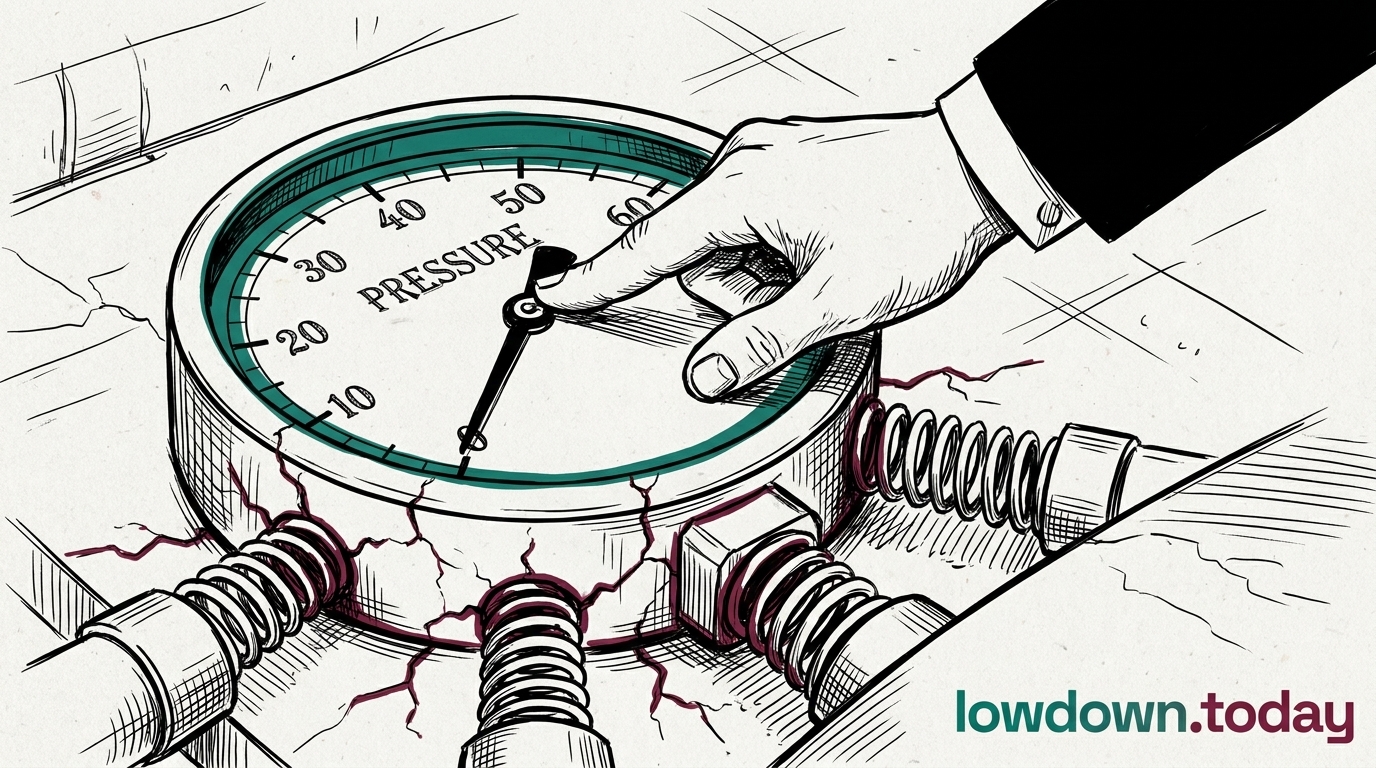
CENTCOM's cumulative count of vessels redirected under the Hormuz blockade held at 33 ships through Saturday 25 April, the first two-day pause since enforcement began . The pace had been climbing in step-twos and threes since early April; the flatline is the first quantitative signal that the intercept curve has either stopped finding fresh targets or that CENTCOM has tightened its definition of what counts. CENTCOM is the United States Central Command, the combatant command running the Hormuz enforcement.

The pause sits inside a verbal escalation on the Iranian side. The Islamic Revolutionary Guard Corps declaration on Friday 24 April that its "self-restraint is over" was a public lifting of the constraint that had governed IRGC small-craft behaviour through the indefinite ceasefire. Two trajectories now run alongside each other: an enforcement count that has stopped rising and a threat posture that has verbally escalated.

The likeliest mechanical explanation is that the population of ships approaching the strait under insured-tonnage rules has collapsed. The dark-fleet baseline means the only remaining Hormuz transits run without insurance and often without AIS, narrowing the candidate pool CENTCOM can credibly intercept. A static count against an invisible denominator does not measure deterrence; it measures the absence of legal traffic.


Deep Analysis

In plain English

Since the blockade started, the US military has been redirecting ships away from Iranian ports or seizing some outright. The count hit 33 on 25 April and then stopped rising for two days in a row, which is unusual. At the same time, Iran's Revolutionary Guard publicly announced it was no longer holding back from attacking US bases in countries that host American troops. These two things together suggest the enforcement operation is running low on ships to stop, partly because insured commercial shipping has already left the area, and partly because the only ships still using the strait are the unlicensed dark-fleet tankers that are harder to intercept under existing US rules.

What could happen next?
  • Meaning

    A static intercept count while IRGC declares end of self-restraint is the worst combination for insurance-market repricing: neither deterrence nor de-escalation has occurred, and P&I clubs have no signal to reinstate cover.

    Short term · Assessed
  • Meaning

    If CENTCOM's intercept count remains flat while IRGC fast-attack activity increases, the enforcement operation transitions from coercive to custodial, managing a closed strait rather than reopening it.

    Short term · Assessed
  • Meaning

    The plateau removes CENTCOM's ability to demonstrate forward progress to congressional critics asking whether the blockade is working.

    Short term · Assessed
First Reported In

Update #80 · Three carriers, zero instruments

Army Recognition / The War Zone· 26 Apr 2026
Read original
Different Perspectives
Kuwait
Kuwait
Kuwait absorbed the Iranian strike that knocked generating units offline at a combined power-and-desalination plant on 17 July, the event that finally moved freight and insurance in lockstep with Brent. The strike hit essential civilian infrastructure, not a trading desk's benchmark.
Asian buyers (Singapore)
Singapore's middle distillates rose 12% month-to-date to 8.91m barrels and fuel oil passed 19m barrels on a 105% net-import surge, buyers retaining barrels as the East-West arbitrage window narrows. Cargoes are being stockpiled ahead of further Hormuz-driven freight repricing rather than released west.
Austria (Coreper holdout)
Vienna is blocking the same package over roughly EUR 2bn of frozen Russian assets earmarked for Raiffeisen, a domestic banking dispute with no connection to the oil cap racing toward its 23 July expiry. The linkage forces the whole package to wait on a bilateral compensation fight.
Greece (Coreper holdout)
Athens is holding the 21st sanctions package at the 22 July Coreper vote over Russian LNG re-export rights, a condition unrelated to the oil price cap itself, leaving the $44.10 freeze one day from expiry without a deal. Greece's own tanker registry gives it a direct stake in how any shadow-fleet measures are drafted.
Marine underwriters (Gulf war-risk)
Hull war-risk cover for Hormuz transits widened to a 3-10% band on 17 July with 5% the emerging norm, up from a 3-4% baseline set in late June, the first repricing in six weeks to track a flat-price move rather than lag it. Cover resets on actuarial evidence of loss, not on diplomatic or price signals.
Money managers (CFTC-tracked)
The CFTC's week-to-14-July snapshot, released 17 July, showed WTI managed-money net long collapsing 69% to 19,783 contracts and a standalone 60,141-contract net short on Brent Last Day (NYMEX). Both readings predate the Kuwait strike and the 20 July escalation, so any covering since is not yet visible in public data.