Skip to content
You can now search across every topic, entity and event.What's new
European Oil Markets
16JUL

Insurers hold the line on Hormuz risk

2 min read
09:39UTC

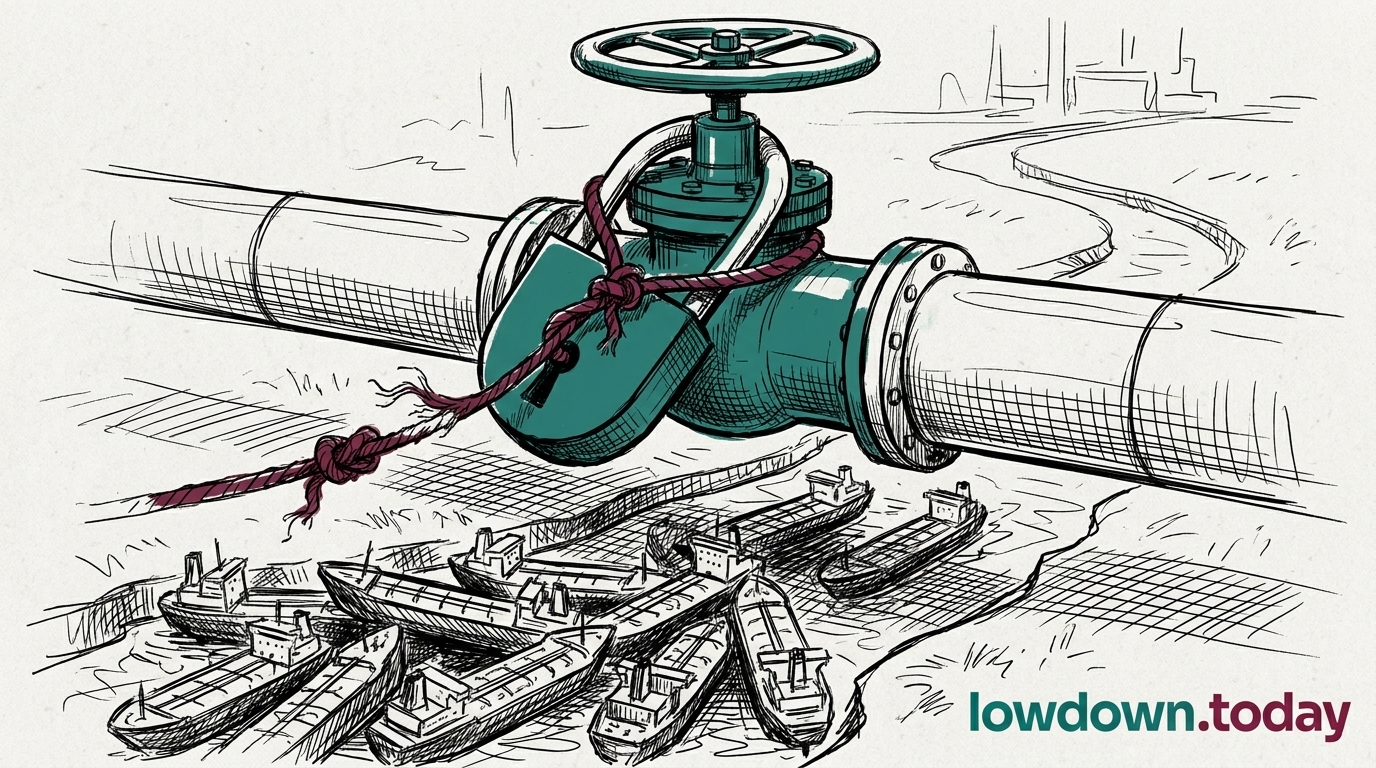
The International Group of P&I Clubs held its Hormuz war-risk exclusion in force through the entire shipping recovery, and now has a burning gas carrier off Limah to cite in keeping it.

EconomicAssessed
Key takeaway

One strike near Limah lets insurers keep the whole strait priced as a war zone.

The International Group of P&I (protection and indemnity) Clubs, a mutual association insuring roughly 90% of world merchant tonnage, kept its Hormuz war-risk exclusion in force through the whole recovery, even as London hull war-risk premiums fell to about 2% of a vessel's value 1. That figure is still around twenty times the pre-conflict baseline, so cover had cheapened without the strait ever being treated as safe.

Marine war cover in the Gulf runs through mutual pooling. The Group's clubs share losses above a retention, so no single club can quietly price one Gulf cargo back into Hormuz without the whole pool re-underwriting the strait. Owners had been carrying that risk themselves as traffic recovered ; now the clubs have a burning carrier off Limah to point to, and the decision to reopen or hold the exclusion falls on all of them at once rather than one underwriter at a time.


Deep Analysis

In plain English

Insurance companies that cover cargo ships, called P&I clubs, had kept a special exclusion in place for the Strait of Hormuz, meaning they would not pay out for war-related damage there even as day-to-day shipping picked up again. These insurers work together as a group and share big losses, so one company acting alone has no power to start covering the risky route again; they all have to agree. Now that a gas tanker has actually been hit, the case for keeping the exclusion in place got much easier for the whole group to make.

Deep Analysis
Root Causes

The International Group of P&I Clubs operates through mutual pooling: member clubs share catastrophic losses above a set retention, so any one club's decision to reopen Hormuz cover effectively commits the whole pool to shared exposure, which requires group-wide, not individual, agreement.

That structure means a single incident, like the Al Rekayyat fire, can reset the exclusion for every member simultaneously, even for clubs with no vessels anywhere near the strike, because the pooling mechanism does not distinguish between a club's own claims history and the group's collective risk.

What could happen next?
  • Consequence

    Continued exclusion keeps commercial insurance out of reach for most Hormuz transits, pushing owners toward self-insurance or state-backed guarantees like the underused US Development Finance Corporation facility.

First Reported In

Update #148 · Iran shoots the Hormuz route it rejected

The National· 7 Jul 2026
Read original
Causes and effects
This Event
Insurers hold the line on Hormuz risk
Mutual pooling means one hit reprices the strait for every owner, not just the cargo that was struck.
Different Perspectives
Indian refiners
Indian refiners
Indian refiners kept lifting discounted Urals as the India/Baltic price split widened past $9-10 a barrel, a gap that only grows as GL X1's Iranian wind-down cuts an alternative discounted grade off the market by 17 July. Cheaper Russian feedstock is being locked in while it lasts.
Chinese refiners
Chinese refiners
Chinese refiners gain leverage as the Urals-Brent discount widens, since Beijing's state buyers already source discounted Russian barrels near the fiscal floor unaffected by Western insurance costs. A wider discount, if it holds past 23 July, lets them lock in cheaper term contracts regardless of the cap's outcome.
US money managers (CFTC-tracked)
Managed money trimmed WTI net length into the rally, positioning that reflects doubt the Hormuz premium survives without freight or war-risk confirmation. The Brent-WTI spread widening almost entirely on the Brent leg supports that scepticism about a broad-based repricing.
OPEC+ (Saudi-led subgroup)
Saudi Arabia is defending market share through a fourth straight 188kbd August hike even as OPEC's own July MOMR cut 2026 demand growth for the fourth consecutive month. At a $108-111 fiscal breakeven, every added barrel costs Riyadh revenue it cannot recoup, so the hike reads as a positioning signal, not a demand bet.
Greek shipping registries
Greece, backed by Cyprus and Malta, is pushing a three-month cap-freeze compromise against the Commission's freeze to January 2027 ahead of the 23 July vote. Athens' and Valletta's combined tanker registrations mean a shorter review gives their insurers more frequent chances to reprice risk on Russian cargoes.
Russia (Deputy PM Alexander Novak)
Novak extended the diesel export restriction to producers on 8 July, the first producer-binding curb of the war, protecting the domestic pump price ahead of any refinery repair timeline. Urals still trades below Russia's $59 budget floor even as Brent gained, so the ban trades export revenue for fiscal stability at home.