Skip to content
You can now search across every topic, entity and event.What's new
European Energy Markets
31JUL

Mistral ships self-hosted OCR 4 to Europe

3 min read
09:44UTC

Mistral shipped OCR 4 on 23 June, a self-hosted document reader that keeps data on the customer's servers, aimed at EU public bodies barred by CADA from US clouds.

EconomicDeveloping
Key takeaway

Mistral OCR 4 runs self-hosted so CADA-bound public bodies can adopt AI without sending data to US clouds.

Mistral launched Mistral OCR 4 on 23 June, document-reading software that runs optical character recognition inside a single container on the customer's own servers, so the data never leaves the building. Optical character recognition (OCR) turns scanned documents into machine-readable text; running it self-hosted means no file is sent to an outside cloud.

The single-container design is built for the public bodies that the EU's new cloud-sovereignty law, the Cloud and AI Development Act (CADA), bars from sending sensitive records to American clouds . A US cloud running a US model structurally cannot offer software that never phones home, which turns a compliance mandate into a sales channel only a European vendor can fill. At $4 per thousand pages and 170 languages, OCR 4 tops the OlmOCRBench document benchmark at 85.2.

The launch underpins Mistral's revenue ambition: €1bn in 2026 against €200m in 2025, a fivefold rise built on industrial contracts and a fresh push into physics and industrial simulation. A €200m-to-€1bn climb in a single year reads like a US enterprise-software trajectory rather than a national-champion subsidy line, and self-hosting is the lever, because it sells the one thing CADA-bound buyers are legally required to choose.


Deep Analysis

In plain English

OCR stands for optical character recognition. It is the software that reads the text out of scanned documents, whether a PDF of an old contract or a photo of a handwritten form. Most businesses and governments use this kind of software constantly, but the big providers are American companies like Google and Microsoft. New EU rules (the Cloud and AI Development Act, or CADA) bar EU government agencies from sending certain types of sensitive documents to US cloud systems for processing. Mistral's answer is a product that runs the whole document-reading process on the agency's own computers, inside their own building. The data never leaves. On 23 June Mistral launched this product, called Mistral OCR 4, at a price of $4 per thousand pages. It topped the main industry benchmark that compares these products. For EU public bodies that previously had no compliant option, this is the first credible alternative.

What could happen next?
  • Opportunity

    CADA creates a captive EU public-sector market for CADA-compliant document AI that US providers structurally cannot serve; Mistral OCR 4 is the first benchmark-leading product in that space.

  • Consequence

    Mistral's €200m-to-€1bn revenue step requires CADA compliance mandates to hold through 2026 implementation; if CADA's public-sector scope narrows in trilogue, the addressable market contracts.

First Reported In

Update #10 · Digital euro to trilogue; Senate bars CBDC

Bloomberg· 30 Jun 2026
Read original
Causes and effects
This Event
Mistral ships self-hosted OCR 4 to Europe
Mistral OCR 4's self-hosted design answers CADA's bar on US clouds directly, turning an EU compliance mandate into a market only European vendors can serve.
Different Perspectives
Spain's LNG terminal operators
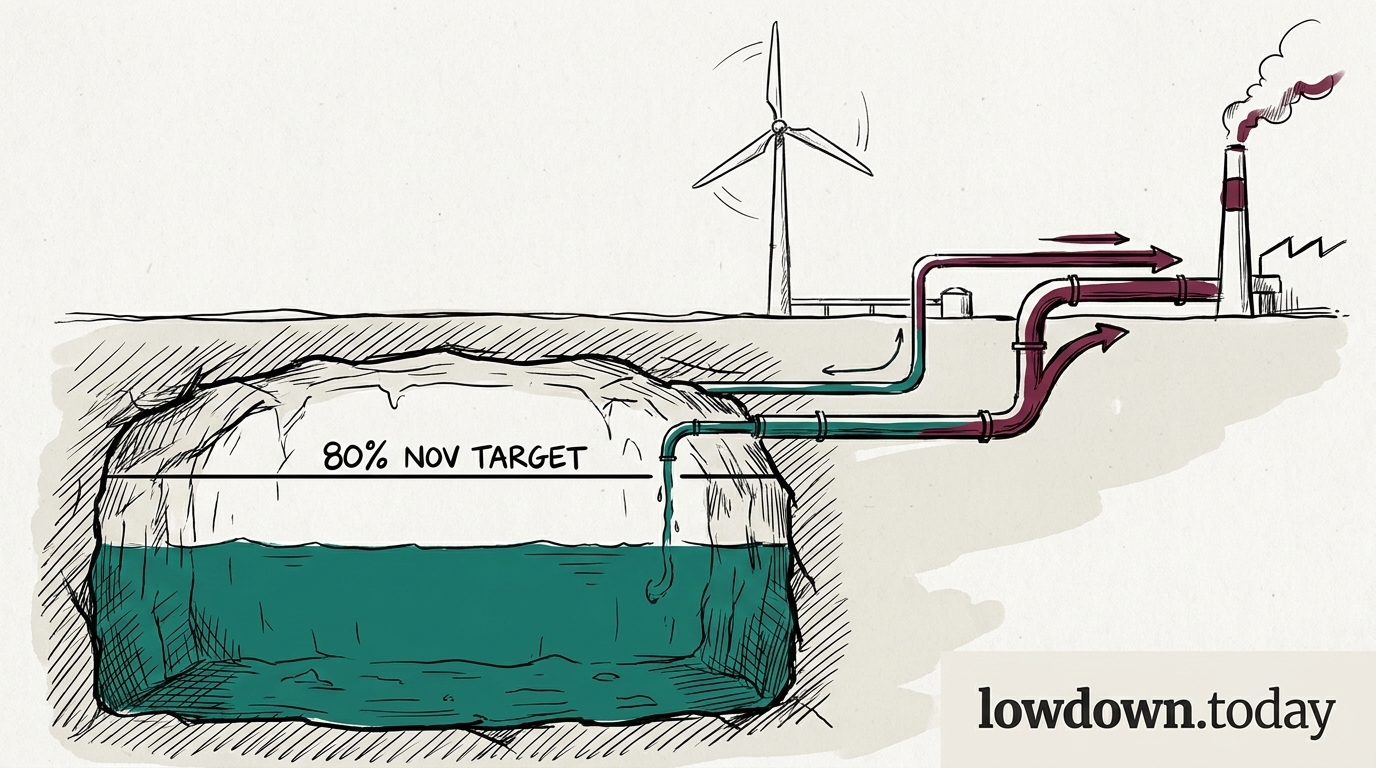
Spain's 9,145 GWh terminal inventory is the largest single stock in the EU LNG network, an option value that can reroute cargoes wherever the winter strip pays best rather than a cavern gas obligation tied to a fixed date. That flexibility matters more as Germany's cavern shortfall pushes more of the winter security question onto import infrastructure.
European Commission
European Commission
Brussels holds the bloc to 90% on a flexible window while Germany, holding roughly a quarter of EU storage capacity, tracks toward missing its own lower 80% figure by 21 points. A national shortfall this size in the anchor market matters more to bloc security than the flexible timetable alone can absorb.
French power exporters and CRE
French day-ahead rose in step with Germany but by less, reopening a EUR 7-17 premium that makes northward export flows commercially attractive again after the EUR 43.09 discount evaporated in days. CRE separately authorised RTE and Enedis to buy flexibility locally, betting the coming winter's binding constraint is grid congestion rather than a shortage of firm capacity.
TTF trading desk
TTF trading desk
A visible national shortfall like Germany's 21-point gap is a directional signal, not noise, for a desk holding the summer-winter spread. TTF's flat EUR 58-60 range through this week's German price swings says the market has not yet chosen to reprice refill risk into the front of the curve.
German cavern and CCGT operators
German caverns kept buying prompt gas at TTF near EUR 58-60 through the inversion; the wind collapse to 2.4 GW then flipped the spark spread to plus EUR 29 and put turbines back in the same queue. Every day turbines win that bid, injection at a third of the 877 GWh/day pace needed falls further behind.
Slovakia
Slovakia
Slovakia says it dropped its hold-out on the 21st sanctions package only after Ursula von der Leyen personally signed written gas-price and supply guarantees. The Council of the European Union's own 17,238-character release on the package names neither Slovakia nor any guarantee, leaving Bratislava's account unconfirmed by the institutional record.



