Skip to content
You can now search across every topic, entity and event.What's new
European Energy Markets
22JUN

Poland proposes model-weights test for state contracts

2 min read
13:56UTC

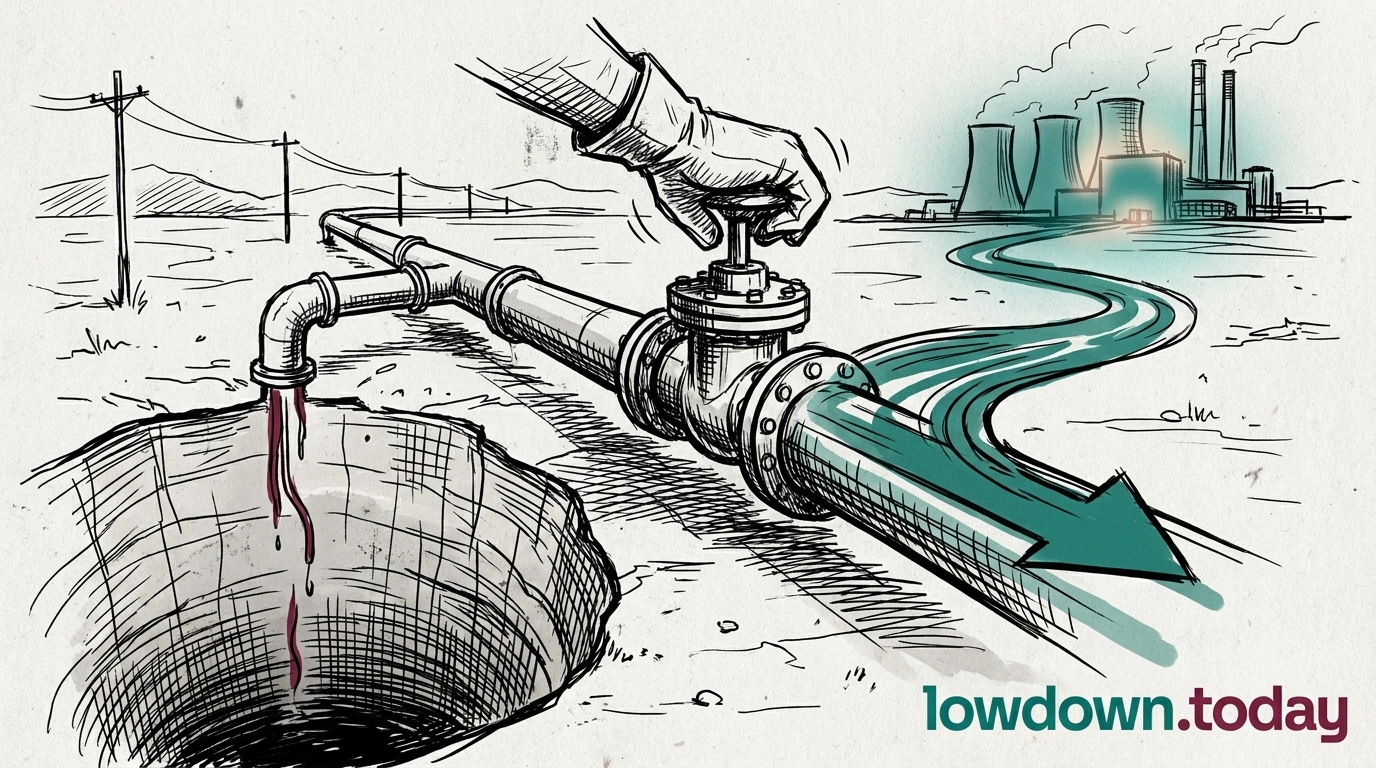
Warsaw would score public technology tenders on architecture control, rights over AI model weights and vendor lock-in. No EU instrument names model weights at all.

EconomicAssessed
Key takeaway

Warsaw would score bids on who owns the model weights, a question no EU law asks.

Donald Tusk's government proposed a mandatory technological sovereignty test on Tuesday 21 July for Polish public technology contracts above 5 million zloty, about $1.3m, and infrastructure projects above 15 million zloty.1 Poland's Ministry of Digital Affairs would score bids against three criteria: state control over system architecture, ownership or access rights to artificial intelligence (AI) model weights, and freedom from vendor lock-in. The stated aim is domestic alternatives taking 20 to 30 per cent of the market.

This is a proposal, not a statute. It has not passed the Sejm, no commencement date has been set, and the criteria could be softened or dropped before any tender is scored against them. Poland's suppliers, most of them American, have several months in which to lobby.

Poland's model-weights criterion has no equivalent in the Cloud and AI Development Act (CADA), the EU cloud law adopted by the College of Commissioners in June after three slipped dates . CADA grades a contract by how far the buyer depends on the operator running the cloud, and says nothing whatever about who owns the weights of the model running on top of it. Weights are the trained parameters of a model, the numbers that determine how it behaves, so whoever holds them decides whether the system can be run, audited or retrained without the vendor's permission.

At 5 million zloty, a sovereignty score attaches to routine ministry procurement rather than to flagship national systems alone, which means a mid-sized case-management contract in Warsaw would be assessed on model-weight rights while the identical contract in Brussels would not. Warsaw drafted that clause in a fortnight for its own tenders. Whether it survives contact with the legislative process, and whether other member states copy the wording, decides if it becomes a European standard by imitation rather than by directive.


Deep Analysis

In plain English

Poland's government wants public bodies, ministries, local authorities, state agencies, to score technology and infrastructure contracts on how much control Poland actually keeps: who owns the software's architecture, who controls the AI model's underlying "weights" (the trained parameters that make an AI system work), and how hard it would be to switch suppliers later. Contracts above roughly £1.3 million for technology, or £3.9 million for infrastructure, would need to pass this test. It's stricter than the EU's own cloud sovereignty law, which doesn't ask about AI model ownership at all.

Deep Analysis
Root Causes

The proposal fills a specific gap Poland has identified in CADA: the EU's own cloud-sovereignty law, adopted 3 June after three slipped dates, grades cloud contracts by operator dependency but has no provision naming AI model-weight rights, leaving public bodies free to procure AI systems whose underlying models are controlled entirely by a non-EU vendor even when the hosting infrastructure passes CADA's test.

Warsaw's domestic-alternative target of 20-30% reflects a deliberate ceiling rather than an aspiration to full sovereignty; setting the bar below majority share avoids excluding foreign vendors outright while still creating a scored incentive domestic suppliers can compete for.

What could happen next?
  • Precedent

    Poland's explicit inclusion of AI model-weight rights exceeds CADA's scope and could become a template other member states adopt to close the same gap.

  • Risk

    Non-EU AI and cloud vendors may need to offer model-weight transparency or licensing concessions to remain eligible for Polish public contracts above the stated thresholds.

First Reported In

Update #13 · The €890m fine that cost more than it collects

Forbes· 26 Jul 2026
Read original
Causes and effects
This Event
Poland proposes model-weights test for state contracts
A national procurement rule reaches a dependency that Europe's cloud legislation leaves untouched, at thresholds low enough to catch routine ministry purchases.
Different Perspectives
Cross-border power traders
The France-Germany day-ahead spread flipped from a EUR 17.20 German premium on 1 August to a EUR 4.15 French premium on 3 August, the same day French curtailment peaked. They cannot yet attribute the flip to curtailment alone, since a like-for-like overnight comparison shows French nuclear output rising while wind fell and demand returned on the weekday step.
EDF
EDF
River-cooling limits took 7.6 GW, 12 per cent of its fleet, offline on 3 August, the highest curtailment since the heatwave began, with an easing forecast to 4.3 GW on 4 August and 3 GW after. It manages the cut as a recurring seasonal constraint, expecting it to lift with river temperature, not repair.
Gasunie
Gasunie
TTF, the Dutch hub it operates, drifted to roughly EUR 55 to 58 per MWh across the window, staying inside its recent range through both the German spark reversal and the French curtailment. It reads a flat hub price as evidence that neither event this window carried enough weight to move the fuel leg on its own.
German gas-fired generators
Record German solar of 18,761 MW on 2 August pushed the clean spark spread to minus 18.48 EUR/MWh, a loss-making day, before it returned to plus 16.20 on 3 August. They now price dispatch against post-solar residual load rather than wind alone, since the sign flipped inside 48 hours on unchanged fuel and carbon costs.
European Commission (DG Energy)
Its implementing-measures register logged transposition notices from only Portugal and Slovakia against Wednesday's Article 94 deadline for Directive (EU) 2024/1788, with 25 states silent. It expects the register to fill only gradually, since filing routinely lags legislating and any infringement track against non-notifying states runs on a slower clock than the deadline itself.
Spain's LNG terminal operators
Spain's 9,145 GWh terminal inventory is the largest single stock in the EU LNG network, an option value that can reroute cargoes wherever the winter strip pays best rather than a cavern gas obligation tied to a fixed date. That flexibility matters more as Germany's cavern shortfall pushes more of the winter security question onto import infrastructure.



