Skip to content
You can now search across every topic, entity and event.What's new
European Energy Markets
15JUN

Rial hits new low on Day 100

2 min read
12:23UTC

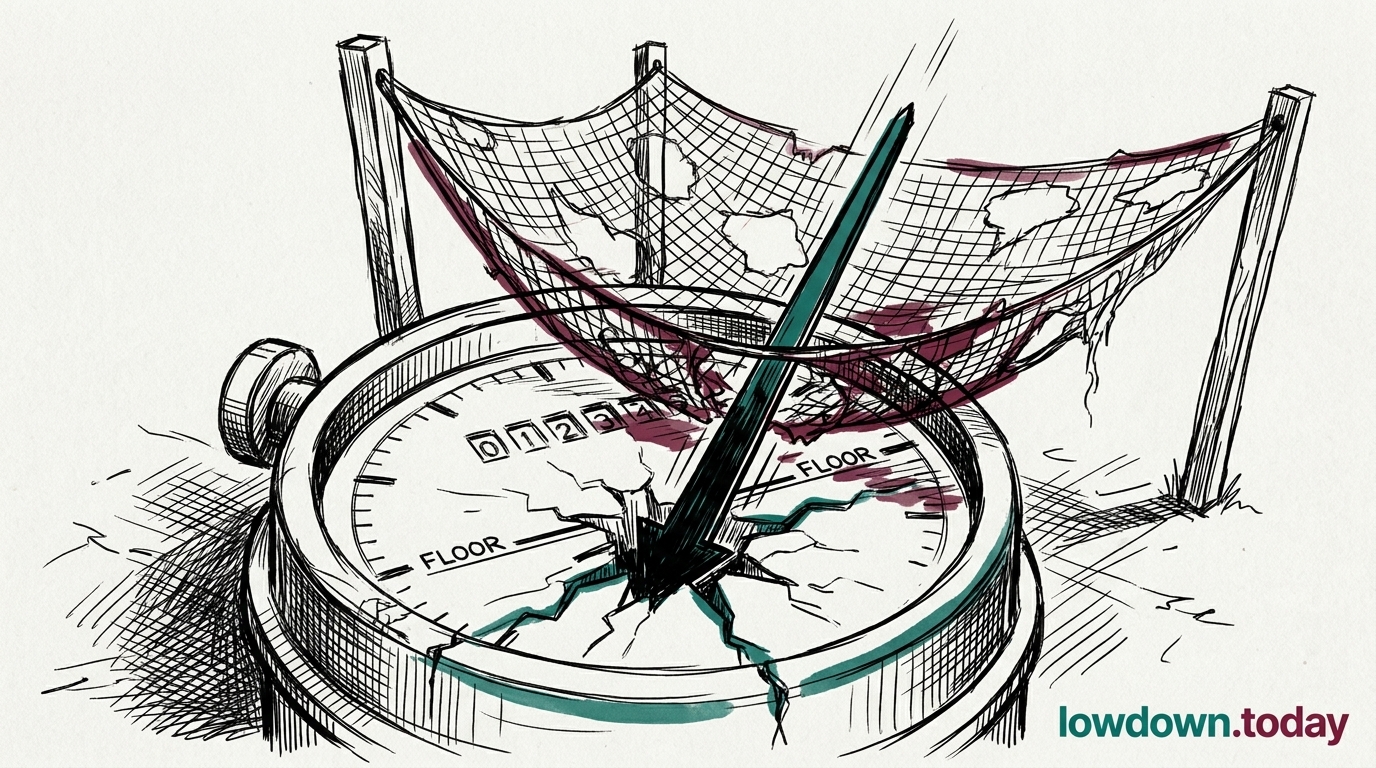
Iran's rial weakened to 1,762,000 per dollar on 7 June, down from 1,736,000 on 4 June, erasing every gain the market had priced in from deal optimism.

EconomicDeveloping
Key takeaway

Iran's rial hit 1,762,000 per dollar on Day 100, erasing the recovery deal optimism had bought.

Iran's rial hit 1,762,000 per dollar on Day 100, 7 June 2026, weakening from 1,736,000 on 4 June, according to the tracking service AlanChand 1. The rial is the free-market exchange rate ordinary Iranians use, and it is the cleanest daily read on how the country's own people price the war and the prospect of a deal. The latest fall extends the retreat documented on 4 June , when the currency reversed an earlier bounce tied to US testimony.

The slide erases the recovery that diplomatic optimism had bought over the prior fortnight. Each signal of a possible agreement had nudged the rate back; the Day 100 low unwinds all of it, leaving the currency near its record weak point after touching 1,746,000 on 1 June . The market is treating the talks as producing nothing tradeable, and the depreciation compounds the cost of imported food and fuel for households already squeezed by sanctions.


Deep Analysis

In plain English

Iran's currency, the rial, is the money ordinary Iranians use to buy food, medicine, and household goods. Many of those goods are imported, so when the rial weakens against the US dollar, everything bought from abroad costs more in rial terms. On Day 100 of the conflict, 7 June 2026, one US dollar costs 1,762,000 rials on the open market. Three days earlier it cost 1,736,000. Before the war began the rial was already under pressure, but the conflict and sanctions have accelerated the fall dramatically. Iran's own central bank reported inflation of 77.2% in the year to May 2026, the worst since the Second World War occupation of 1942, with daily-needs goods up 113% {{EVREF:/t/iran-conflict-2026/119/iran-inflation-at-worst-since-1942/}}. Currency traders use the rial as a real-time signal of how close a deal feels. When Rubio said the deal was '95% done' on 2 June, the rial briefly strengthened. By Day 100 that gain had completely reversed. The market's message is that signed paper has not arrived and may not arrive soon.

Deep Analysis
Root Causes

Iran's rial depreciation rests on a dollar-scarcity structural condition that predates the 2026 war. Under the maximum-pressure sanctions of 2018-2021 the rial fell from roughly 40,000 to the dollar to over 300,000; the conflict has accelerated the same dynamic by an order of magnitude.

The central mechanism is that Iran cannot freely sell oil for dollars, so it cannot maintain foreign-exchange reserves at the level needed to defend the currency. With reserves depleted and oil exports near zero, the open market rate reflects genuine scarcity rather than speculative attack.

First Reported In

Update #120 · The deal's last 5% is uranium nobody can find

GlobalSecurity· 7 Jun 2026
Read original
Causes and effects
This Event
Rial hits new low on Day 100
The currency has unwound a fortnight of diplomatic hope, pricing the deal talk as worthless.
Different Perspectives
Spain's LNG terminal operators
Spain's 9,145 GWh terminal inventory is the largest single stock in the EU LNG network, an option value that can reroute cargoes wherever the winter strip pays best rather than a cavern gas obligation tied to a fixed date. That flexibility matters more as Germany's cavern shortfall pushes more of the winter security question onto import infrastructure.
European Commission
European Commission
Brussels holds the bloc to 90% on a flexible window while Germany, holding roughly a quarter of EU storage capacity, tracks toward missing its own lower 80% figure by 21 points. A national shortfall this size in the anchor market matters more to bloc security than the flexible timetable alone can absorb.
French power exporters and CRE
French day-ahead rose in step with Germany but by less, reopening a EUR 7-17 premium that makes northward export flows commercially attractive again after the EUR 43.09 discount evaporated in days. CRE separately authorised RTE and Enedis to buy flexibility locally, betting the coming winter's binding constraint is grid congestion rather than a shortage of firm capacity.
TTF trading desk
TTF trading desk
A visible national shortfall like Germany's 21-point gap is a directional signal, not noise, for a desk holding the summer-winter spread. TTF's flat EUR 58-60 range through this week's German price swings says the market has not yet chosen to reprice refill risk into the front of the curve.
German cavern and CCGT operators
German caverns kept buying prompt gas at TTF near EUR 58-60 through the inversion; the wind collapse to 2.4 GW then flipped the spark spread to plus EUR 29 and put turbines back in the same queue. Every day turbines win that bid, injection at a third of the 877 GWh/day pace needed falls further behind.
Slovakia
Slovakia
Slovakia says it dropped its hold-out on the 21st sanctions package only after Ursula von der Leyen personally signed written gas-price and supply guarantees. The Council of the European Union's own 17,238-character release on the package names neither Slovakia nor any guarantee, leaving Bratislava's account unconfirmed by the institutional record.



