Skip to content
You can now search across every topic, entity and event.What's new
European Energy Markets
15JUN

German storage deficit deepest in EU

3 min read
12:23UTC

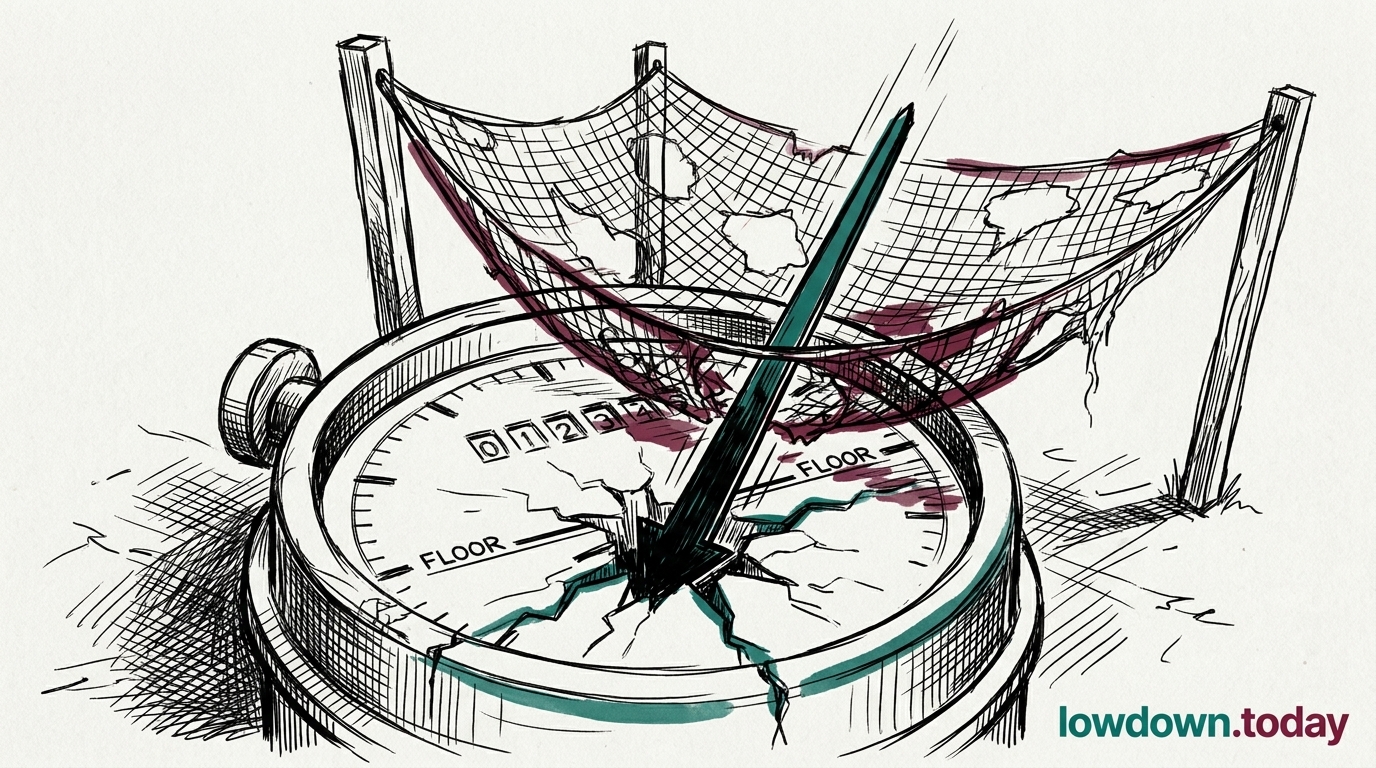
Bundesnetzagentur data reveals a structural asymmetry: Germany can draw gas twice as fast as it can inject it.

EconomicDeveloping
Key takeaway

Germany's injection ceiling of 4.3 TWh per day makes late starts to refilling irrecoverable.

Bundesnetzagentur data showed Germany's gas storage at 23.32% (57.6 TWh) on 12 April, the steepest national deficit in the EU. Daily injection capacity stands at only 4.3 TWh against 7.0 TWh withdrawal capacity, a structural asymmetry that limits how fast reserves can rebuild regardless of supply availability.

The Bundeswirtschaftsministerium (federal economics ministry) activated its early warning stage (Fruhwarnstufe) last summer and has not lifted it since. Germany's 247 TWh storage estate is the EU's largest, and at current fill levels the country holds roughly two months of average winter consumption. Reaching The Commission's revised target by November requires injecting approximately 140 TWh in seven months, an average daily rate of roughly 0.67 TWh; that is achievable within the 4.3 TWh ceiling, but leaves no margin for supply disruptions or late-season cold snaps.

The injection asymmetry is the structural constraint traders are watching. A late start to refilling, whether from continued high TTF prices discouraging early buying or from LNG supply tightness through May, cannot be recovered by faster injection later. The pipeline only flows so fast.


Deep Analysis

In plain English

Germany has more underground gas storage space than any other EU country. Think of it as the EU's biggest reserve tank. But right now that tank is only about a quarter full. The problem is the refill speed, which matters as much as the volume gap. Its pumping infrastructure can only push in 4.3 TWh of gas per day, while it can pull out 7.0 TWh per day in an emergency. This mismatch means filling up takes a long time, and there is not much room for anything to go wrong before the next winter.

Deep Analysis
Root Causes

Germany's below-average storage position reflects three compounding factors. The Uniper Rehden salt cavern complex, restructured following Uniper's 2022 nationalisation and subsequent sale, operated at reduced injection capacity in 2025 after post-nationalisation capex constraints delayed compressor upgrades.

Second, Germany ceased Russian pipeline gas imports in September 2022 but did not replace the equivalent flexible baseload with LNG regasification capacity until the FSRU fleet expansion of 2023-24. The resulting two-year gap in flexible supply left German operators more dependent on storage drawdown as a balancing tool.

Third, the Bundeswirtschaftsministerium's early warning stage, active since July 2025, imposes mandatory reporting but not mandatory injection targets, meaning commercially rational operators have had discretion to defer injections while spot prices remained above forward contract levels.

Escalation

The early warning stage (Fruhwarnstufe) is the lowest of Germany's three crisis levels. If storage falls below 25% during the injection season rather than rising, the Bundesnetzagentur has authority to escalate to the alert level (Alarmstufe), triggering compulsory injection obligations and demand-side reporting requirements for large users.

What could happen next?
  • Risk

    If German injection rates run below 3.5 TWh/day through May, the Bundesnetzagentur will need to issue a formal deficit trajectory warning under EU Gas Regulation 2017/1938.

  • Consequence

    German industrial gas consumers face mandatory reporting obligations under the active early warning stage, increasing administrative costs and creating competitive disadvantages versus non-EU producers.

First Reported In

Update #1 · Europe's thinnest gas cushion since 2018

Bundesnetzagentur / news.de· 13 Apr 2026
Read original
Different Perspectives
Equinor
Equinor
Equinor stacked a 13-16 June planned maintenance window on Hammerfest LNG directly atop the unresolved compressor fault running since 22 April, creating two simultaneous live stoppages at 4.3 mtpa capacity for the first time. The 10 July return target carries overrun risk: the same compressor class slipped 24 days in the 2025 maintenance cycle.
EDF and French nuclear-anchored power buyers
EDF's fleet repriced French July contracts roughly 10% in two days on cooling-water curtailment risk, flipping the FR-DE spread to France EUR 1.6 above Germany after a EUR 96.20 record in the other direction a week earlier. Industrial buyers long France against short Germany face EUR 97.7/MWh of spread swing in seven calendar days.
Hungary and Slovakia supply-security ministries
Hungary's Tisza government has reframed Russian gas dependency as a systemic risk, removing Budapest as a co-plaintiff in the CJEU challenge; MVM's 3.5 bcm long-term TurkStream contract remains exempt to September 2027, so Budapest's near-term supply is intact. Slovakia under Fico presses its QMV challenge alone and faces a 3-4 bcm/year short-term supply gap with no contracted LNG alternative.
LNG spot traders and cargo routers
At JKM-TTF of USD 5.26/MMBtu, every uncommitted Atlantic cargo loading in late June routes east; the arb sits roughly twice the OIES-assessed diversion threshold of USD 2.50-3.00/MMBtu after freight. European storage terminals are the losing bid in the cargo auction until TTF recovers or JKM eases.
European Commission / ACER
The Commission structured Regulation 2026/261 as a QMV trade measure to resist Article 194 unanimity challenges; the six-origin prior-authorisation waiver acknowledges that LNG capacity cannot substitute pipeline gas within the legislative window. ACER's cross-border enforcement powers activate in H2 2026, but jurisdiction over the Kipi entry point is legally contested.
German CCGT capacity planners
Capacity planners at Uniper and RWE face the StromVKG Wirtschaftsausschuss scrutiny as the decisive near-term fork: if the Greens' hydrogen-conversion amendment passes, the September 2026 auction becomes unbiddable on technology risk grounds and the capacity-payment fix delays into winter. Plants that have run at -EUR 44 spark spread for weeks cannot commercially sustain extended shut-in.



