Skip to content
You can now search across every topic, entity and event.What's new
European Energy Markets
15JUN

Brussels stays silent on 20% chip goal

3 min read
12:23UTC

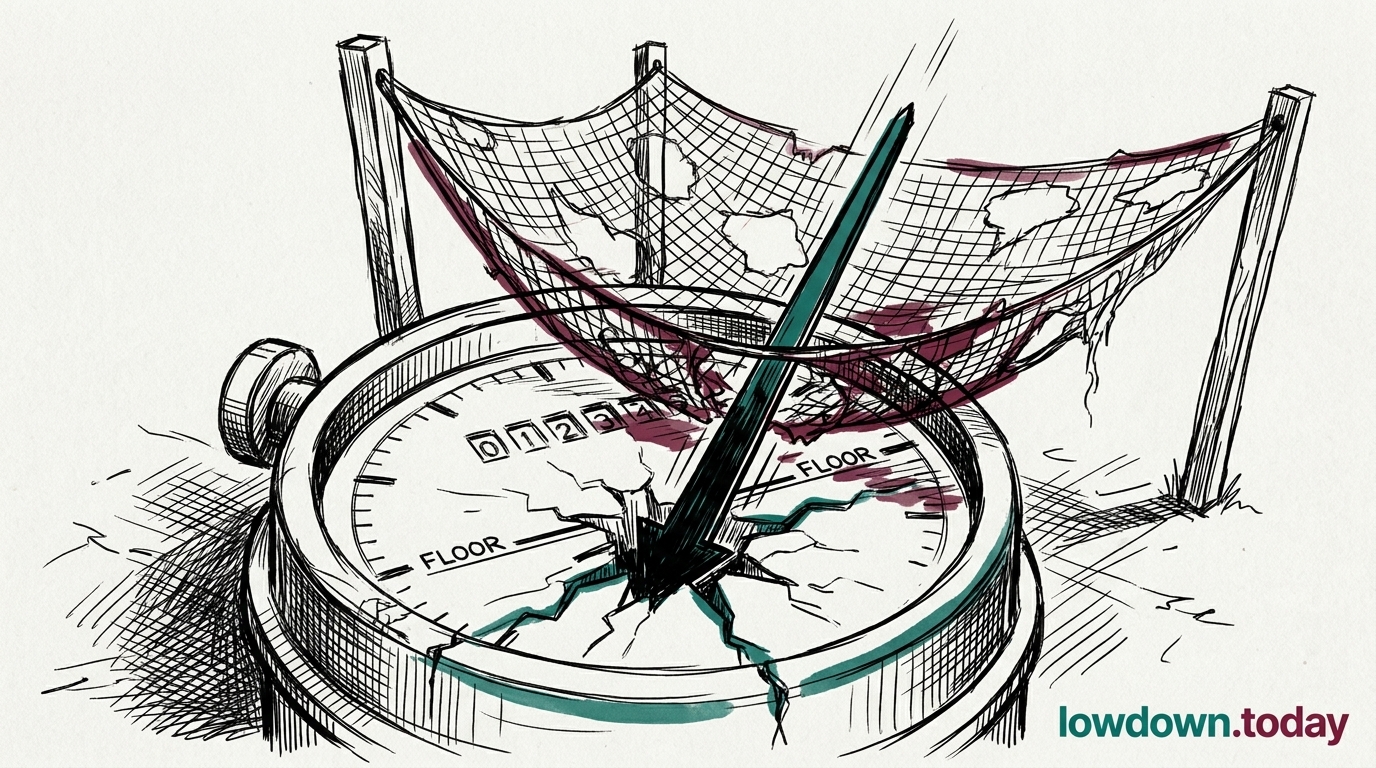
No DG CNECT or Commissioner Virkkunen communication since 13 April has restated the Chips Act's 20% global market share target by 2030. The figure is lapsing without a speech to retract it.

EconomicAssessed
Key takeaway

The 20% chip target is lapsing by procurement rather than by policy; no replacement benchmark has been published.

Since 13 April 2026, no European Commission communication has restated the Chips Act's 20% global semiconductor market share target by 2030 1. DG CNECT has issued none. Commissioner Virkkunen, the European Commissioner for Tech Sovereignty, Security and Democracy, has issued none. The silence extends a pattern running since the first Integrated Production Facility and Open EU Foundry designations dropped the number last October .

The Intel Magdeburg cancellation and GlobalFoundries Crolles suspension removed the mathematical basis for the target. Formally abandoning it would invite political embarrassment; repeating it would invite ridicule. The Commission has chosen neither. It is letting the figure lapse without acknowledgement, routing Chips Act execution into photonics and advanced packaging pilot lines while leaving the original ambition on the policy shop-front.

National capitals planning their own semiconductor strategies have nothing new to calibrate against. Without a replacement benchmark, member-state industry ministries cannot set their own 2030 production goals in any form that links back to a shared EU aggregate. The strategic retreat is happening through state-aid approvals and pilot-line awards, not through a speech, and the replacement metric has yet to appear in any public document.


Deep Analysis

In plain English

In 2022, the EU passed the Chips Act with an ambition to make Europe responsible for 20% of global semiconductor production by 2030. Europe currently makes about 10%. The two biggest factory projects meant to close that gap, Intel's €30bn German plant and a €7.5bn French factory, have both been cancelled or suspended. Since October 2025, no EU official has publicly repeated the 20% target. DG CNECT has continued approving photonics and packaging pilot lines without restating the headline goal. No replacement target has been published. This is a recurring pattern in EU industrial policy: set a bold numeric target, fail to achieve the conditions needed to reach it, and then quietly stop mentioning the number rather than formally admitting the goal was missed. The Lisbon Agenda did exactly this in the 2000s with its 2010 competitiveness target.

What could happen next?
  • Consequence

    Without a replacement benchmark, member states including Germany, France, and the Netherlands will design their own 2030 semiconductor strategies without a shared EU aggregate, fragmenting the single market's chip capacity planning along national lines.

    Short term · 0.75
  • Risk

    Asian and US chipmakers may interpret the absence of a restated 20% target as a signal that European state aid conditions will soften, reducing their incentive to accept the Open EU Foundry third-party access obligations that come with Chips Act designation status.

    Medium term · 0.65
  • Consequence

    A Chips Act 2.0 roadmap that replaces the 20% global market share target with niche sovereignty targets (automotive chips, photonics, advanced packaging) would represent a genuine strategic recalibration; its absence in 2026-27 would confirm the Lisbon Agenda failure pattern is repeating.

    Long term · 0.72
First Reported In

Update #2 · Brussels buys, Britain backs, Google unlocks

European Commission DG CNECT· 19 Apr 2026
Read original
Different Perspectives
Spain's LNG terminal operators
Spain's 9,145 GWh terminal inventory is the largest single stock in the EU LNG network, an option value that can reroute cargoes wherever the winter strip pays best rather than a cavern gas obligation tied to a fixed date. That flexibility matters more as Germany's cavern shortfall pushes more of the winter security question onto import infrastructure.
European Commission
European Commission
Brussels holds the bloc to 90% on a flexible window while Germany, holding roughly a quarter of EU storage capacity, tracks toward missing its own lower 80% figure by 21 points. A national shortfall this size in the anchor market matters more to bloc security than the flexible timetable alone can absorb.
French power exporters and CRE
French day-ahead rose in step with Germany but by less, reopening a EUR 7-17 premium that makes northward export flows commercially attractive again after the EUR 43.09 discount evaporated in days. CRE separately authorised RTE and Enedis to buy flexibility locally, betting the coming winter's binding constraint is grid congestion rather than a shortage of firm capacity.
TTF trading desk
TTF trading desk
A visible national shortfall like Germany's 21-point gap is a directional signal, not noise, for a desk holding the summer-winter spread. TTF's flat EUR 58-60 range through this week's German price swings says the market has not yet chosen to reprice refill risk into the front of the curve.
German cavern and CCGT operators
German caverns kept buying prompt gas at TTF near EUR 58-60 through the inversion; the wind collapse to 2.4 GW then flipped the spark spread to plus EUR 29 and put turbines back in the same queue. Every day turbines win that bid, injection at a third of the 877 GWh/day pace needed falls further behind.
Slovakia
Slovakia
Slovakia says it dropped its hold-out on the 21st sanctions package only after Ursula von der Leyen personally signed written gas-price and supply guarantees. The Council of the European Union's own 17,238-character release on the package names neither Slovakia nor any guarantee, leaving Bratislava's account unconfirmed by the institutional record.



