Skip to content
You can now search across every topic, entity and event.What's new
European Energy Markets
15JUN

ACER lifts price cap to EUR 99,999

3 min read
12:23UTC

ACER will widen cross-border marginal-price limits to plus or minus EUR 99,999/MWh after July, opening a REMIT reporting consultation on 16 July as a Danish hoarding fine sets the enforcement tone.

EconomicDeveloping
Key takeaway

A higher cross-border cap sharpens winter tail risk as REMIT enforcement nears.

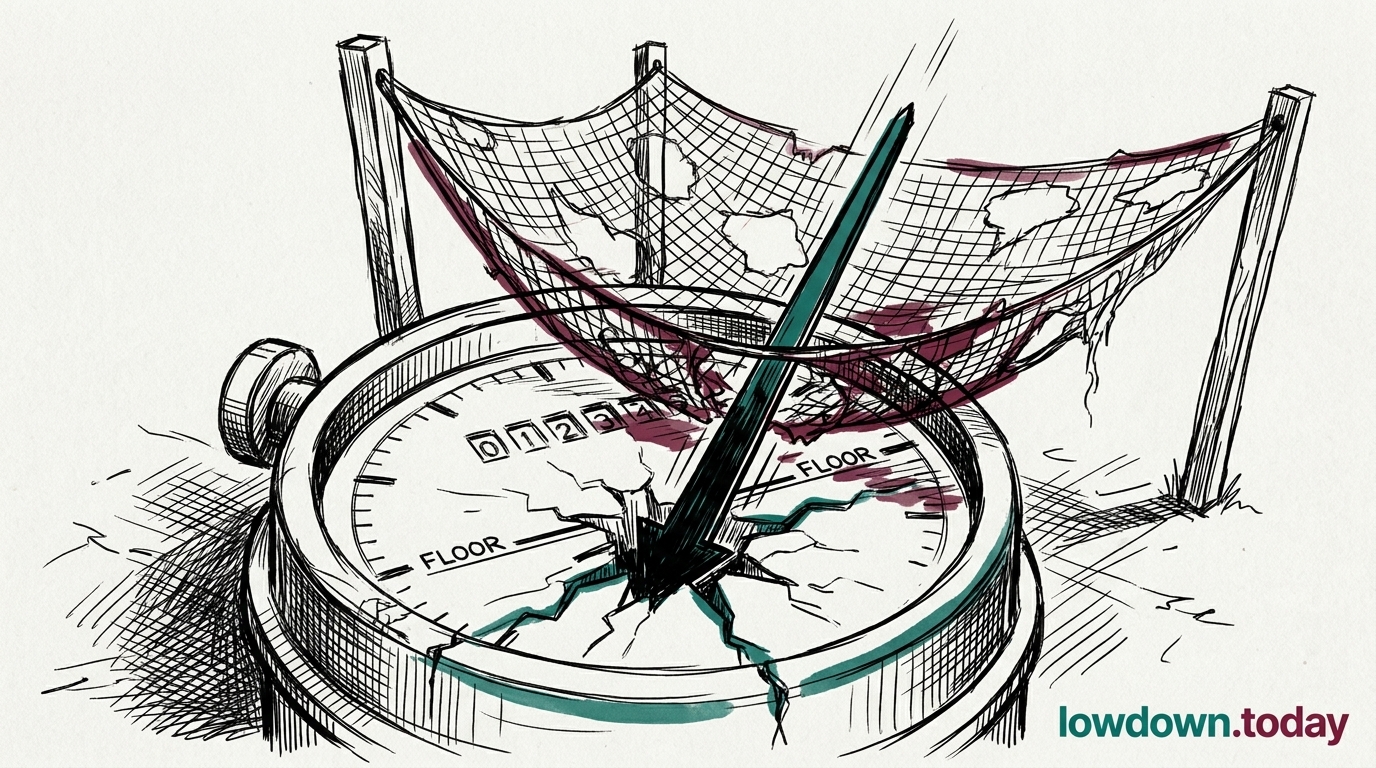
ACER, the EU agency that coordinates national energy regulators, will widen cross-border marginal-price limits from plus or minus EUR 15,000 to plus or minus EUR 99,999/MWh after July, removing the transitional cap on cross-zonal clearing extremes 1. The cap sets how high a price can clear when capacity is allocated across borders; lifting it lets scarcity register at its true level rather than being truncated.

The timing matters against a market already tracking a wider winter balance. A higher ceiling does nothing on a normal day, but in a genuine scarcity event it lets cross-border prices spike to levels the old cap suppressed, sharpening the tail risk on any winter position.

A second strand runs in parallel. ACER's REMIT transaction-reporting Annex consultation opens on 16 July, covering energy derivatives . REMIT is the EU's wholesale market-integrity regulation, and the agency gained direct cross-border investigatory powers under its 2024 revision; those powers are due to activate in the fourth quarter of 2026.

No ACER cross-border enforcement case exists yet, so the Danish regulator's capacity-hoarding fine functions as the national curtain-raiser, a REMIT-style action that signals the enforcement posture ahead of ACER taking the cross-border lead 2. Desks should treat the fine as the template for how the agency's own first case is likely to look.


Deep Analysis

In plain English

ACER is the EU's energy regulator; the body that oversees electricity and gas markets across European borders. When electricity is traded across countries, there are rules about how high or low prices can go. Currently, the maximum price for cross-border electricity trades is EUR 15,000 per unit. After July, ACER is raising that ceiling to EUR 99,999 per unit. This sounds alarming, but the reasoning is technical: in an extreme shortage, prices need to rise very high to ration the limited supply and signal where it should go. If the cap is too low, the market cannot clear; meaning trades cannot be settled; which is actually worse than an extreme price. The concern is that this rule change takes effect before ACER's ability to detect price manipulation at the new levels is fully operational. REMIT is the EU's market-integrity regulation for energy trading; broadly similar to financial markets regulation. ACER opened a consultation on 16 July to update REMIT's reporting requirements to cover energy derivatives, but that consultation will not produce binding rules until 2027.

What could happen next?
  • Risk

    The EUR 99,999 cap takes effect in August, months before the REMIT Annex consultation produces binding derivative-reporting rules; a scarcity event in October or November 2026 would occur under the new cap but without the full enforcement coverage the consultation is designed to create.

    Short term · Assessed
  • Precedent

    The Danish capacity-hoarding fine establishes national REMIT enforcement as a live regulatory instrument ahead of ACER's Q4 cross-border activation, providing a deterrence signal to generators across the EU single energy market.

    Immediate · Assessed
  • Consequence

    The REMIT Annex consultation covering energy derivatives from 16 July will require trading counterparties to report a wider set of financial instruments; compliance costs for energy traders are estimated at EUR 2-5 million per firm for system updates.

    Medium term · Assessed
First Reported In

Update #20 · Spark spread now feeds the winter deficit

ACER· 22 Jun 2026
Read original
Different Perspectives
Spain's LNG terminal operators
Spain's 9,145 GWh terminal inventory is the largest single stock in the EU LNG network, an option value that can reroute cargoes wherever the winter strip pays best rather than a cavern gas obligation tied to a fixed date. That flexibility matters more as Germany's cavern shortfall pushes more of the winter security question onto import infrastructure.
European Commission
European Commission
Brussels holds the bloc to 90% on a flexible window while Germany, holding roughly a quarter of EU storage capacity, tracks toward missing its own lower 80% figure by 21 points. A national shortfall this size in the anchor market matters more to bloc security than the flexible timetable alone can absorb.
French power exporters and CRE
French day-ahead rose in step with Germany but by less, reopening a EUR 7-17 premium that makes northward export flows commercially attractive again after the EUR 43.09 discount evaporated in days. CRE separately authorised RTE and Enedis to buy flexibility locally, betting the coming winter's binding constraint is grid congestion rather than a shortage of firm capacity.
TTF trading desk
TTF trading desk
A visible national shortfall like Germany's 21-point gap is a directional signal, not noise, for a desk holding the summer-winter spread. TTF's flat EUR 58-60 range through this week's German price swings says the market has not yet chosen to reprice refill risk into the front of the curve.
German cavern and CCGT operators
German caverns kept buying prompt gas at TTF near EUR 58-60 through the inversion; the wind collapse to 2.4 GW then flipped the spark spread to plus EUR 29 and put turbines back in the same queue. Every day turbines win that bid, injection at a third of the 877 GWh/day pace needed falls further behind.
Slovakia
Slovakia
Slovakia says it dropped its hold-out on the 21st sanctions package only after Ursula von der Leyen personally signed written gas-price and supply guarantees. The Council of the European Union's own 17,238-character release on the package names neither Slovakia nor any guarantee, leaving Bratislava's account unconfirmed by the institutional record.



