Skip to content
Briefings are running a touch slower this week while we rebuild the foundations.See roadmap
European Energy Markets
26MAY

Storage gap widens to 18.7 pp, the series widest

3 min read
12:01UTC

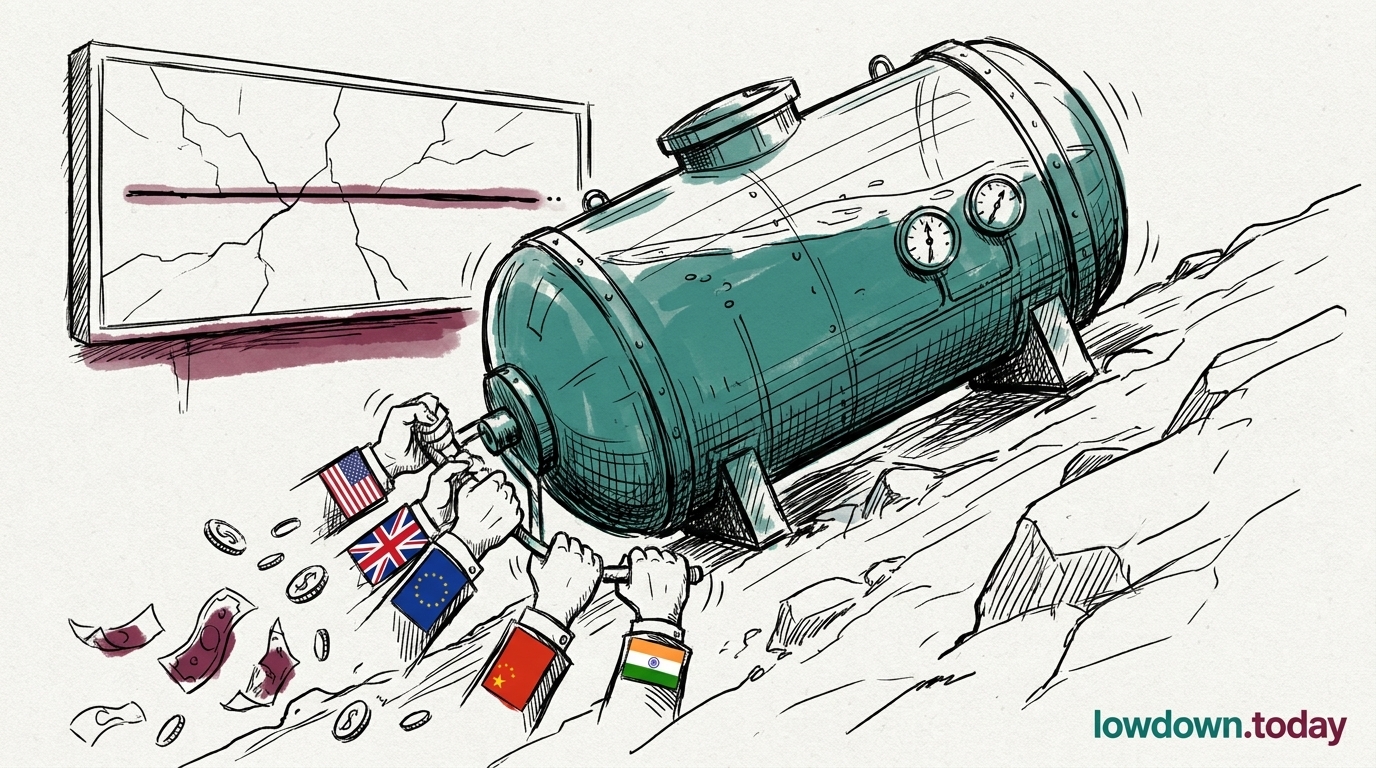
EU aggregate gas storage reached 36.3% on Sunday 17 May, leaving the widest deficit to the five-year norm of the briefing series as injection pace slowed to 0.18 percentage points per day.

EconomicDeveloping
Key takeaway

EU storage hit its widest deficit of the series at 18.7 percentage points below the five-year norm.

EU aggregate gas storage reached 36.3% on Sunday 17 May per GIE AGSI+ data, up from 35.4% on 12 May. The implied injection pace of 0.18 percentage points per day across that window is the third consecutive deceleration: 0.257 pp/day floor at season open, 0.248 pp/day to 7 May , 0.18 pp/day to 17 May. The five-year seasonal norm sits at 55.0%, leaving an 18.7 percentage point deficit, the widest of the briefing series and the milestone the deceleration delivered.

Bundesnetzagentur, the German energy regulator, reaffirmed on Monday 18 May that gas supply remains 'stable' with no new measures. Germany has now held Frühwarnstufe (the first of three emergency escalation stages) for more than ten consecutive months since 1 July 2025 . Bruegel's three-scenario refill model , costed at EUR 45/MWh TTF and 0.257 pp/day injection, is now materially underpriced on both dimensions. the Commission cut its mandatory target from 90% to 80% in April; a second formal cut would require Council unanimity that is not available, leaving silent acceptance of a sub-80% landing as the operative posture.


Deep Analysis

In plain English

Europe stores gas underground during summer to use in winter, like filling a tank before a long trip. The tank is filling more slowly than needed each week, and the shortfall against the five-year average is now the largest on record for this stage of the season. At the current rate, Europe would arrive at winter with far less stored gas than it needs.

Deep Analysis
Root Causes

Germany's abolition of the gas storage levy on 1 January 2026 removed the principal mechanism that had incentivised early-season injection across the EU's largest storage market, with no replacement instrument announced in this window.

Injection economics at TTF above EUR 47/MWh are commercially unattractive without forward-hedged offtake certainty, and the forward curve does not offer a backwardated structure that would make summer fill-and-sell profitable for independent storage operators.

The 25 April Russian LNG ban removed the marginal Russian short-term cargo volumes that had periodically depressed spot prices enough to create injection-economic windows in early 2026.

What could happen next?
  • Meaning

    A second formal storage target cut from 80% would require unanimous Council support that is not available, meaning the EU is on course for a silent sub-80% landing rather than a policy-managed revision.

    Short term · Assessed
  • Meaning

    Industrial gas users in Germany and the Netherlands who defer winter-gas procurement on the assumption that storage pace accelerates in June face the sharpest exposure if the pace deceleration persists.

    Short term · Assessed
  • Meaning

    The widening of the five-year storage deficit to 18.7 pp gives the Commission additional political leverage to extend REMIT market surveillance to storage injection reporting, a step ACER has flagged as under consideration.

    Short term · Assessed
First Reported In

Update #10 · TTF breaks EUR 50; US LNG hits 58% of imports

EnergyRiskIQ / GIE AGSI+· 18 May 2026
Read original
Causes and effects
This Event
Storage gap widens to 18.7 pp, the series widest
The 18.7 percentage point gap to the five-year norm is the season's widest, and Bruegel's EUR 26bn refill model is now an undercount on both price and pace.
Different Perspectives
Cefic and European industrial gas offtakers
Chemical manufacturers running at 62-68% utilisation face mandate-funded storage that secures volume at above-commercial prices without reducing gas costs. A EUR 35bn refill bill, if confirmed, flows back through regulated network tariffs, adding directly to industrial energy costs already named by BASF and INEOS as structural.
OIES and energy research institutions
Bruegel and OIES have not published a revised refill cost model at EUR 47-51 TTF with sub-0.4 pp/day pace. The EUR 35bn mid-range is drifting into use as the operative sub-80% November consensus, and the 11 June ACER workshop is the next venue where EU-level storage instrument advocacy can surface.
Equinor upstream gas
The Troll A compressor fault removed 34.6 mcm/day, stacked on Hammerfest, yet TTF fell 8.1% on Iran news the same day. Norwegian supply disruptions carry no price premium while Hormuz dominates; Equinor's 31 May Troll restart is a first estimate and the 2025 Hammerfest compressor fault of the same class slipped 24 days.
German Economy Ministry and Bundesnetzagentur
Berlin confirmed on 20 May it will not introduce a summer injection-incentive scheme, leaving Germany as the EU's only major unincentivised market after the storage levy lapsed on 1 January 2026. Commercial injectors apparently used the 18 May EUR 50 spike to lock winter supply cost rather than book against a structurally negative strip.
CRE and French gas operators
CRE's 100% mandatory booking order funds French injection regardless of the inverted strip, providing the EU aggregate cover that masks Germany's gap. The French position is insulated from TTF price moves but exposed to CRE's annual renewal cycle, a political risk rather than a commercial one.
Amsterdam-Rotterdam gas trading desks
TTF's 8.1% crash on a deal headline despite 50-plus mcm/day of verified Norwegian outages settled the EUR 50 question: it is a diplomatic ceiling, not a floor, and the short EUR 50-strike summer position keeps paying until Iran resolves. EBN's price-insensitive mandate buying tightens the prompt but the EUR 233m budget cap is a known position risk.
