Skip to content
Briefings are running a touch slower this week while we rebuild the foundations.See roadmap
European Energy Markets
26MAY

REMIT 2.0 T+10 lands; STORs double

3 min read
12:01UTC

The first REMIT 2.0 T+10 transaction reporting deadline landed on Tuesday 12 May; ACER's enforcement report showed 204 Suspicious Transaction Reports filed by national regulators in 2025, double the 2024 figure.

EconomicDeveloping
Key takeaway

REMIT 2.0's T+10 deadline lands with STORs already doubled and guidance still open to revision until 12 June.

The first REMIT 2.0 (Regulation on Wholesale Energy Market Integrity and Transparency) T+10 transaction reporting deadline landed on Tuesday 12 May 2026, the first compliance gate under the recast framework that entered force 29 April , . ACER's enforcement report, published Friday 8 May, showed 204 STORs (Suspicious Transaction and Order Reports) filed by national regulators in 2025, double the 2024 figure. ACER called for 'targeted improvements in surveillance by trading intermediaries', PPATs (persons professionally arranging transactions).

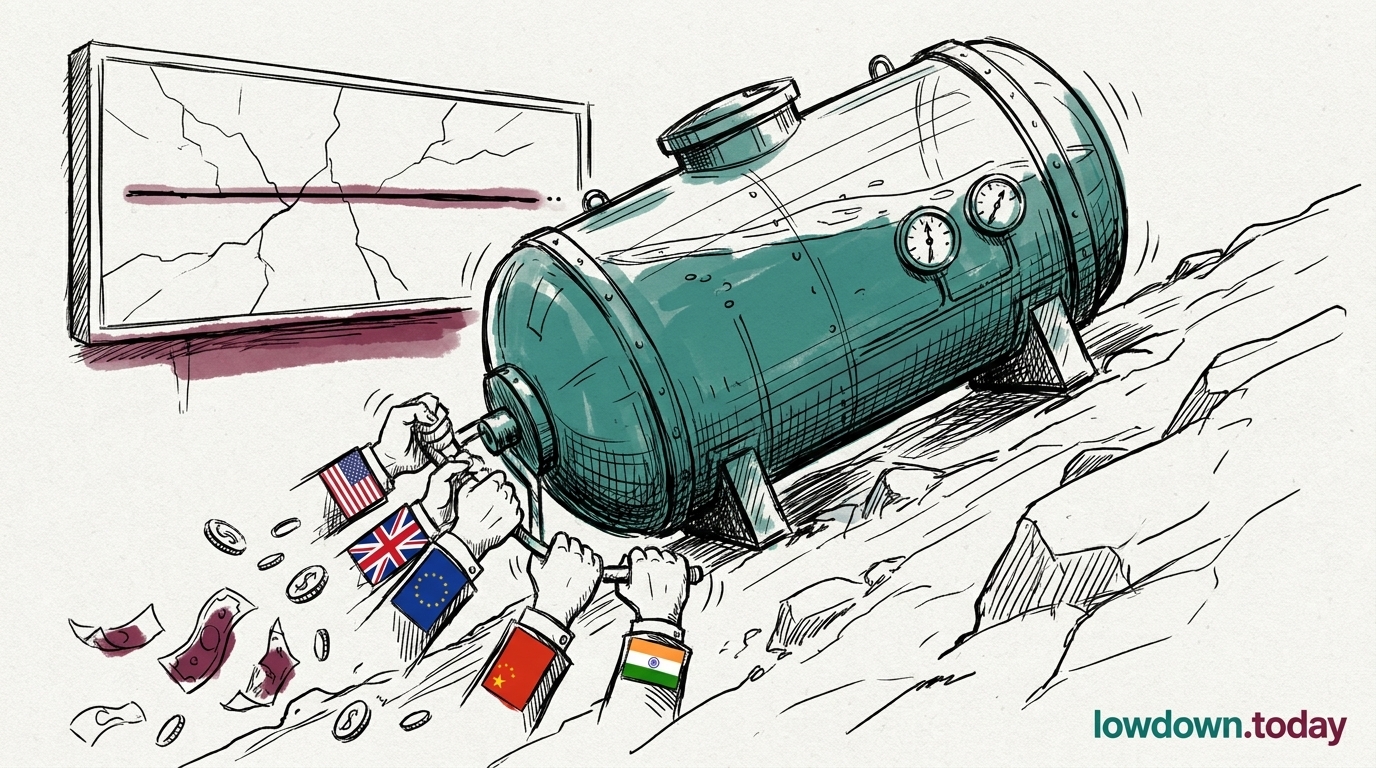
The compliance paradox flagged on entry day is now operative across the trading-intermediary stack: market participants must comply from 29 April with rules whose guidance remains open to formal revision until 12 June . The 204 STORs were generated under the prior REMIT framework; the doubling is a structural indicator, not a temporary surge. The T+10 deadline multiplies the data flow into NRA (national regulatory authority) systems without expanding NRA staffing, and REMIT 2.0's enhanced scope will push STOR volumes materially higher before that staffing can respond. No first-week enforcement action has surfaced through 18 May; the guidance consultation runs to 12 June.


Deep Analysis

In plain English

Europe has new rules requiring energy trading firms to report suspicious trades to regulators within ten days. The first deadline under these rules was 12 May. The regulator also published a report showing that suspicious trade reports doubled last year. Energy companies now have to submit more data, more quickly, to national watchdogs who are already stretched handling the volume from the old rules.

Deep Analysis
Root Causes

The European Parliament's decision in 2023 to recast REMIT rather than amend it required a full new notification framework, which had to enter force with a statutory timeline that did not allow ACER to finalise all implementing technical standards before the first compliance deadline.

The doubling of STORs from 2024 to 2025 under REMIT 1.0 already indicated that NRA surveillance capacity was not scaling proportionally to market activity; REMIT 2.0's expanded transaction reporting will multiply data flow without an equivalent expansion of national regulator processing capacity.

What could happen next?
  • Meaning

    The first ACER REMIT 2.0 enforcement action will establish the effective fine tariff across jurisdictions; energy desks in member states with lower domestic fine ceilings face a competitive advantage relative to London or Amsterdam-based desks under UK or Dutch national frameworks.

    Short term · Assessed
  • Meaning

    National regulator capacity constraints, identified implicitly in ACER's 'targeted improvements' call, suggest that the tripling of data volume under REMIT 2.0 will create a surveillance backlog that delays enforcement actions beyond the six-month post-T+10 window.

    Short term · Assessed
  • Meaning

    PPATs that fail to meet the T+10 deadline in the first month will not face immediate enforcement action based on ACER's opening posture, but that window of leniency is unlikely to extend past the 12 June guidance consultation close.

    Short term · Assessed
First Reported In

Update #10 · TTF breaks EUR 50; US LNG hits 58% of imports

ACER· 18 May 2026
Read original
Different Perspectives
Cefic and European industrial gas offtakers
Chemical manufacturers running at 62-68% utilisation face mandate-funded storage that secures volume at above-commercial prices without reducing gas costs. A EUR 35bn refill bill, if confirmed, flows back through regulated network tariffs, adding directly to industrial energy costs already named by BASF and INEOS as structural.
OIES and energy research institutions
Bruegel and OIES have not published a revised refill cost model at EUR 47-51 TTF with sub-0.4 pp/day pace. The EUR 35bn mid-range is drifting into use as the operative sub-80% November consensus, and the 11 June ACER workshop is the next venue where EU-level storage instrument advocacy can surface.
Equinor upstream gas
The Troll A compressor fault removed 34.6 mcm/day, stacked on Hammerfest, yet TTF fell 8.1% on Iran news the same day. Norwegian supply disruptions carry no price premium while Hormuz dominates; Equinor's 31 May Troll restart is a first estimate and the 2025 Hammerfest compressor fault of the same class slipped 24 days.
German Economy Ministry and Bundesnetzagentur
Berlin confirmed on 20 May it will not introduce a summer injection-incentive scheme, leaving Germany as the EU's only major unincentivised market after the storage levy lapsed on 1 January 2026. Commercial injectors apparently used the 18 May EUR 50 spike to lock winter supply cost rather than book against a structurally negative strip.
CRE and French gas operators
CRE's 100% mandatory booking order funds French injection regardless of the inverted strip, providing the EU aggregate cover that masks Germany's gap. The French position is insulated from TTF price moves but exposed to CRE's annual renewal cycle, a political risk rather than a commercial one.
Amsterdam-Rotterdam gas trading desks
TTF's 8.1% crash on a deal headline despite 50-plus mcm/day of verified Norwegian outages settled the EUR 50 question: it is a diplomatic ceiling, not a floor, and the short EUR 50-strike summer position keeps paying until Iran resolves. EBN's price-insensitive mandate buying tightens the prompt but the EUR 233m budget cap is a known position risk.
