Skip to content
You can now search across every topic, entity and event.What's new
Drones: Industry & Defence
30APR

Iran got 800 interceptors; Ukraine 700

2 min read
09:10UTC

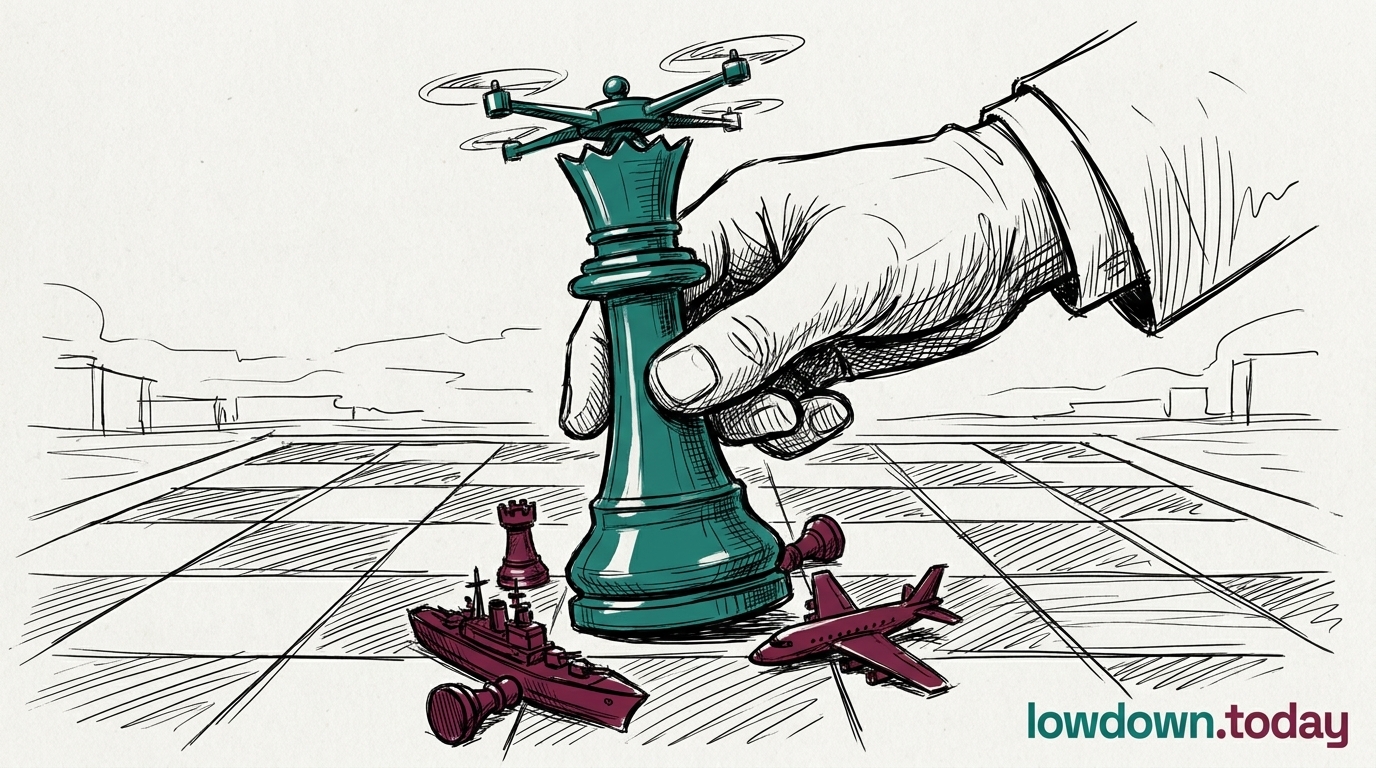
Eight hundred missiles consumed in three days of the Iran war exceeded everything Ukraine received over the entire winter, exposing a production bottleneck that cannot be resolved in under a year.

TechnologyDeveloping
Key takeaway

US interceptor production cannot sustain two simultaneous high-intensity air defence campaigns.

Zelenskyy told the BBC on 26 March that 800 US-made interceptors were consumed in three days of the Iran war, compared to 700 Ukraine received over its entire winter 1. The United States produces only 60 to 65 Patriot missiles per month.

Replacing the 800 rounds burned in Iran takes 12 to 13 months at current production rates. Zelenskyy's earlier observation that more Patriot interceptors were used in three days of the Iran war than Ukraine received in three years was a rhetorical comparison; the 26 March figures make it arithmetic. The THAAD expenditure of 100 to 150 rounds in the first week compounds the shortfall across a second interceptor class.

Zelenskyy confirmed that deliveries to Ukraine have not stopped. But the trajectory is clear: the $750 million PURL diversion notified the same day signals Washington is prioritising restocking over resupply. France's commitment of eight SAMP/T NG air defence systems becomes a more important stopgap with each week the American production bottleneck persists.

The production constraint is physical, not political. Propellant, seeker heads, and testing capacity all take 18 months to surge. No amount of congressional goodwill changes the number of missiles that leave the factory floor each month.


Deep Analysis

In plain English

Imagine there are only 65 bullets produced each month for a very expensive gun. Ukraine was given 700 over the whole winter. Then, separately, 800 were fired in just three days during the Iran war. Zelenskyy is pointing out the maths: the US cannot supply both wars at once. The gun that protects Ukraine from Russian drones uses the same bullets being spent in the Middle East. Until production speeds up — which takes 12-18 months at minimum — one theatre will go short.

Deep Analysis
Root Causes

The interceptor shortage has two structural roots.

US Patriot missile production was scaled for Cold War deterrence scenarios, not sustained multi-theatre high-intensity conflict. The production bottleneck — propellant chemistry, seeker head manufacturing, and qualification testing — cannot be surged quickly. Raytheon has stated publicly that 18 months is the minimum lead time for a significant production increase.

The Iran war created demand that was structurally unpredictable in Western defence planning. NATO procurement cycles operate on 5-10 year horizons; simultaneous high-intensity air defence campaigns across two separate theatres were not in the baseline scenario for Patriot allocation planning.

First Reported In

Update #8 · Pentagon diverts funds; 948 drones fired

Ukrainska Pravda· 27 Mar 2026
Read original
Different Perspectives
Procurement sceptics
Two identically sized IDIQs to different primes within seven weeks, and a five-nation pact where one partner moves weeks ahead of the rest, could just as easily read as an industrial base still improvising vendor mix as a deliberate hedging doctrine. Neither ceiling appears sized against a validated requirement yet.
Chinese component suppliers
FCC and Pentagon-level restrictions on Chinese-origin airframes and motors have progressively excluded DJI-linked suppliers from federal counter-drone catalogues, narrowing the field JIATF-401 and Gauntlet II can buy from to a short list of certified domestic bidders. Beijing reads the exclusions as protectionism dressed as security policy.
Quantum Systems
Quantum Systems
Blackstone, Airbus, Advent and Noteus reportedly priced the Munich drone maker at $8 billion, more than double its prior mark, on the strength of 19,000 Ukraine missions rather than confirmed revenue. It is betting production capacity, not current sales, is what buyout capital is now paying for.
United Kingdom
United Kingdom
Britain released the first LEAP effector money three weeks after its defence secretary quit over the size of the drone budget, splitting £3.16 million across three small firms rather than one contractor. It expects the other four LEAP partners to follow its pace, not set their own.
JIATF-401
JIATF-401
The task force handed AeroVironment a $500 million counter-drone ceiling identical to Perennial Autonomy's from seven weeks earlier, while its own Gauntlet II red team prepares to attack the drones the winners of that sprint will build. It expects to keep several qualified suppliers warm rather than certify one.
DroneShield
DroneShield
DroneShield appointed retired Rear Admiral Lee Goddard as an independent director from 1 July, its second board move since founder Oleg Vornik's April exit. The ASIC probe into November's disclosures and share sales stays open, so the admiral steadies the story without closing the file.



