Skip to content
You can now search across every topic, entity and event.What's new
Drones: Industry & Defence
19MAR

Red Cat up 60% on Chinese drone ban

3 min read
08:30UTC

With DJI and Autel locked out of new US certifications, Red Cat Holdings has parlayed military programme wins into the sharpest stock rally in the domestic drone sector this year.

TechnologyDeveloping
Key takeaway

Red Cat's NATO NSPA listing extends the DJI exclusion beyond US procurement into the entire alliance's supply chain.

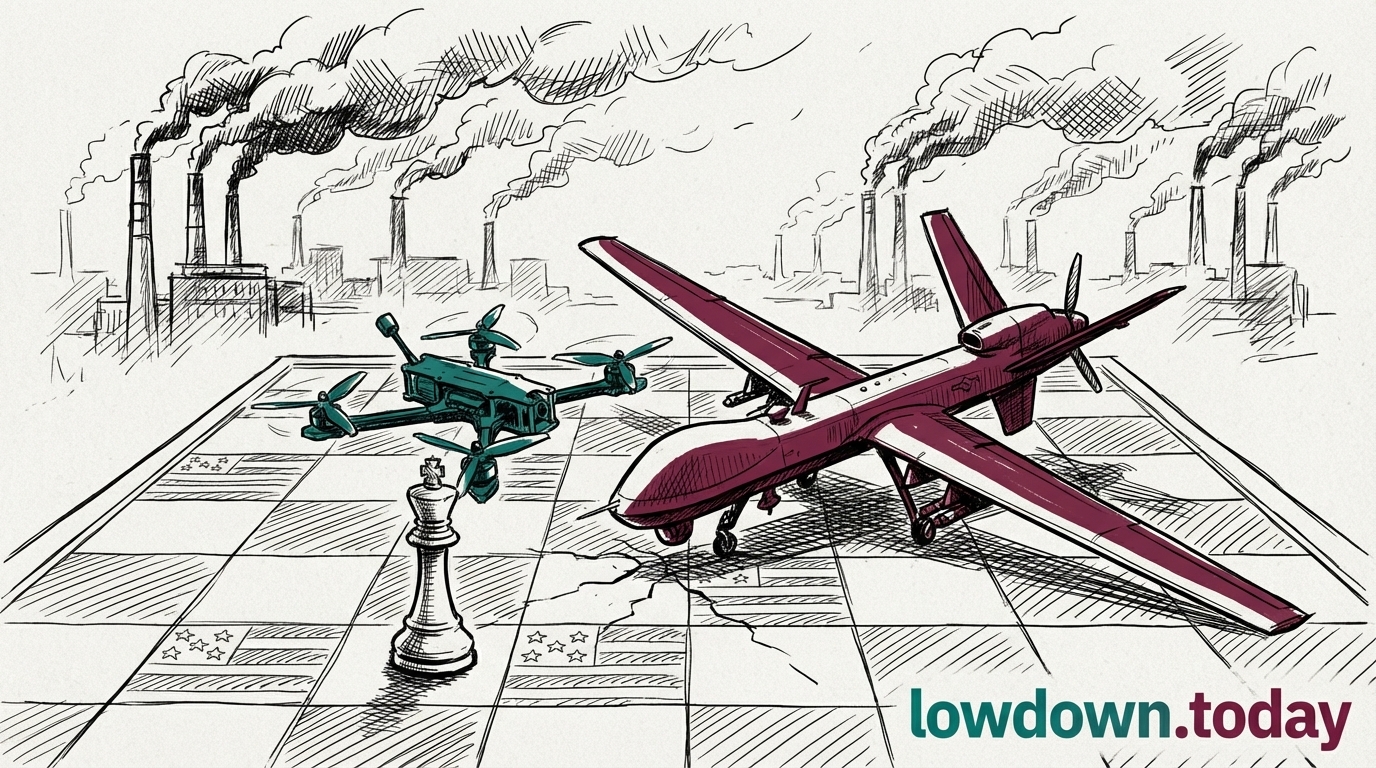
Red Cat Holdings (NASDAQ: RCAT), parent of Teal Drones, has seen its stock price rise more than 60% in 2026. The rally tracks directly to , which removed Red Cat's principal competitors from US market certification.

Two military contract wins reinforce the trajectory beyond regulatory windfall. Red Cat's Black Widow small uncrewed aircraft system won the Army's Short Range Reconnaissance (SRR) programme of record — the Pentagon's standard-issue small drone for infantry units, replacing an interim capability that had relied on foreign-sourced components. Separately, Black Widow gained approval for the NATO Support and Procurement Agency (NSPA) catalogue, which allows allied governments to purchase the system through a single streamlined procurement channel. The SRR designation provides a recurring demand floor: every infantry brigade combat team requires the capability, giving Red Cat a procurement baseline most small drone manufacturers lack. NATO catalogue access extends that baseline to European militaries increasing drone budgets under the ReArm Europe initiative.

The outstanding question is scale. DJI's cost advantage derives from vertically integrated manufacturing at Chinese labour and component prices — a structure no US company can replicate near-term. Red Cat's market capitalisation, even after the 2026 rally, is a rounding error against DJI's estimated annual revenue. Military programmes of record guarantee a volume floor but at Pentagon procurement timelines, not commercial market speed. Whether Red Cat can translate its regulatory and military positioning into commercial-sector adoption — where firefighters, farmers, and construction firms need sub-$1,000 capable platforms — will determine whether the stock reflects a durable business or a temporary arbitrage on Chinese exclusion.

Deep Analysis

In plain English

Red Cat Holdings owns Teal Drones, which makes small military reconnaissance drones. The US government banned Chinese competitors from the market, and Red Cat's stock jumped over 60% as investors repriced its prospects. More significantly, its Black Widow drone won a formal US Army contract and was added to the NATO purchasing catalogue — meaning any NATO country can buy it through established procurement channels without running its own competitive tender. This combination of domestic programme win and alliance catalogue listing is qualitatively different from simply benefiting from a competitor's exclusion.

Deep Analysis
Synthesis

The NATO NSPA listing signals that the competitive exclusion of Chinese drones is extending beyond US procurement into the alliance framework — a qualitatively different development from a domestic ban. US-standard drone security certification being embedded in NATO procurement catalogues is analogous to the Chip 4 semiconductor alignment, creating a de facto technology bloc that standardises allied nations' hardware acquisition away from Chinese supply chains. This sets a template for other defence hardware categories where US security-certification frameworks could be exported into allied procurement structures.

Root Causes

Red Cat's competitive position derives primarily from the Blue UAS programme — a DoD and CISA initiative that pre-certifies drone hardware for federal use, established years before the FCC action made it commercially decisive. Red Cat had the right product in the right certification pathway at the right time. The FCC ban transformed Blue UAS certification from an advantageous differentiator into a market-access prerequisite, and competitors cannot easily replicate that certification status in the short term given the programme's lengthy evaluation process.

Escalation

The NATO NSPA catalogue listing escalates Red Cat's market position beyond domestic regulatory protection. If NATO member states progressively align their small UAS procurement requirements with NSPA catalogue standards — as they have with other equipment categories — Red Cat's addressable market expands to encompass procurement budgets across 32 allied nations. This is an alliance-level dynamic, not just a US domestic story.

What could happen next?
1 opportunity1 risk1 precedent1 consequence1 meaning
  • Opportunity

    NATO NSPA catalogue inclusion gives Red Cat frictionless access to 32-nation procurement pipelines without the cost and time of separate competitive tenders in each member state.

    Short term · Assessed
  • Risk

    Red Cat's stock appreciation is predicated on regulatory protection; any relaxation of the FCC ban or Blue UAS re-evaluation could expose the valuation to sharp correction.

    Medium term · Suggested
  • Precedent

    US-standard drone security certification being embedded in NATO procurement frameworks establishes a template for technology-bloc alignment across other defence hardware categories where Chinese competition is a concern.

    Long term · Suggested
  • Consequence

    Non-US, non-NATO drone manufacturers face structural exclusion from the largest collective defence procurement pool without a separate compliance pathway equivalent to Blue UAS.

    Medium term · Assessed
  • Meaning

    The Blue UAS framework — originally a domestic US procurement instrument — is effectively becoming a NATO-wide security standard for small UAS acquisition, extending US regulatory influence into allied procurement.

    Short term · Assessed
First Reported In

Update #2 · UK startup tops Pentagon's drone gauntlet

CBS News· 19 Mar 2026
Read original
Different Perspectives
Procurement sceptics
Two identically sized IDIQs to different primes within seven weeks, and a five-nation pact where one partner moves weeks ahead of the rest, could just as easily read as an industrial base still improvising vendor mix as a deliberate hedging doctrine. Neither ceiling appears sized against a validated requirement yet.
Chinese component suppliers
FCC and Pentagon-level restrictions on Chinese-origin airframes and motors have progressively excluded DJI-linked suppliers from federal counter-drone catalogues, narrowing the field JIATF-401 and Gauntlet II can buy from to a short list of certified domestic bidders. Beijing reads the exclusions as protectionism dressed as security policy.
Quantum Systems
Quantum Systems
Blackstone, Airbus, Advent and Noteus reportedly priced the Munich drone maker at $8 billion, more than double its prior mark, on the strength of 19,000 Ukraine missions rather than confirmed revenue. It is betting production capacity, not current sales, is what buyout capital is now paying for.
United Kingdom
United Kingdom
Britain released the first LEAP effector money three weeks after its defence secretary quit over the size of the drone budget, splitting £3.16 million across three small firms rather than one contractor. It expects the other four LEAP partners to follow its pace, not set their own.
JIATF-401
JIATF-401
The task force handed AeroVironment a $500 million counter-drone ceiling identical to Perennial Autonomy's from seven weeks earlier, while its own Gauntlet II red team prepares to attack the drones the winners of that sprint will build. It expects to keep several qualified suppliers warm rather than certify one.
DroneShield
DroneShield
DroneShield appointed retired Rear Admiral Lee Goddard as an independent director from 1 July, its second board move since founder Oleg Vornik's April exit. The ASIC probe into November's disclosures and share sales stays open, so the admiral steadies the story without closing the file.
