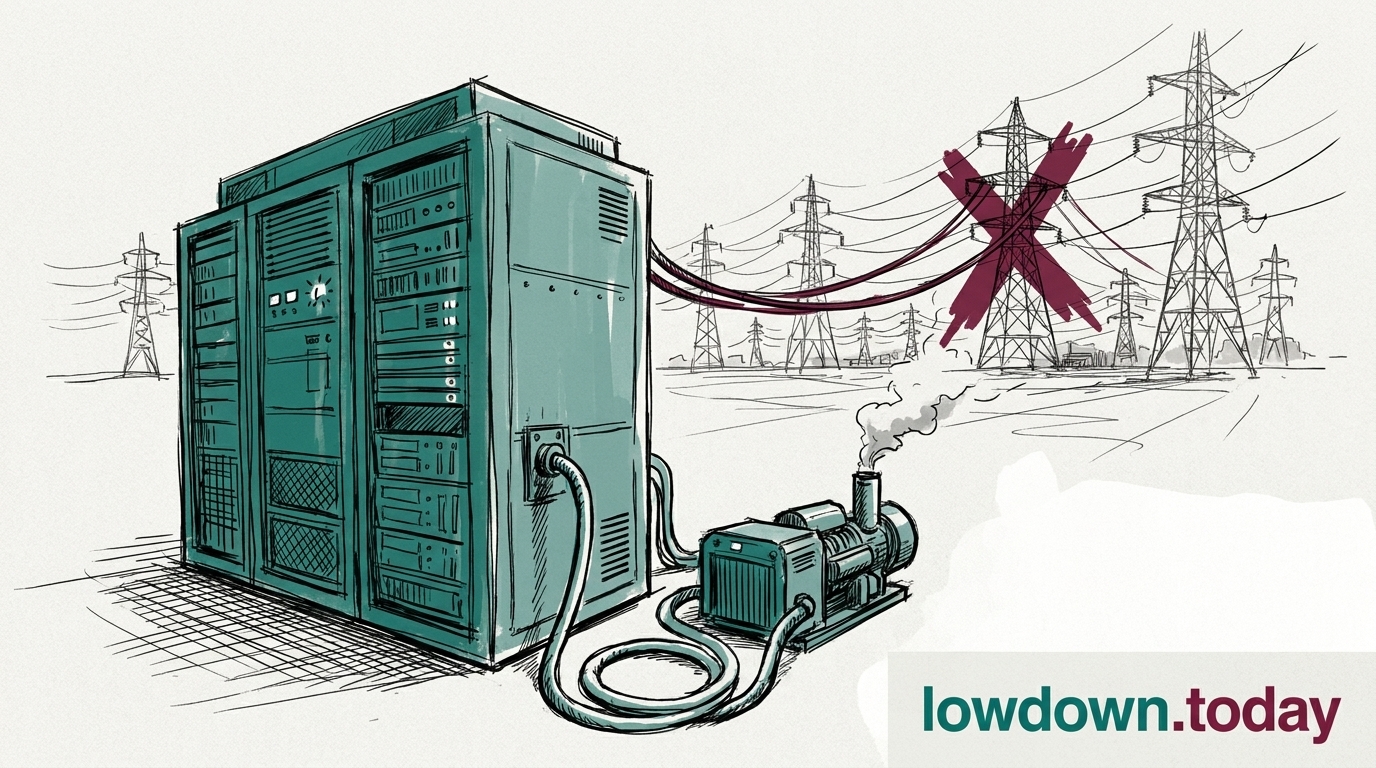
Oregon's Public Utility Commission (PUC), the state body that sets electricity tariffs, approved a 29% rate increase for large-load customers on Tuesday 7 July, effective the next day.1 The rise covers Portland General Electric (PGE) customers drawing more than 20 megawatts (MW), the band that captures data centres, crypto miners and heavy industry. Residential bills fall 1.3% across roughly 963,000 customers, because the tariff shifts grid-reinforcement cost onto the loads that drive it.
The ruling closes a thread the beat has followed since PGE filed the 29% rise in June, then watched the PUC push its decision to 7 July on 200-page review grounds. It is the first fully approved cost-shift tariff now in force in the US.2
The design answers a question PJM's board put to thirteen governors in May: who pays when the grid bends for AI. Oregon's regulator decided the load forcing the reinforcement should carry the cost, not the household next door. Above 100 MW the tariff adds a one-cent-per-kilowatt-hour (kWh) surcharge, so the largest campuses pay the steepest premium yet stay buildable. That is the counter-model to New York's freeze: price the load rather than block it.



