Skip to content
You can now search across every topic, entity and event.What's new
Data Centres: Boom and Backlash
4AUG

UK queue: 50 GW DC vs 45 GW peak demand

3 min read
10:53UTC

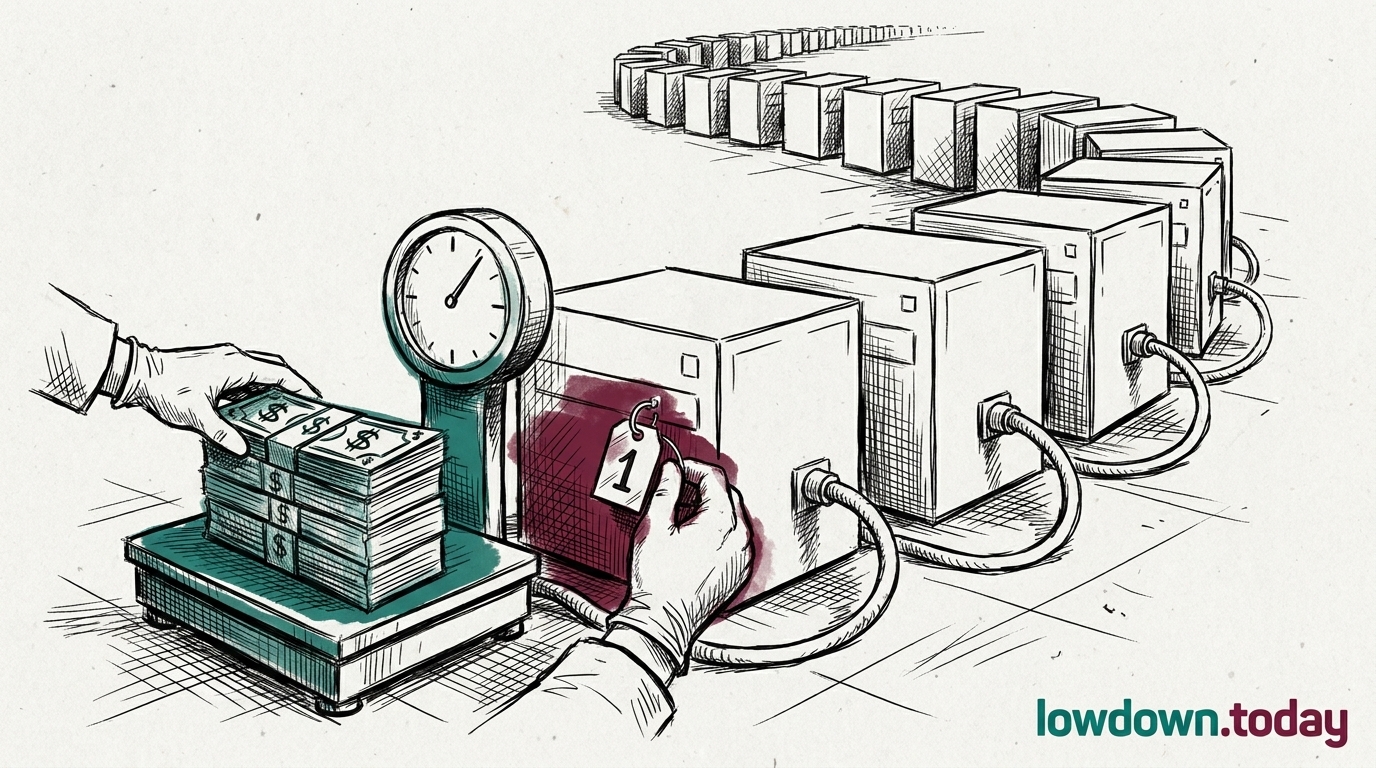
The UK grid-connection register holds 50 GW of data centre demand from roughly 140 sites, against a national peak electricity use of 45 GW recorded on 11 February 2026.

IndustryDeveloping
Key takeaway

UK data centre connection requests now exceed national peak demand; queue reform is the most consequential policy lever in play.

The United Kingdom's grid-connection register holds 50 GW of data centre demand from roughly 140 data centres, against a national peak electricity use of 45 GW recorded on 11 February 2026. 1 Total contracted offers in the UK demand queue reached 125 GW by mid-2025, up from 41 GW in November 2024, a tripling in seven months.

The register is maintained by the National Energy System Operator (NESO), the body that took over GB grid operation from National Grid ESO in October 2024 under the Energy Act 2023. It tracks every signed connection offer, distinguishing data centres from generation, electrolysers, and other large industrial loads. The 45 GW peak figure comes from NESO's own demand monitoring on a cold February evening when the British electricity system was running near full deliverable capacity.

NESO's own February register puts the data centre sub-queue alone above the entire country's recorded peak demand, and the wider queue at 125 GW is roughly three times peak. Most of those connection offers will not be built; queue-clog is a known feature of the GB system, with operators submitting speculative requests to hold optionality. Ofgem's "Curate, Plan, Connect" reform workstreams, announced in February 2026, are designed precisely to filter speculation from intent and re-rank the queue by readiness. The reform is the single largest UK grid-connection policy intervention since privatisation.

The disclosure is the event because it gives the OpenAI Cobalt Park pause its quantitative context. When a US operator describes the UK regulatory environment as "unfavourable", this register is what they mean. The 125 GW queue cannot connect on the timescales hyperscalers need; the 80% that NESO and Ofgem will likely strike off as speculative still leaves a real pipeline that exceeds available transmission headroom for the rest of the decade. Whether Ofgem publishes its AI-demand consultation response this quarter is the next decision the market is watching.

Deep Analysis

In plain English

The UK's electricity grid is managed by NESO, the National Energy System Operator. Any large new connection to the grid, whether a factory, a wind farm, or a data centre, must join a queue and wait for the grid to be physically upgraded to handle the extra load. By February 2026, data centres alone had 50 GW of queued requests, more than the 45 GW peak demand the entire UK recorded on the coldest evening in February 2026. The total queue across all types of connections reached 125 GW, up from 41 GW just seven months earlier. That growth is partly real demand and partly speculative: companies reserve grid capacity as a strategic option, even if they are not certain they will build. Ofgem, the UK energy regulator, has launched reforms to clean up the queue, but the physical work of building new power lines and substations still takes five to eight years.

Deep Analysis
Root Causes

Grid connection queues inflate when the cost of holding a reservation is lower than the option value of the connection. In the UK, Transmission Entry Capacity applications historically required only nominal deposits, creating no economic barrier to speculative reservation. The result is a queue that contains genuine projects alongside capacity-optioning strategies that will never build.

The physical constraint underneath the speculative inflation is real: new 400 kV substation infrastructure in the North of England requires five to eight years of civil works. No queue reform can shorten the construction timeline. Regulatory reform can only accelerate the culling of non-viable reservations, which in turn shortens the wait for genuine projects without adding physical capacity faster.

What could happen next?
  • Consequence

    Ofgem's Curate workstream, if it accelerates queue culling, will reduce wait times for genuine data centre connections but cannot deliver new transmission infrastructure faster than the physical construction timeline allows.

    Short term · High
  • Risk

    If queue attrition does not resolve speculative reservations before the next hyperscaler investment cycle, a second round of OpenAI-style pauses becomes probable as operators price connection uncertainty into UK location decisions.

    Short term · Medium
  • Precedent

    The 50 GW sub-queue figure, once public, becomes a negotiating reference for any hyperscaler seeking concessions from UK government on planning or grid priority, a structural shift in the power balance between operators and regulators.

    Immediate · Medium
First Reported In

Update #1 · Boom hits wall: grid says no, states freeze

The Register· 26 Apr 2026
Read original
Different Perspectives
Government of Odisha
Odisha signed a $1.5bn agreement with HCLTech and Sarvam AI on 24 July for a sovereign AI data centre in Bhubaneswar, targeting 2028 operations. While regulators elsewhere price developers out of the queue, Odisha is bidding state financial assistance to bring capacity in, betting the AI infrastructure boom is worth courting rather than rationing.
Switch Datacenters and Uithoorn
The developer, the municipality, Liander and dozens of greenhouse growers signed a waste-heat agreement letting a 60 MVA facility proceed under a provincial rule that bans sites above 5 MVA. The public-interest exception argues the site relieves rather than adds to grid congestion, working around a standing ban from inside rather than waiting for it to change.
Iskandar Puteri residents
Residents protested in February over falling water pressure they attribute to ZDATA's 300 MW construction; ZDATA disputes causation and has not yet resolved the dispute with its wastewater-only pivot. The complaint sits unadjudicated while the operator advertises compliance to state authorities the residents cannot address directly.
Microsoft
Microsoft
DC Byte reports Microsoft looking to the Nordics for new capacity while Dublin's regional share falls to 15 per cent, though this is a market-intelligence inference rather than a company statement. Microsoft keeps its existing Dublin cloud region, which is costly to relocate, while directing new investment where power is cheaper and the queue is shorter.
ISO New England
ISO New England
ISO-NE proposed excluding new large loads from its Installed Capacity Requirement entirely, forcing data centres to bring their own generation or accept curtailment, even though New England's demand has been flat or falling for a decade. The reform is pre-emptive, written before the region has felt the strain PJM and MISO already report.
Ofgem
Ofgem
Ofgem opened its Data Centre Commitment Fee consultation on 29 July, arguing that free options on grid capacity let developers bank places on ten sites and abandon nine, crowding out projects that would build. It expects the deposit to filter the queue before the rule even takes final form.

