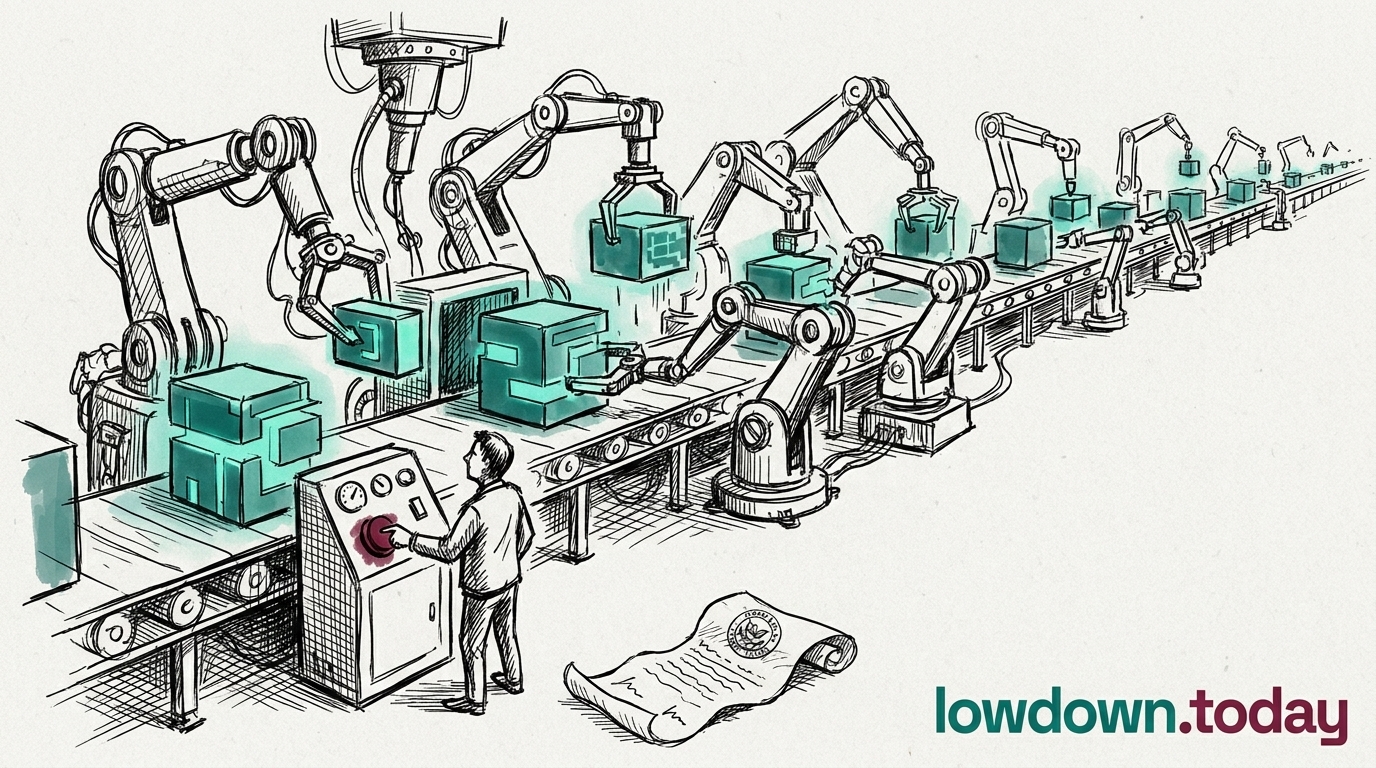
GitLab CEO Bill Staples published "GitLab Act 2" on Monday 11 May 2026, announcing a restructuring that cuts the company's country footprint by up to 30%, removes up to three management layers from some functions, and breaks R&D into approximately 60 smaller Teams, nearly doubling the number of independent Teams. The explicit justification in Staples's own words: "Software will be built by machines, directed by people. Agents will plan, code, review, deploy, and repair."
The 60-team structure concentrates individual-contributor output while stripping out the managers who previously co-ordinated across functions. In practice, individual engineers report into smaller pods with no manager between them and the AI tools they use to build product. A voluntary separation window closes 18 May; full restructuring completes by 1 June 2026. Financial impact lands on the 2 June earnings call, making it the first public headcount figure for the new structure.
GitLab did not arrive at this thesis alone. Salesforce CEO Marc Benioff applied the same structural argument to customer support: AI agents replaced roughly half the team, and no new engineers were hired in its fiscal year ending January 2026. Meta applied it to engineering titles in April, replacing conventional engineering roles with AI-native designations. GitLab has now applied the thesis to engineering structure itself: not which roles exist, but how many engineers it takes to ship product. That progression from support functions to engineering titles to engineering organisation is what makes the May cluster a pattern rather than separate decisions by unrelated companies.
The voluntary separation window that closes 18 May avoids the immediate WARN Act filing that a simultaneous termination event would trigger. GitLab operates across dozens of countries with no single US site large enough to meet the WARN threshold in any single jurisdiction. Both structural facts sit alongside the public manifesto, which is arguably the most candid CEO-signed statement on AI displacement to appear from a major DevOps company in 2026.





