Skip to content
You can now search across every topic, entity and event.What's new
AI: Jobs, Power & Money
24AUG

New York Fed: adoption up, sackings rare

3 min read
16:17UTC

Service-firm AI use jumped from 25% to 40% in a year, yet the same firms told the New York Fed they are barely firing anyone. What they are doing is not hiring graduates.

EconomicDeveloping
Key takeaway

Firms are adopting AI and not firing, but graduates are the ones no longer being hired.

The Federal Reserve Bank of New York published firm-level survey work on 5 August finding that AI use among service firms in its district rose from 25% in August 2024 to 40% a year later, while those same firms reported very few AI-driven layoffs and said they intend to retrain staff rather than dismiss them. 1 The regional Fed banks run these surveys of local employers every month, which makes them one of the few instruments that asks companies directly rather than inferring from filings or announcements.

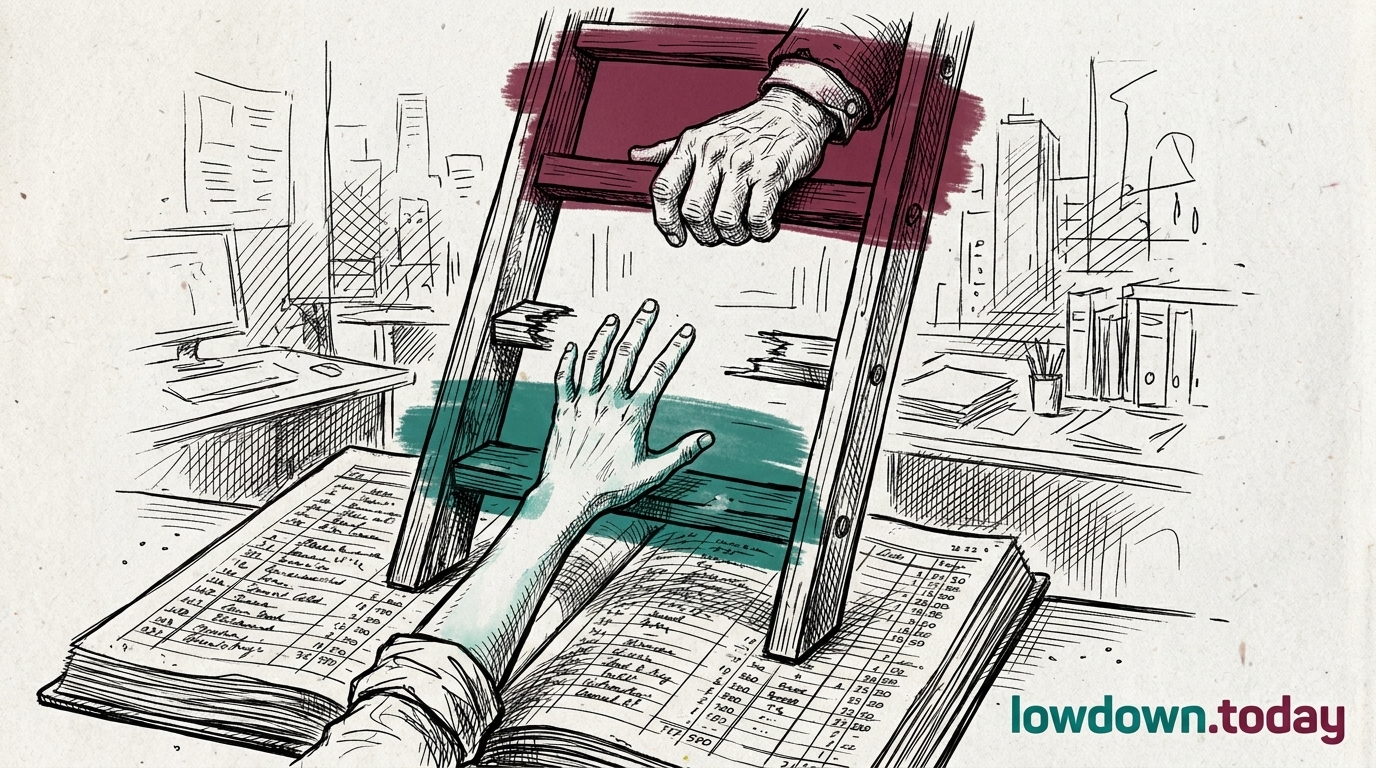
What the survey does find is hiring suppression aimed at college-educated applicants. That is a different mechanism from redundancy and it leaves a different trace: no notice, no severance, no filing, no press release, just a vacancy that never opens. SAP chief executive Christian Klein told investors in July that the company's research headcount will not grow for a year , which is the same decision described from the employer's side.

Stanford's Digital Economy Lab put the ratio at roughly 34 suppressed hires for every declared AI layoff . Federal Reserve governor Michael Barr said in July that the central bank had found little evidence of economy-wide displacement . Both statements survive the New York Fed's result intact, because an adjustment that runs through unopened vacancies will not show up in dismissal counts and will not move an aggregate unemployment rate quickly.

The reading matters for how the rest of the evidence on this beat should be weighed. A survey of firms sees intentions and dismissals; a pension register sees entries and exits. Where the two disagree about severity, the gap is likely to be sitting in the cohort that was never hired in the first place, and no instrument in wide use counts that group directly.

Deep Analysis

In plain English

The Federal Reserve Bank of New York surveys service-sector firms about how they use technology. It found firms said they were adopting AI tools quickly, but very few said they were actually laying staff off because of it. Instead, the effect showed up mostly in hiring: firms became more cautious about bringing in new graduates and other college-educated applicants, even while keeping existing staff on.

Deep Analysis
Root Causes

AI tools that automate first-draft writing, research summarisation and junior analytical tasks substitute most directly for exactly the tasks new graduates are hired to do, rather than for the judgement-based work of experienced staff, so hiring suppression concentrating on the college-educated may reflect which tasks AI reaches, not a preference for non-graduate labour generally.

Firms facing uncertain AI-driven productivity gains have an incentive to hold headcount steady rather than announce layoffs that would be read as an admission the technology already works, making 'adoption up, redundancies rare' a plausible near-term equilibrium even where hiring plans have already been cut.

What could happen next?
  • Meaning

    AI's near-term labour effect in US services is showing up as a hiring slowdown for graduates rather than as visible layoffs.

  • Consequence

    A slowdown concentrated in hiring rather than firing will not appear in headline layoff trackers such as Challenger, Gray & Christmas, understating the effect if hiring suppression is the dominant channel.

First Reported In

Update #19 · Four methods, one answer on AI and jobs

Federal Reserve Bank of New York· 24 Aug 2026
Read original
Different Perspectives
Office for National Statistics
Deferred its Transformed Labour Force Survey beyond November 2027 and disclosed a May 2026 telephone-collection failure. The ONS carries no AI-attribution layer at all, so Britain sits outside this month's cohort of measuring states by its own admission.
Uber India, Swiggy, Zomato and Urban Company
Named as respondents after the Karnataka High Court extended the interim welfare-fee deposit arrangement under the state's gig-worker welfare law to Uber India on 28 July, joining the other platforms already under the same order. The companies are contesting the underlying law while complying with the interim deposit terms.
Kenya State Department for ICT and the Digital Economy
Its draft AI policy, open for consultation to 4 August, proposes a pay floor for data-annotation work, where Kenyan annotators earn $1.46 to $3.74 an hour against $21 to $27 in the US, on figures relayed by the trade outlet WeeTracker. Kenya is legislating on AI labour even though the World Bank rates it among the least exposed economies.
ARAN and Italian public-sector unions
Signed the CCNL Funzioni Centrali 2025-2027 on 6 August, the first Italian national contract with a dedicated AI Title, barring fully automated employment decisions without meaningful human intervention and requiring advance union notice of AI deployment. The unions secured this through bargaining rather than waiting for legislation.
US employers reporting to Challenger, Gray & Christmas
Named artificial intelligence as the leading stated cause of job cuts for a fifth consecutive month in July, at 33% of that month's total, even as the overall cut count fell 27%. Employers kept citing AI as the reason even as scrutiny of the attribution rose.
Bank for International Settlements
Bulletin 130 reports a 0.75 percentage point average unemployment rise across high-AIPI countries between 2023 and 2025, while its own footnote 2 states the index is strongly correlated with employment shares in AI-exposed sectors it is used to predict. The bulletin calls the productivity payoff uncertain and uneven.