Skip to content
You can now search across every topic, entity and event.What's new
AI: Jobs, Power & Money
27JUL

AI hollows out entry-level career paths

2 min read
10:02UTC

A study of 62 million resumes found that AI-adopting firms stopped hiring juniors while leaving senior roles untouched.

EconomicAssessed
Key takeaway

Entry-level postings fell 15% at AI-adopting firms, severing the pipeline to senior roles.

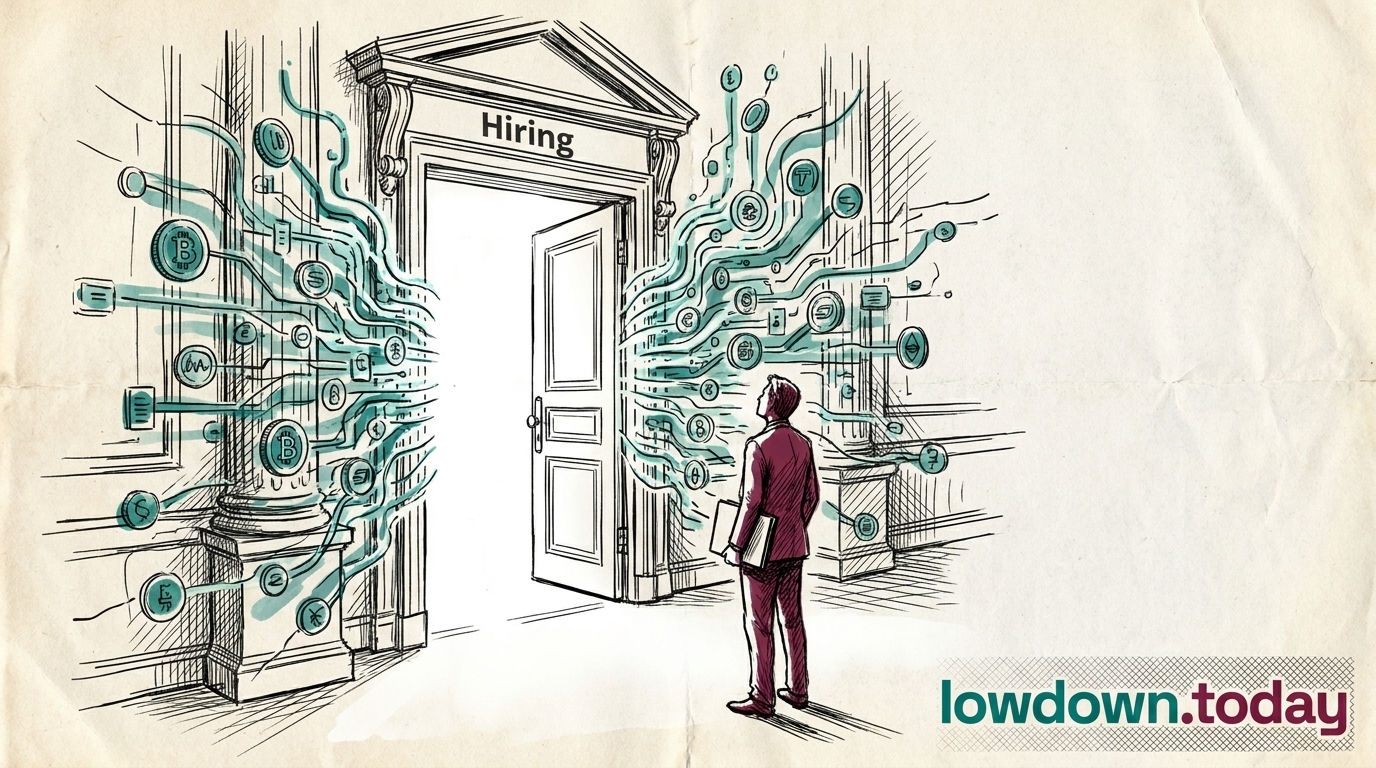
A working paper by Seyed Mahdi Hosseini Maasoum and Guy Lichtinger, drawing on 62 million US worker resumes across 285,000 firms, found that entry-level job postings fell 15% in firms adopting AI tools 1. Senior roles remained flat. The decline is driven by slower hiring, not increased firing. Companies are not sacking juniors. They are simply not replacing them.

This confirms the Federal Reserve Bank of Dallas finding that employment losses concentrate among workers under 25 through collapsed job-finding rates . In three to five years, the juniors never hired will not exist as mid-career professionals. Companies consuming this seed corn face a structural senior talent shortage they are not accounting for.

Deep Analysis

In plain English

A study that looked at the hiring records of 285,000 American companies found something specific: firms that adopted AI tools reduced their entry-level job postings by 15%, while leaving senior positions largely unchanged. The companies are not firing junior workers. They are simply not replacing them when they leave, and not hiring new ones when the workload grows. AI is doing what those jobs used to do. The problem with this is that entry-level jobs are where people learn. In five years, the engineers and analysts who should be reaching mid-career expertise will not exist, because they were never hired as juniors. Companies are borrowing from their own future talent supply.

Deep Analysis
Root Causes

Large language models trained on code, documentation, and analysis outputs can now perform the most common entry-level tasks in software development, data analysis, and content production. These are the same tasks that have historically served as on-the-job training for junior professionals. Companies discover they can sustain output without hiring juniors, not because they have made a long-term workforce planning decision, but because immediate productivity works without them.

The quarterly earnings pressure on public companies creates a structural incentive to reduce headcount costs in the near term without accounting for the loss of future talent pipeline. CFOs optimising for 2026 margins are not being measured on whether they have a senior engineer cohort in 2031. The time horizon mismatch between quarterly reporting and multi-year talent pipeline effects is a core driver.

What could happen next?
  • If entry-level hiring in AI-adopting firms remains suppressed for 3-5 years, the mid-career professional cohort of 2029-2031 will be structurally smaller, driving a senior talent shortage that companies are not currently accounting for in workforce planning.

  • Youth unemployment will rise in professional and technical occupations as entry-level roles contract, compounding the 18-24 unemployment trend already visible in UK data (14.5%) and US Federal Reserve Bank of Dallas research.

First Reported In

Update #4 · AI leads US layoffs as cuts go uncounted

Harvard Business Review· 4 Apr 2026
Read original
Different Perspectives
European Commission
European Commission
The European Commission's draft Annex III guidelines, closed for comment on 23 July, treat algorithmic scoring in recruitment, pay and termination as high-risk regardless of whether a human signs off, echoing Spain's Audiencia Nacional ruling 101/2026 on concealed scheduling algorithms. Brussels is shifting the fight from counting AI job losses to assigning legal liability for the tools themselves.
Office for National Statistics
The Office for National Statistics recorded UK vacancies rising to 712,000 on 21 July, the first quarterly increase this beat has tracked, with payrolled employment down 85,000 on the year against May's 210,000 fall. The bulletin names no AI cause anywhere, and that is the point: nothing in the release confirms the displacement story it gets cited to support.
Christian Klein, SAP
Christian Klein told investors on 23 July that SAP's research headcount will not grow for twelve months because AI agents and their token costs are absorbing the work, not because SAP is cutting jobs. He frames it as commercial arithmetic: the cost of AI-assisted coding tokens plus the salaries specialist AI hires command, not people being replaced by machines.
Betsey Stevenson, University of Michigan
Betsey Stevenson argued that the 187,000 jobless-claims reading describes a market that hires little and fires little, not one AI is emptying. She said the real damage hides in eligibility rules and suppressed job postings, not in the headline layoff counts employers keep denying.
Comisiones Obreras, UGT and Concentrix's A Coruña works committee
Comisiones Obreras, UGT and Concentrix's A Coruña works committee blamed Microsoft's push toward AI self-service for the 80 redundancies unions signed off on 22 July, not unavoidable business cause. A second Coruña procedure covering 80 more jobs runs to a 31 August deadline, and the unions want the state, not the employer, setting the pace of AI-driven cuts.
Stanford's 'We Must Act Now' signatories
More than 200 academics, including 16 Nobel laureates, published a 13 July letter warning of AI-driven labour disruption, citing Daron Acemoglu's NBER estimate that AI's total factor productivity gain stays under 0.66% over ten years. The letter's own cited economics sit well below Goldman Sachs Research's 1.5-percentage-point estimate published the same week.