Skip to content
You can now search across every topic, entity and event.What's new
AI: Jobs, Power & Money
17JUL

US added 172,000 jobs, none in tech

3 min read
14:01UTC

The Bureau of Labor Statistics booked +172,000 May payrolls, double the forecast, yet information and technology stayed off the gains list for a second straight month.

EconomicDeveloping
Key takeaway

The May jobs total stayed healthy where AI is absent and flat where it is deployed.

The Bureau of Labor Statistics (BLS), the US federal agency that publishes the monthly Employment Situation report, recorded +172,000 nonfarm payrolls for May 2026 on Friday 5 June, double the 85,000 forecast, with unemployment steady at 4.3% 1. The print beat on breadth: leisure and hospitality added 70,000, local government 55,000, healthcare 35,200. The April figure was revised up to +179,000 from the +115,000 first reported, walking back the spring scare .

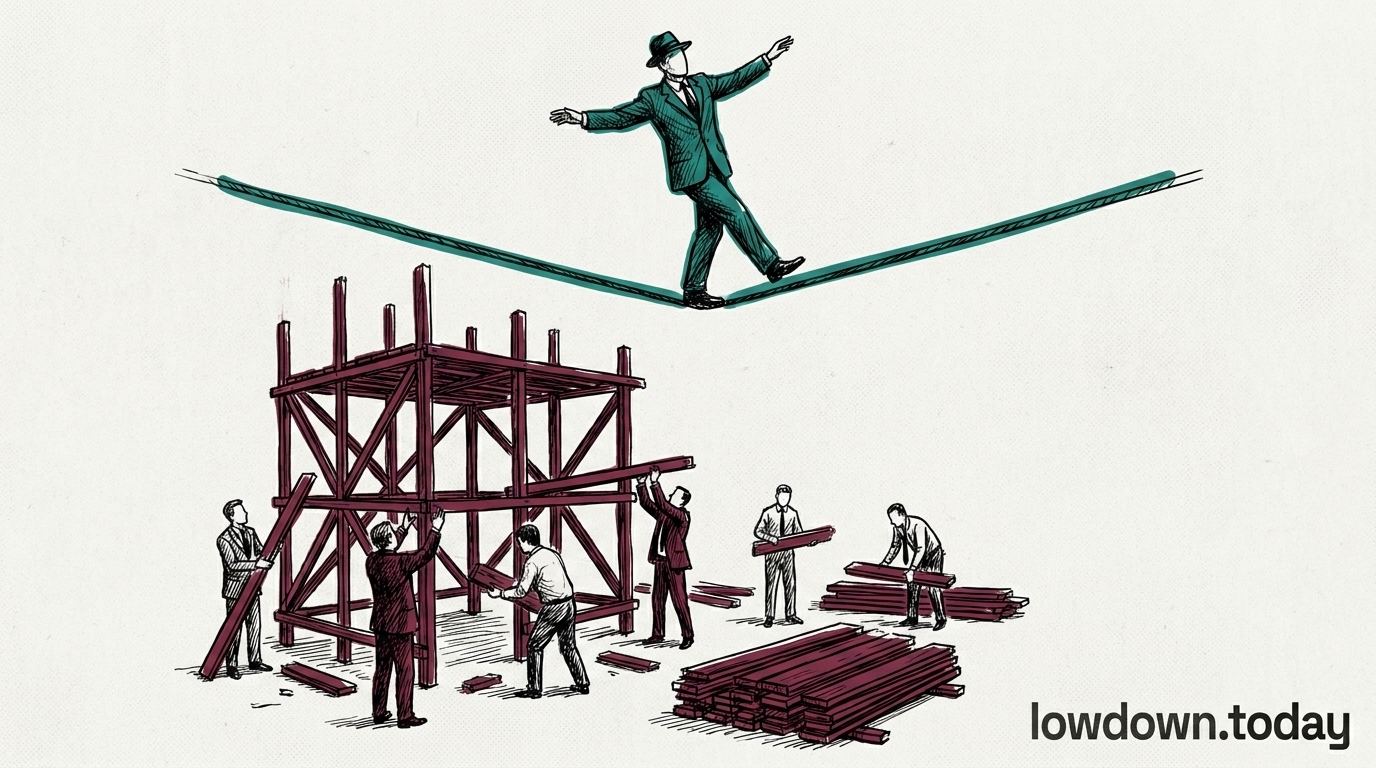
One detail cuts against the reassuring read. Information and technology stayed absent from the gains list for a second consecutive month, while broad consumer and public-sector hiring carried the total. The aggregate looks healthy precisely where AI is not deployed, and flat-to-falling exactly where it is.

The optimistic frame holds that the spring AI-displacement panic was a counting error the revision has now corrected. The sectoral composition complicates that. Hospitality and government jobs are not substitutes for the white-collar tech roles that have stopped appearing in the data, and the establishment survey nets employment across all sectors, so it cannot isolate where the losses sit. A reader watching only the headline would conclude the labour market had shrugged off AI. The line beneath it says the displacement has simply moved somewhere the top number does not measure.

Deep Analysis

In plain English

Each month the US government counts how many jobs employers added or cut. May 2026's number looked good: 172,000 new jobs, roughly double what forecasters expected. The sectoral breakdown points in a different direction from the headline. Almost all the gains came from restaurants (+70,000), hospitals, and local councils (+55,000), sectors where physical presence remains required. Technology companies added nothing for the second month in a row. And for the first time in this economic cycle, banks and insurance firms actually cut jobs. This matters because it suggests AI is reducing demand for specific kinds of white-collar work even while the overall number looks healthy. High-paying office jobs are contracting; lower-paying service jobs are growing. That gap will eventually show up in wage data.

Deep Analysis
Root Causes

The finance payroll contraction traces to a structural shift in the cost of routine white-collar processing. JPMorgan's 2026 disclosure that AI had displaced roles was the named confirmation of a pattern already visible in CCAF's agentic AI adoption figures (52% of firms running multi-step autonomous systems). Back-office clearing, trade reconciliation, and loan-origination document review are the three highest-volume tasks in banking that language models can perform at near-zero marginal cost.

The tech payroll absence reflects a different driver: post-2022 overcorrection compounding with genuine AI-substitution of software QA, documentation, and testing roles. UBS chief economist Arend Kapteyn's observation that record-low white-collar turnover partly reflects 'AI fear' captures both mechanisms: workers staying put because they fear the next job is harder to find, which suppresses hiring-rate numerators without appearing in the fired-count denominator.

What could happen next?
  • Consequence

    A persistent tech-and-finance absence from payroll gains will decelerate real wage growth even as headline employment stays positive, compressing household income at the upper-middle segment.

  • Risk

    If the finance payroll contraction accelerates, credit-underwriting quality may deteriorate as human oversight layers thin faster than AI oversight frameworks are established.

First Reported In

Update #12 · Jobs report says fine, layoff report says no

Bureau of Labor Statistics· 8 Jun 2026
Read original
Different Perspectives
Stanford's 'We Must Act Now' signatories
More than 200 academics, including 16 Nobel laureates, published a 13 July letter warning of AI-driven labour disruption, citing Daron Acemoglu's NBER estimate that AI's total factor productivity gain stays under 0.66% over ten years. The letter's own cited economics sit well below Goldman Sachs Research's 1.5-percentage-point estimate published the same week.
Germany / the Bundesrat
Germany's Bundesrat acted on the EU AI Act's employment provisions on 10 July, more than a year ahead of the Act's 2 December 2027 enforcement deadline. Germany is moving on statutory AI-employment disclosure while the US Congress and Federal Reserve have no equivalent instrument.
Indian IT services sector (TCS, HCLTech, Wipro)
TCS cut 19,271 roles and HCLTech cut 3,292 in the same reporting week that Wipro's headcount rose by 888 under its own zero-fresher-hiring pledge for FY27. The divergence shows attrition, not layoffs, is how India's outsourcers absorb AI-driven project compression while their net headcount numbers stay ambiguous.
Federal Reserve
Federal Reserve
Barr said on 14 July there is little evidence of AI displacement, citing a 43-versus-10 adoption gap by education; Cook said the next day the dire predictions have not come to fruition, her text carrying none of the bond-spread language she used in May. The Fed reads AI's labour effect through national aggregates, where four banks' cuts remain statistically invisible.
Barclays
Barclays
Barclays economist Pooja Sriram flagged a 28,000-a-month bleed in finance and information roles the same week Microsoft disputed that AI drove its own 4,800 cuts. The bank treats Challenger's AI-attribution share as a lagging indicator against faster erosion visible in raw labour-market data.
European Commission
European Commission
Brussels deferred the Digital Omnibus's Annex III employment-compliance deadline from 2 August 2026 to December 2027, even as California advanced three binding AI-hiring bills the same week. The 17-month delay leaves EU workers without the algorithmic-hiring safeguards the regulation already promises.
