Skip to content
You can now search across every topic, entity and event.What's new
AI: Jobs, Power & Money
17JUL

Directors settle Hollywood's AI fight weakest

3 min read
14:01UTC

The Directors Guild reached a four-year AMPTP deal on Tuesday 9 June. Directors won the right to treat AI footage like a camera shot, but secured no training ban and no residual, with a 24.4% health-plan rise as their largest concrete gain.

EconomicDeveloping
Key takeaway

Directors won creative control over AI footage but no training ban and no residual, banking a 24.4% health rise instead.

The Directors Guild of America, the union representing film and television directors, reached a tentative four-year agreement with the studios' bargaining body, the AMPTP, on Tuesday 9 June 1. Its board endorsed the deal on Saturday 13 June; members vote by Thursday 25 June, with the contract running to 30 June 2030. On artificial intelligence, directors won the right to treat AI-generated footage as they would any camera shot, under their creative control, with licensing and transparency terms.

That authority clause carries less than it appears. There is no ban on training studio material into AI systems, and no residual or royalty when AI does the work, the same gap the actors accepted when SAG-AFTRA, the screen actors' union, settled with digital-replica consent but no payout . The directors opened these talks on 12 May with AI protections billed as central and closed them in 29 days, the fastest of the three guilds. Their largest concrete gain was a 24.4% rise in health-plan funding over the term rather than anything new on AI 2. Trade coverage from Deadline and The Hollywood Reporter read the AI terms as no broader than the writers' and actors' deals before them.

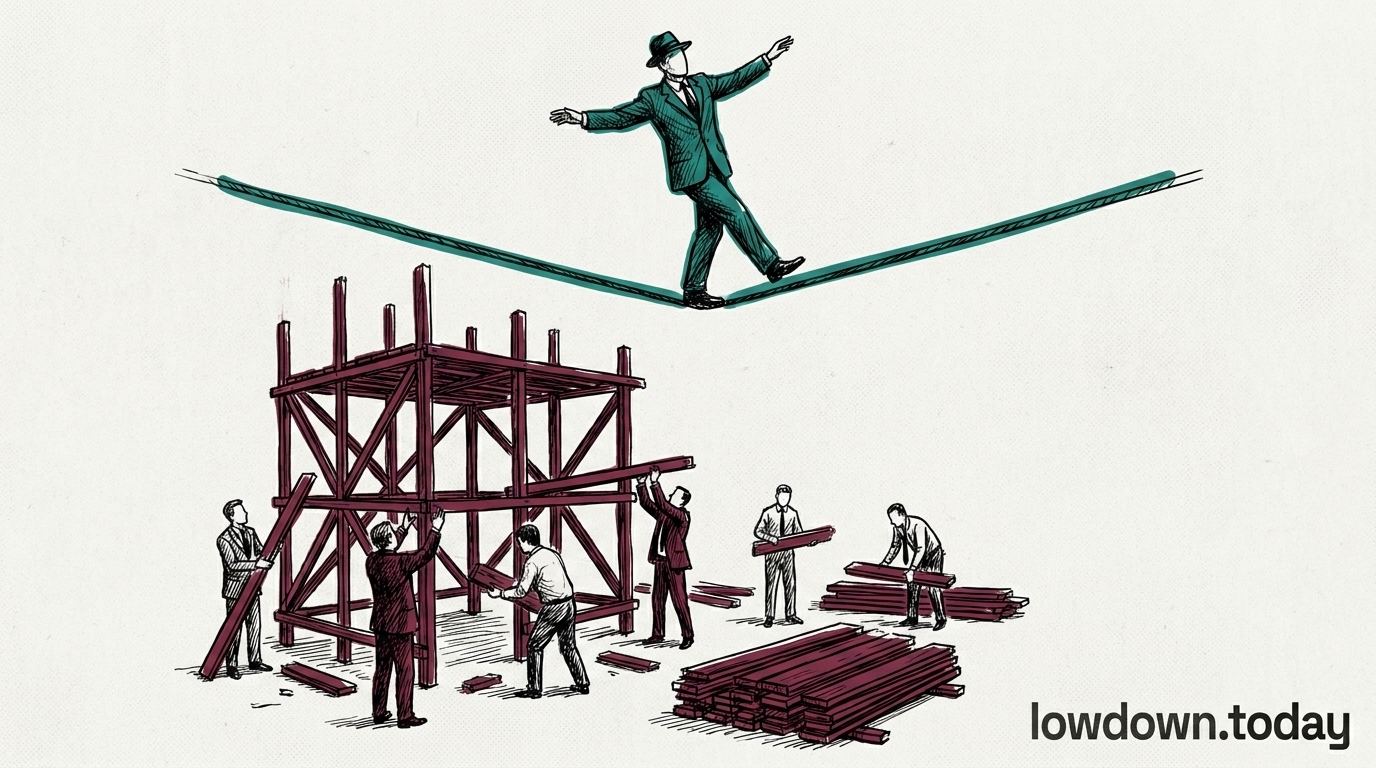
The shape of the settlement follows from who the directors are. Their binding constraint is health-plan solvency, not per-use royalties, because members are salaried per project rather than paid each time a film airs. Where the writers feared replacement and the actors feared likeness theft, a director retains authority by default, since someone still has to be accountable for a finished cut. The studios now hold a settled pattern across the whole cycle: AI-generated material is permitted, the people on set keep nominal control, and no guild secured a payment stream tied to the technology that prompted three sets of talks.


Deep Analysis

In plain English

Hollywood has three big unions: the Writers Guild (WGA), the Screen Actors Guild (SAG-AFTRA), and the Directors Guild (DGA). All three negotiated new contracts with the studios this year, and all three had to decide what rules to put around AI. The question for each was the same: can a studio train an AI on your work without paying you, and can a studio use an AI to replace your work without paying you? All three settled without getting either a training ban or a payment when AI does the job. The directors' deal is the last of the three and matches what the writers and actors got. The main thing directors took home was a 24.4% rise in the money studios pay into their health plans. That matters because directors, unlike actors, are typically paid a flat fee per project and rely on union health cover rather than per-use royalties. The studios now have a settled template across all three guilds: AI is allowed, the human keeps nominal control, and no one gets paid extra when the AI does the work.

Deep Analysis
Root Causes

A DGA feature director earns most of their income before a film releases; re-run residuals and sequel rights are secondary. This front-loaded structure means DGA members face a different AI risk than writers or actors. Writers fear replacement at the drafting stage; actors fear likeness duplication without consent or pay. A director retains a functional role as long as someone must be accountable for a finished cut, which no AI currently replaces.

Bargaining-cycle sequencing shaped the outcome. The WGA settled first in April 2026 , establishing AI terms the studios used as a ceiling. SAG-AFTRA settled next without improving those terms. By the time the DGA opened talks on 12 May, the studios held two precedents showing that AI training bans and per-use royalties were unnecessary to close a deal, and the DGA's 29-day negotiation ran against a floor the prior guilds had already set.

What could happen next?
  • Precedent

    The three-guild settlement establishes the US standard through 2030: AI-generated content is permitted, creative professionals retain nominal credit and control, and no guild secured a revenue-sharing mechanism for AI-generated work.

    Long term · Assessed
  • Risk

    European creative unions entering studio negotiations after 2026 face a US template with no training ban and no residual, which studios will cite as evidence that neither clause is market standard.

    Medium term · Assessed
  • Consequence

    Junior directors, assistant directors, and unit production managers whose roles are most vulnerable to AI-assisted production efficiency receive no contractual floor on AI-driven role reduction under the settled DGA terms.

    Medium term · Suggested
First Reported In

Update #13 · Washington pulls a live AI model

Deadline· 13 Jun 2026
Read original
Different Perspectives
Stanford's 'We Must Act Now' signatories
More than 200 academics, including 16 Nobel laureates, published a 13 July letter warning of AI-driven labour disruption, citing Daron Acemoglu's NBER estimate that AI's total factor productivity gain stays under 0.66% over ten years. The letter's own cited economics sit well below Goldman Sachs Research's 1.5-percentage-point estimate published the same week.
Germany / the Bundesrat
Germany's Bundesrat acted on the EU AI Act's employment provisions on 10 July, more than a year ahead of the Act's 2 December 2027 enforcement deadline. Germany is moving on statutory AI-employment disclosure while the US Congress and Federal Reserve have no equivalent instrument.
Indian IT services sector (TCS, HCLTech, Wipro)
TCS cut 19,271 roles and HCLTech cut 3,292 in the same reporting week that Wipro's headcount rose by 888 under its own zero-fresher-hiring pledge for FY27. The divergence shows attrition, not layoffs, is how India's outsourcers absorb AI-driven project compression while their net headcount numbers stay ambiguous.
Federal Reserve
Federal Reserve
Barr said on 14 July there is little evidence of AI displacement, citing a 43-versus-10 adoption gap by education; Cook said the next day the dire predictions have not come to fruition, her text carrying none of the bond-spread language she used in May. The Fed reads AI's labour effect through national aggregates, where four banks' cuts remain statistically invisible.
Barclays
Barclays
Barclays economist Pooja Sriram flagged a 28,000-a-month bleed in finance and information roles the same week Microsoft disputed that AI drove its own 4,800 cuts. The bank treats Challenger's AI-attribution share as a lagging indicator against faster erosion visible in raw labour-market data.
European Commission
European Commission
Brussels deferred the Digital Omnibus's Annex III employment-compliance deadline from 2 August 2026 to December 2027, even as California advanced three binding AI-hiring bills the same week. The 17-month delay leaves EU workers without the algorithmic-hiring safeguards the regulation already promises.



