Skip to content
You can now search across every topic, entity and event.What's new
AI: Jobs, Power & Money
1JUL

Ford and IBM start undoing AI cuts

3 min read
11:00UTC

Ford is rehiring engineers its automation could not replace, and IBM will triple US entry-level hiring after its AI recruitment system failed the hardest cases.

EconomicDeveloping
Key takeaway

Ford and IBM are rehiring after AI cuts fell short, the first payroll sign of the overshoot correcting.

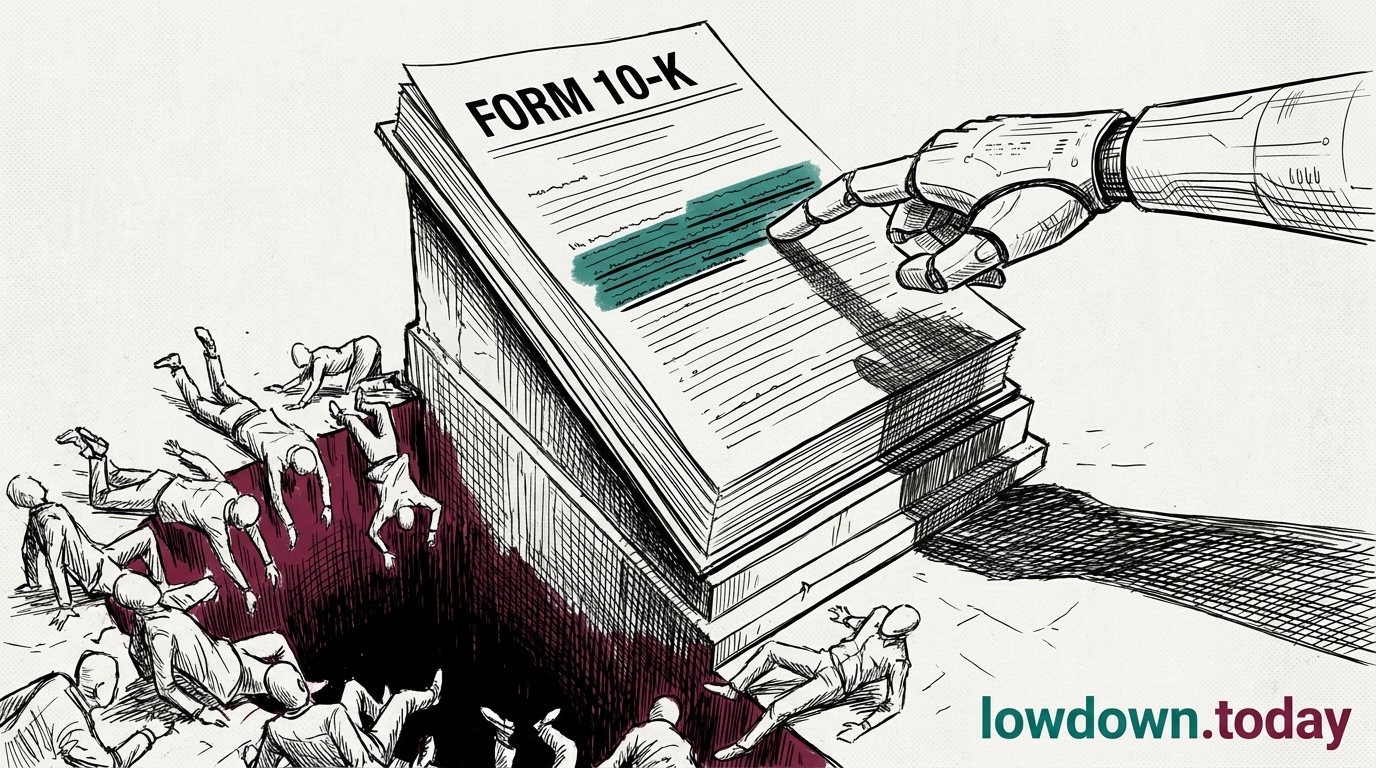
Ford is rehiring hundreds of experienced engineers for quality-control work its automated systems could not handle, and IBM has said it will triple US entry-level hiring across all business units in 2026 after its own artificial-intelligence (AI) human-resources system failed the hardest 6% of requests 1. Charles Poon, Ford's vice-president for vehicle hardware engineering, put it plainly: "Artificial intelligence is a fantastic tool, but it's only as good as the information you use to train it."

Orgvue first quantified the regret in March, when 55% of leaders who had cut for AI called the decision wrong , and Klarna had by then rehired customer-service agents after admitting it "went too far" on automation . The staffing firm Robert Half now adds fresh payroll evidence, reporting 32% of US hiring managers eliminated a role for AI, then rehired for the same or a similar one 2. Ford and IBM turn that survey signal into hiring action at industrial scale, extending the overshoot this beat has tracked since ResumeBuilder found 59% of firms had overstated AI's role in their cuts , the pattern MIT Sloan's Paul Osterman described when he called AI attribution a cover story for pre-planned reductions .

Both reversals point to the same limit, the last-mile problem: automation clears the routine bulk cheaply but breaks on the judgment-heavy residual, and the cost of that failure, whether a vehicle recall or a mishandled hiring case, can exceed the wage bill it displaced. IBM's chief human-resources officer Nickle LaMoreaux framed the correction as pipeline defence, warning that cutting entry-level hiring now means "the well simply dries up" in three to five years 3. None of the July evidence is payroll-hard at the level of an official series; the corroborating surveys are vendor-adjacent, and no national dataset yet confirms net AI-driven rehiring at scale.

Deep Analysis

In plain English

Ford and IBM cut jobs earlier in the AI rollout and are now hiring some of them back. Ford brought engineers back to catch quality problems its automated systems missed, and IBM will triple entry-level hiring because a system that failed to fully process job requests had also cut off the pipeline of junior staff who normally grow into senior roles. Surveys back up the pattern: more than half of leaders who made AI-driven job cuts now say they were wrong, and about a third of hiring managers have already rehired someone let go because of AI.

Deep Analysis
Root Causes

The original cuts were made on earnings-season timelines that reward an AI-efficiency story to investors, while the downstream cost, Ford's defect-rate rise or IBM's thinning entry-level pipeline, only becomes visible a full hiring cycle later, longer than the quarterly disclosure window that drove the decision, the pattern Orgvue's regret survey first quantified .

IBM's own admission that 6% of automated HR requests failed points to a narrower structural cause: entry-level roles function as a training pipeline for judgment IBM's AI cannot yet exercise, so cutting them removes future capacity rather than current cost.

What could happen next?
  • Consequence

    Ford and IBM's reversals give hiring managers elsewhere public cover to slow AI-driven cuts without appearing to reject the technology outright.

  • Precedent

    IBM tying entry-level cuts to a thinned future leadership pipeline sets a structural argument other large employers may use to justify reversing similar reductions.

First Reported In

Update #16 · AI layoffs fall, but the reversals begin

CNBC· 9 Jul 2026
Read original
Different Perspectives
Barclays
Barclays
Barclays economist Pooja Sriram flagged a 28,000-a-month bleed in finance and information roles the same week Microsoft disputed that AI drove its own 4,800 cuts. The bank treats Challenger's AI-attribution share as a lagging indicator against faster erosion visible in raw labour-market data.
European Commission
European Commission
Brussels deferred the Digital Omnibus's Annex III employment-compliance deadline from 2 August 2026 to December 2027, even as California advanced three binding AI-hiring bills the same week. The 17-month delay leaves EU workers without the algorithmic-hiring safeguards the regulation already promises.
OpenAI
OpenAI
OpenAI proposed a 5% US government equity stake worth $42.6bn, structured as a public wealth fund modelled on the Alaska Permanent Fund, with Sam Altman pitching it directly to Trump, Bessent and Lutnick. The offer pre-empts Sanders' rival one-time 50% AI-stock tax, which has not yet reached committee.
India's IT and outsourcing sector
BAT's transfer of 3,500 roles to Accenture on 29 June fits a delivery model Indian IT firms increasingly run: consultancies win Western contracts, then execute through offshore centres. The sector expects more Fit2Win-style transfers, not straight redundancies, as employers absorb AI without cutting outsourced headcount.
European Trade Union Confederation
ETUC says the Council's shift from 'ensure' to 'support' in the AI-literacy duty, confirmed in the Digital Omnibus's final adoption on 29 June, is a collapse of the legal threshold, not a drafting tidy-up. It expects EU workers to face AI-driven hiring and monitoring decisions with a statutory right to explanation that exists in name only.
British American Tobacco's Fit2Win workforce
BAT is cutting 9,000 roles under Fit2Win, transferring 3,500 to Accenture rather than making them redundant, to reach roughly £500m in AI-driven savings by 2027. For affected staff, that distinction decides whether they keep a job at all, just not at BAT.
