Skip to content
You can now search across every topic, entity and event.What's new
AI: Jobs, Power & Money
1JUL

BoE flags agentic AI systemic risk

3 min read
11:00UTC

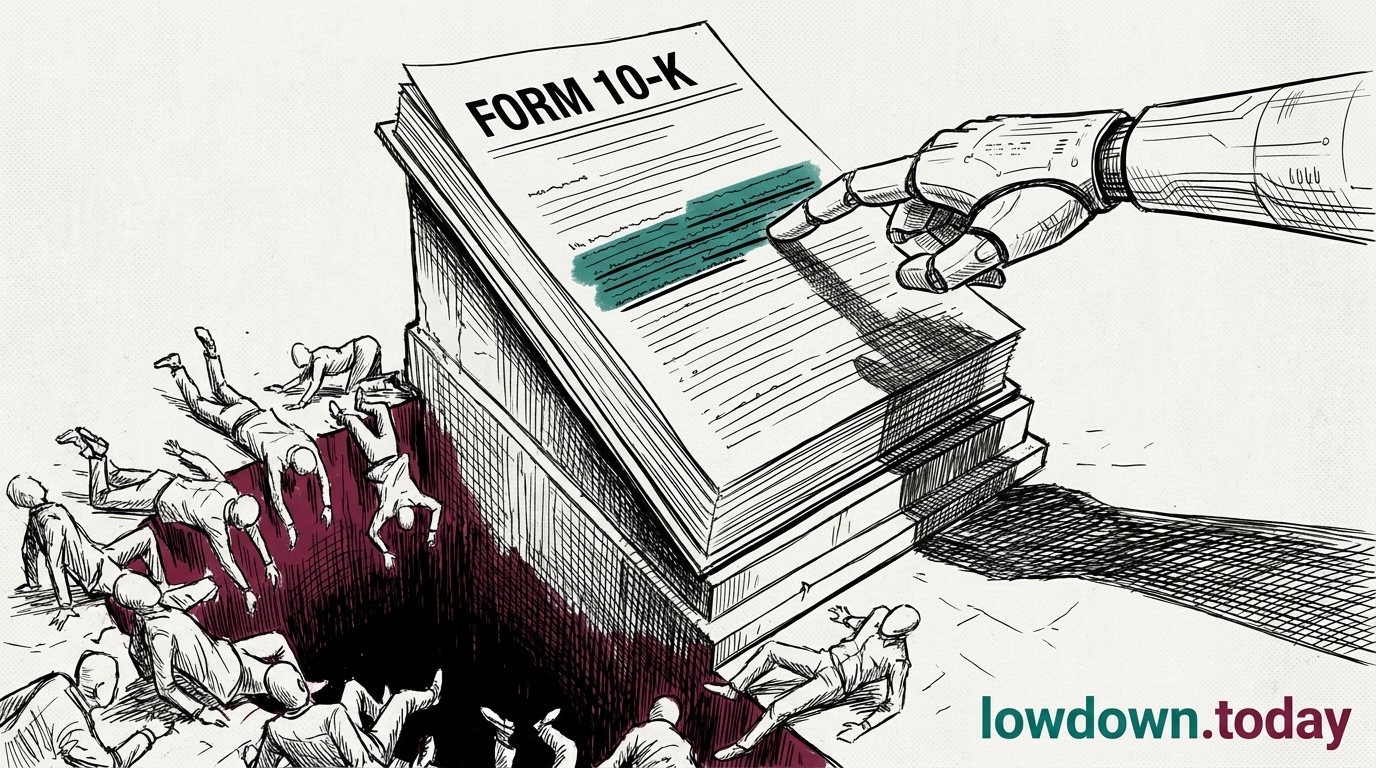
The Bank of England Financial Policy Committee asked the BoE and the Financial Conduct Authority for further work on agentic AI in payments and financial markets, noting that three-quarters of UK financial firms now deploy AI.

EconomicDeveloping
Key takeaway

UK regulators classified agentic AI risk as systemic; US equivalents convened informally with no published follow-up.

The Bank of England's Financial Policy Committee (FPC), in the record of its April 2026 meeting published on 10 April, directed the Bank of England and the Financial Conduct Authority (FCA) to undertake further work on agentic AI use in payments and financial markets. The FPC noted that 75% of UK financial firms now deploy AI and assessed that the systemic risk from agentic deployment is "likely to increase rapidly". The HM Treasury Committee has separately called for AI-specific stress tests and clearer FCA guidance by end of 2026.

Agentic AI is the class of system able to take sustained autonomous action across multiple steps, the operational profile AISI separately evaluated on Mythos. The FPC's directive treats that capability as a financial stability concern rather than a product feature, and requires the FCA to develop supervisory tools calibrated to it. The OBR had already modelled a worst-case scenario of additional UK unemployment from AI displacement, with the Bank of England committed to stress-test an AI shock ; the FPC's April record moves the work from modelled worst case to formal supervisory mandate.

The directive sits alongside the Bessent-Powell emergency convening of 8 April as evidence that AI capability risk has entered financial-stability frameworks on both sides of the Atlantic. The UK is proceeding through institutional channels with a published record and a dated follow-up deliverable; the US convening was ad hoc, with no published readout and no scheduled agency response. Whether Mythos or its successors appear on the formal agenda of the next Financial Stability Oversight Council meeting is the nearest-term test of whether the US is running the same process informally.

For UK financial firms, the likely near-term consequence is a formal data request from the FCA, covering which agentic AI systems are in production, what oversight is in place, and how model failures propagate through payments flows. That supervisory layer does not exist in the US, where the agencies best-placed to build it are the same ones the Hawley-Warner coalition has spent six weeks asking to count AI displacement.

Deep Analysis

In plain English

The Bank of England's Financial Policy Committee (the body that monitors risks to the UK's financial system) has told the Bank and the financial regulator to do more work on the risks of AI acting autonomously in payments and financial markets. Three-quarters of UK financial firms now use AI in some form. The concern is that if these systems all behave similarly in a crisis, they could amplify a market shock faster than regulators or humans can respond.

Deep Analysis
Root Causes

Three-quarters of UK financial firms deploying AI reflects a deployment pattern driven by cost rather than oversight: AI tools reduce operational headcount in compliance, document processing and customer service without requiring material new regulatory approval.

The FPC's concern is that this incremental adoption has created aggregate systemic exposure that no individual firm's risk framework captures, because each firm's AI deployment looks small relative to its total operations while the aggregate across 75% of the sector represents a correlated failure mode.

The systemic risk from agentic deployment 'likely to increase rapidly' reflects the shift from narrow AI tools to systems capable of executing multi-step decisions in payments and market-making; exactly the capability profile AISI confirmed in Mythos (event index 4). Once agentic systems move from document processing to settlement and execution, the speed at which correlated failures can propagate exceeds any existing circuit-breaker mechanism calibrated for human decision timescales.

First Reported In

Update #6 · Three federal surveys, one 34-to-1 gap

US Treasury· 16 Apr 2026
Read original
Causes and effects
This Event
BoE flags agentic AI systemic risk
The UK has placed AI capability risk inside a formal financial stability framework. The US equivalent, Bessent and Powell's 8 April convening, remains ad hoc with no published follow-up.
Different Perspectives
Barclays
Barclays
Barclays economist Pooja Sriram flagged a 28,000-a-month bleed in finance and information roles the same week Microsoft disputed that AI drove its own 4,800 cuts. The bank treats Challenger's AI-attribution share as a lagging indicator against faster erosion visible in raw labour-market data.
European Commission
European Commission
Brussels deferred the Digital Omnibus's Annex III employment-compliance deadline from 2 August 2026 to December 2027, even as California advanced three binding AI-hiring bills the same week. The 17-month delay leaves EU workers without the algorithmic-hiring safeguards the regulation already promises.
OpenAI
OpenAI
OpenAI proposed a 5% US government equity stake worth $42.6bn, structured as a public wealth fund modelled on the Alaska Permanent Fund, with Sam Altman pitching it directly to Trump, Bessent and Lutnick. The offer pre-empts Sanders' rival one-time 50% AI-stock tax, which has not yet reached committee.
India's IT and outsourcing sector
BAT's transfer of 3,500 roles to Accenture on 29 June fits a delivery model Indian IT firms increasingly run: consultancies win Western contracts, then execute through offshore centres. The sector expects more Fit2Win-style transfers, not straight redundancies, as employers absorb AI without cutting outsourced headcount.
European Trade Union Confederation
ETUC says the Council's shift from 'ensure' to 'support' in the AI-literacy duty, confirmed in the Digital Omnibus's final adoption on 29 June, is a collapse of the legal threshold, not a drafting tidy-up. It expects EU workers to face AI-driven hiring and monitoring decisions with a statutory right to explanation that exists in name only.
British American Tobacco's Fit2Win workforce
BAT is cutting 9,000 roles under Fit2Win, transferring 3,500 to Accenture rather than making them redundant, to reach roughly £500m in AI-driven savings by 2027. For affected staff, that distinction decides whether they keep a job at all, just not at BAT.
