Skip to content
Briefings are running a touch slower this week while we rebuild the foundations.See roadmap
AI: Jobs, Power & Money
8JUN

Cumulative AI-attributed US cuts cross 107,000

3 min read
11:04UTC

AI led all stated reasons for US job cuts in March for the first time on record, pushing the cumulative tally past 100,000.

EconomicDeveloping
Key takeaway

AI attribution jumped from 10% to 25% of US layoffs in a single month.

Challenger, Gray & Christmas confirmed cumulative AI-attributed US job cuts crossed 107,094 in April 2026 1. In March, AI led all stated reasons for US layoffs for the first time on record, with 15,341 AI-attributed cuts in a single month . The attribution share jumped from roughly 10% in February to 25% in March.

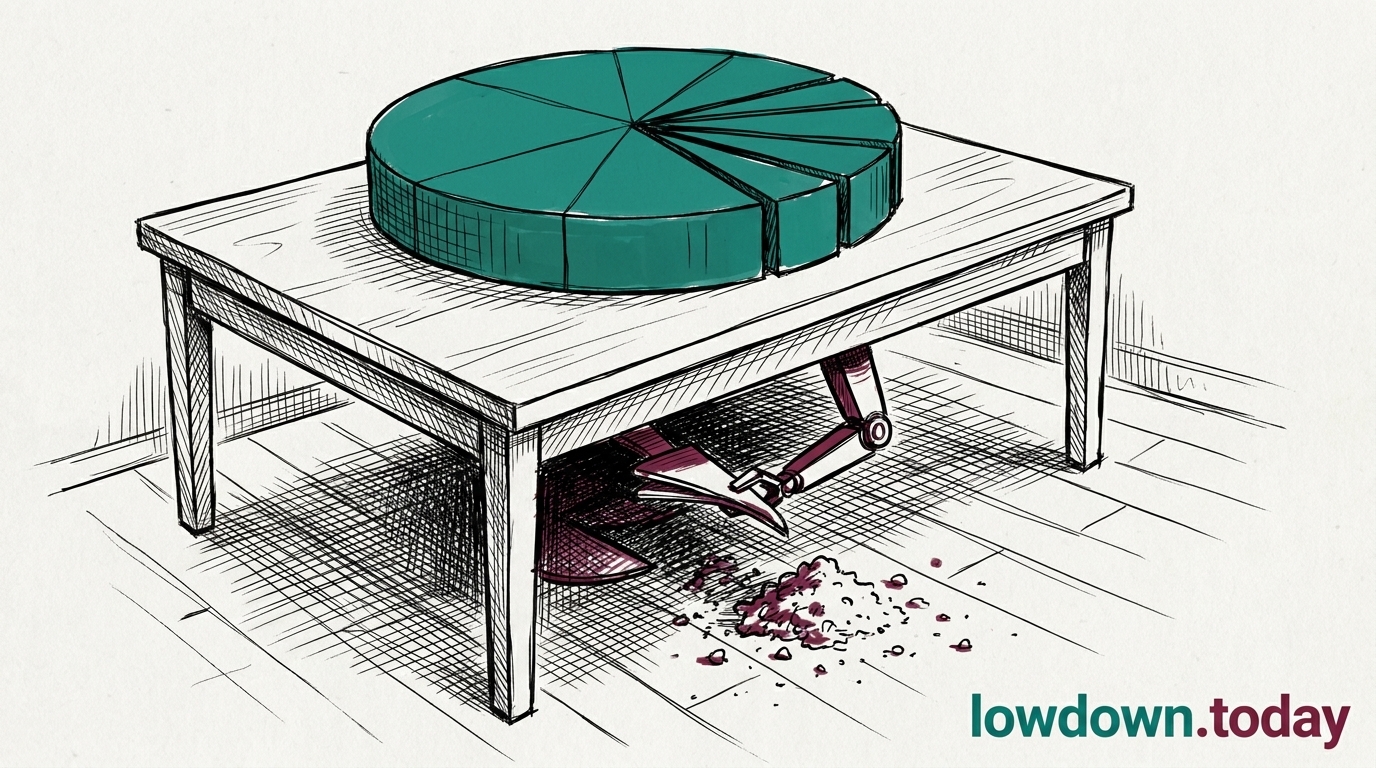
Oracle's 30,000-person cut likely inflated the month, but even excluding it, the trend line is accelerating: full-year 2025 saw 5% AI attribution; Q1 2026 averaged 13%. Goldman's bottom-up model implies the headline Challenger figure covers only one-third of actual substitutions occurring through attrition and non-renewal. For every cut that appears in the public tally, two more disappear through roles that are quietly restructured or never re-posted.

The acceleration is sharpest in technology. Tech sector Q1 2026 cuts reached 52,050, up 40% year-on-year. A Challenger executive noted that AI replacing coding functions in technology companies is where "the actual role replacement is visible."

Deep Analysis

In plain English

Challenger, Gray & Christmas is the firm that tracks US job cuts. When a company announces layoffs and mentions AI as a reason, Challenger adds it to its count. That count crossed 100,000 in April 2026, confirmed at 107,094. In March alone, 15,341 jobs were attributed to AI, and for the first time, AI led all stated reasons for job cuts in a single month. The number comes with a caveat: Challenger only counts what companies say publicly. Goldman Sachs estimates the actual figure of jobs being replaced by AI is closer to 300,000 since tracking began, with two-thirds disappearing quietly through attrition and roles that are never re-posted when someone leaves.

What could happen next?
  • Consequence

    The first month in which AI leads all stated US layoff reasons represents a categorical shift in the public attribution narrative, regardless of the underlying count methodology.

  • Risk

    If Goldman's 3:1 ratio between actual and announced displacement is accurate, cumulative AI-driven substitution already exceeds 300,000, placing the policy response at least 18 months behind the labour market reality.

First Reported In

Update #5 · The model they won't release

Challenger, Gray & Christmas· 10 Apr 2026
Read original
Different Perspectives
European workers and regulators
NBER working paper w34995 found European workers use generative AI at 32% versus 43% of US workers, a gap driven by management practice rather than regulation. The EU AI Act's high-risk employment deadline stays at December 2027, leaving European workers facing the same displacement curve two to four years behind the US.
AI industry (Leading the Future PAC, OpenAI, Andreessen Horowitz)
Leading the Future committed over $100 million to the 2026 midterms and targeted regulation-minded candidates in the 2 June primaries; its counter-fund Public First formed at $50 million. The PAC runs advertising on healthcare and jobs without naming AI, mirroring the 1994 insurance industry campaign that defeated the Clinton health plan.
UK youth entering the labour market
UK youth unemployment reached 14.7% in January-March 2026, the highest since 2014, with 22.7% of young jobseekers out of work more than a year. The ONS publishes no AI-exposure breakdown, so policy is being set blind to the channel doing the damage.
US displaced workers (tech and finance)
Tech workers face median reemployment times of 4.7 months, up 47% from 2024, with a hiring pool contracting faster than AI-specialist openings can absorb them. Finance operations workers are the next cohort: 52% of their employers now run agentic AI in the exact functions where most of them work.
TSMC and Taiwan chip supply chain
Nvidia's 17% headcount growth to 42,000 on $81.6 billion in quarterly revenue depends on TSMC's CoWoS advanced packaging capacity constraining H100 and B200 supply, sustaining margins above 70%. The AI build-out's sole headcount-growth story runs through a Taiwan supply chain that has no parallel in downstream software.
Displaced tech workers globally
CrowdStrike's SEC disclosure puts AI attribution on a material regulatory record for the first time, but Oracle's Massachusetts WARN clock expired unfiled after up to 14 workers were logged as remote despite office proximity. The legal apparatus cannot enforce what it cannot see: hybrid reclassification, GCC transfers, and hires never made.