Skip to content
Welcome, thoughtbot's Giant Robots listeners!Start here
AI: Jobs, Power & Money
1JUN

Debt beat the forecast, borrowing missed it

3 min read
09:18UTC

The ONS put net debt at 94.1% of GDP on 21 August, 0.3 points below the OBR profile, and reported borrowing £2.3bn above that same profile in the same bulletin.

EconomicDeveloping
Key takeaway

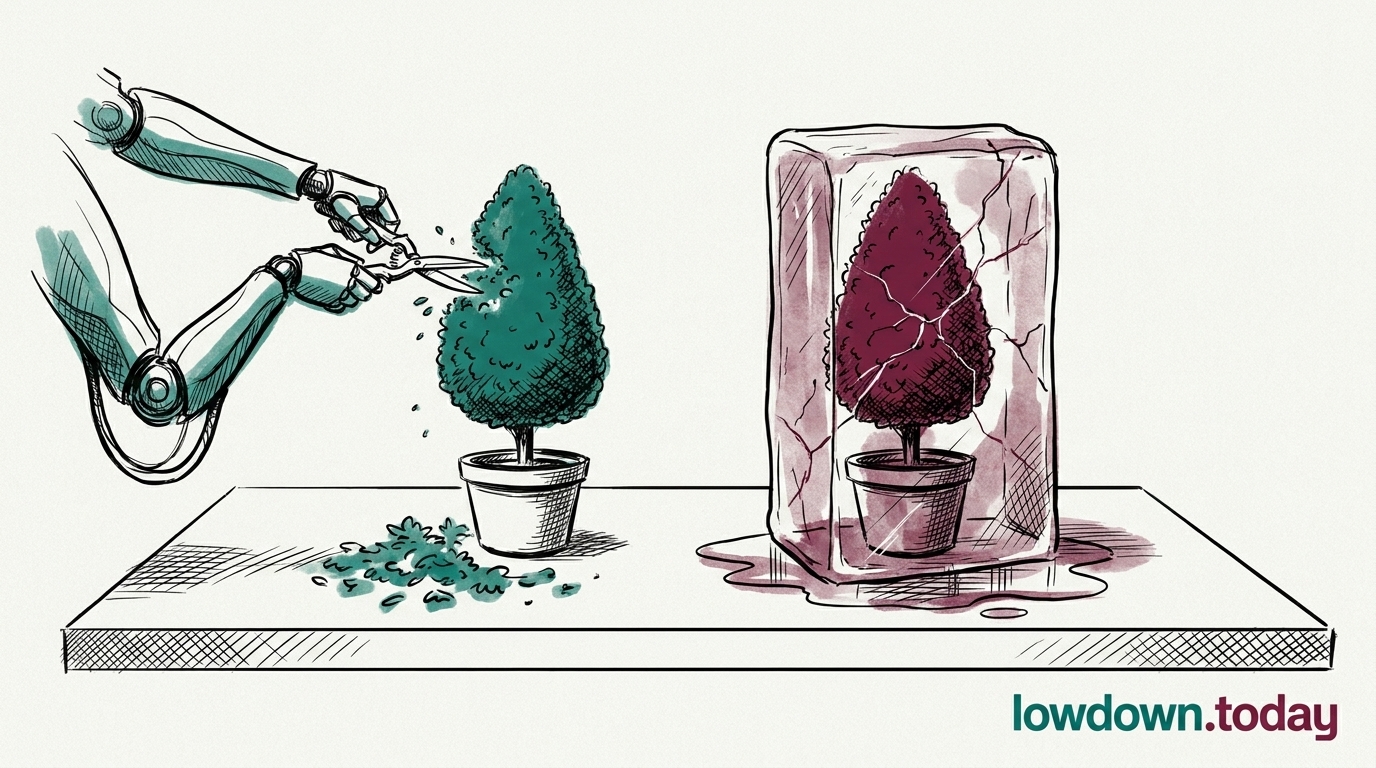
One bulletin beat the OBR forecast on debt and missed it on borrowing.

The Office for National Statistics (ONS) put public sector net debt at £2,984.9bn at the end of July 2026, equal to 94.1% of gross domestic product (GDP), in the monthly public finances bulletin it published on 21 August⁠1. Net debt on that measure is what the state owes to the UK private sector and to overseas holders, less the liquid assets it could call on. That ratio sits 0.8 percentage points lower than a year earlier and 0.3 points below the profile set by the Office for Budget Responsibility (OBR), the government's independent forecaster. GDP is the value of everything the economy produces in a year, so 94.1% means the state owes a little less than the country makes in twelve months.

Borrowing in July came to £1.8bn, which is £2.3bn above the OBR profile, and borrowing in the financial year to July stands at £56.7bn, £6.0bn (9.6%) below the same period last year and again £2.3bn above the profile⁠2. The same bulletin therefore reports the opposite result on the other measure. The overshoot is larger than the borrowing itself, and the whole of the financial year's miss arrived in one month rather than building across four. Neither comparison belongs to this desk: the ONS states both against the OBR's numbers, in one document, on one day.

Debt is £95.9bn higher in cash than a year earlier while the ratio is lower. The ONS says its updated estimate of January to March output came in above the first estimate, "resulting in lower debt-to-GDP ratios for recent months than previously reported"⁠3, and it puts no number on that effect. The share of the economy fell because the economy was re-measured, not because the borrowing stopped.

The forecast beaten on one line and missed on the other was published on 3 March 2026, with the monthly profiles the ONS scores against following in April, and the OBR does not refresh any of it until the Budget on 28 October. Debt interest payable by central government ran to £7.7bn in July alone, against £7.0bn in July 2025, and that bill is settled before a single bin is emptied or a single appointment is booked. This desk's June cell of 94.9% cannot be set beside 94.1%, because the ONS did not restate the June ratio on the new output base and published no replacement for it.


Deep Analysis

In plain English

The government keeps a running total of everything it owes, called public sector net debt. To judge whether that total is manageable, it is usually shown as a share of GDP, the size of the whole economy in a year, because a bigger economy can carry a bigger debt without strain. In July, that share came in at 94.1%, a little better than the official forecaster expected. But in the same report, the amount the government actually borrowed that month came in worse than expected. Both things are true at once because they come from different parts of the sum: the economy was recently measured as slightly bigger than first thought, which makes the debt look smaller by comparison, even though the pounds borrowed did not fall.

Deep Analysis
Root Causes

The ratio moved because its denominator moved, not because its numerator did. ONS incorporated the Q2 GDP first estimate, published 13 August, eight days before this bulletin, which revised earlier-quarter output upward; every debt-to-GDP figure for those quarters is recalculated against the new base the moment it lands, independent of anything the government spent or borrowed.

A second structural cause sits in the fiscal calendar itself. The OBR sets one forecast per fiscal event and profiles it monthly without interim revision, so every ONS bulletin between March and October is scored against a static baseline that cannot absorb news the baseline itself has not yet seen. That gap is what lets a single bulletin beat the forecast on one measure and miss it on another without contradiction.

What could happen next?
  • Meaning

    The debt-ratio improvement reflects a bigger measured economy, not reduced government borrowing.

    Immediate · Assessed
  • Precedent

    Both this reading and June's upward revision came from data updates rather than fiscal decisions, suggesting monthly moves in the ratio should be read cautiously until the OBR rebases its forecast.

    Short term · Suggested
  • Risk

    The £2.3bn borrowing overshoot against the OBR profile, if it persists monthly, would compound toward the October Budget without a forecast update to register it until then.

    Medium term · Suggested
First Reported In

Update #3 · Debt ratio fell; borrowing missed by £2.3bn

Office for National Statistics· 3 Sept 2026
Read original →
Different Perspectives
Competition and Consumer Commission of Singapore
The regulator found on 27 November that businesses can still choose and switch between cloud providers and AI models. It named dominant firms blocking rival AI agents as a risk, but answered with eight voluntary principles rather than rules.
La Poste
La Poste
France's state-owned postal group signed its first AI accord with four union confederations on 19 November, setting up a joint committee to oversee AI use. The announcement gives the unions a say, but no job security and no training hours for its 227,000 staff.
Nascent Information Technology Employees Senate (NITES)
The IT workers' union asked India's central government on 26 November for a mandatory national policy on AI layoffs, with every automated job cut logged in public. It expects to meet Labour Ministry officials; no government response has been reported.
China State Council
China State Council
Beijing's cabinet told local governments to pace AI in labour-intensive industries and to screen large AI projects for job losses. It keeps backing AI but wants the replacement of workers slowed, and it set no numeric targets.
SAP
SAP
SAP answered Bloomberg's report of at least 10,000 planned job cuts by telling CNBC that nothing is settled. In Germany a cut on that scale goes through works councils, and its 2024 round of about 10,000 ended mostly in voluntary departures.
Nvidia's board of directors
The board reinstated Jensen Huang on 22 November after input from senior levels of the US government, while its committee of independent directors keeps investigating. Its confidence rests, by its own account, on Washington's input, and the company says it will keep cooperating with government inquiries.

Written with AI from Lowdown's published reporting. Not individually reviewed by an editor. Editorial standards.
