Skip to content
You can now search across every topic, entity and event.What's new
2026 FIFA World Cup
16JUL

DR Congo score first goal in 52 years

2 min read
10:33UTC

Yoane Wissa headed DR Congo level with Portugal at 1-1 in Houston on 17 June, the nation's first World Cup goal since their 1974 debut as Zaire.

SportDeveloping
Key takeaway

DR Congo scored their first World Cup goal in 52 years, drawing 1-1 with Portugal through Yoane Wissa.

Yoane Wissa headed in a cross from Arthur Masuaku in first-half stoppage time to draw DR Congo level with Portugal at 1-1 in Houston on 17 June 1. It was the nation's first goal at a World Cup in 52 years, since their 1974 debut as Zaire, when they conceded 14 and scored none. Joao Neves had opened the scoring for Portugal in the sixth minute. The draw leaves both sides chasing qualification from the group.

DR Congo reached the milestone the hard way, against a side ranked far above them, in a match they did not win, in a 48-team field engineered to put more mismatched teams on the same pitch . Two dozen extra group fixtures mean more chances for a long-dormant statistic to fall, regardless of whether the gap in quality has closed. Wissa's header was a genuine first; the format made the fixture likelier than it would have been under the old 32-team draw.

That tension ran through Wednesday's round. A point against Portugal keeps DR Congo's qualification arithmetic alive, which matters more to the squad than the record. The historical line will travel further than the league table, though the two should not be confused.


Deep Analysis

In plain English

DR Congo, a large country in central Africa, first played at the World Cup back in 1974 under the name Zaire. That was their only previous appearance, and they never scored a single goal in three matches. They have not been back until now. On 17 June in Houston, Yoane Wissa scored with a header to draw level at 1-1 against Portugal. It was the first World Cup goal in the country's history, 52 years after their debut. The goal meant both teams share one point going into their remaining group matches, with qualification still to be decided.

Deep Analysis
Root Causes

The 52-year gap between World Cup appearances reflects three overlapping structural failures: the limited African qualification slots under previous formats, recurrent domestic political instability that disrupted league continuity and player development pipelines in Kinshasa, and the persistent brain drain of talented Congolese players into the French and Belgian leagues since the 1990s.

The expanded 48-team format resolved the first constraint. The diaspora concentration in Belgium and France's professional leagues resolved the third through a different mechanism, creating a talent pool that can represent the national team at a competitive level without requiring a functioning domestic league structure.

What could happen next?
  • Meaning

    DR Congo's 1-1 draw with Portugal leaves both sides level on one point in their group, with both chasing qualification through remaining fixtures.

  • Consequence

    The 48-team format's expanded African allocation is directly enabling nations like DR Congo to reach and score at a World Cup for the first time in generations.

First Reported In

Update #22 · Firsts and lasts: a record-day collision

FIFA.com· 18 Jun 2026
Read original
Different Perspectives
FIFA
FIFA
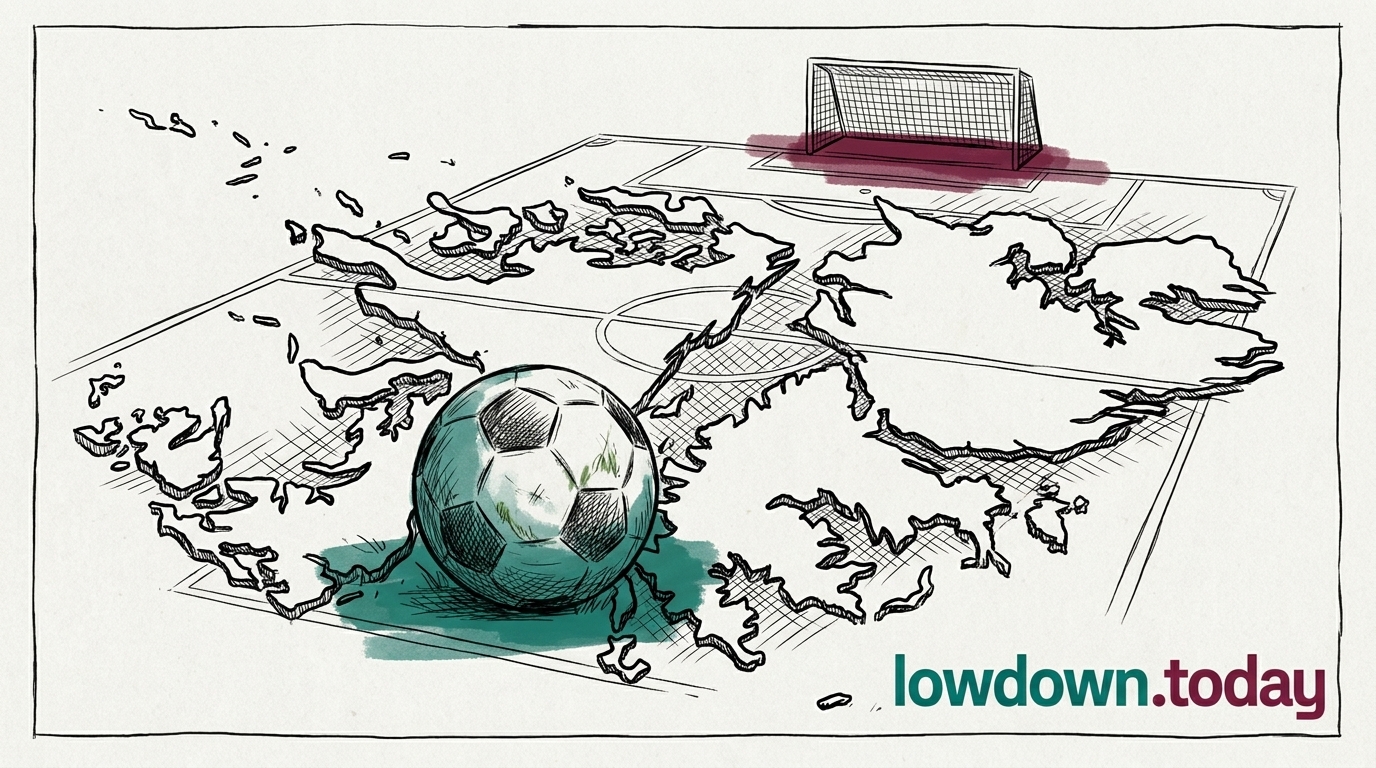
FIFA had not opened disciplinary proceedings over the Malvinas banner as of 16 July, continuing a pattern set by its fast reversal of Folarin Balogun's ban while South Africa's appeal over Themba Zwane's ban remained outstanding. The nearest tariff, a CHF 30,000 fine from 2014, remains only a precedent, not a decision.
France
France
France's tournament ended at the semi-final stage for the first time since 2010, beaten 2-0 by Spain in Arlington, and Kylian Mbappe's Golden Boot chances are reduced to Saturday's third-place game alone. The 2022 runners-up now play for bronze rather than a second straight final.
Spain
Spain
Spain reached their first World Cup final since winning the trophy in 2010, beating France 2-0 through goals from Mikel Oyarzabal and Pedro Porro. Sixteen years after their only title, this squad returns to the same stage without the sovereignty politics attached to the other semi-final.
Downing Street (UK Government)
Downing Street said on the record that the Falkland Islanders 'are British with the right to determine their own future,' answering Argentina's vice-president and foreign minister. London rests its case on the islanders' 2013 referendum, not on the fixture, and lodged no formal protest despite the semi-final framing.
Argentina
Argentina
Vice-President Victoria Villarruel called England 'the usurping pirates' before kickoff; midfielder Leandro Paredes said after the 2-1 win that the Falklands 'will always be Argentine'. Argentina's 1994 constitution commits every office-holder to press the Malvinas claim, so a World Cup semi-final was never going to pass without it.
Switzerland
Switzerland
Switzerland reached their first World Cup quarter-final since 1954 and led Argentina before Breel Embolo's second yellow card left them a man down for the last half-hour. They expect the run to raise expectations for the next cycle rather than close a chapter.


