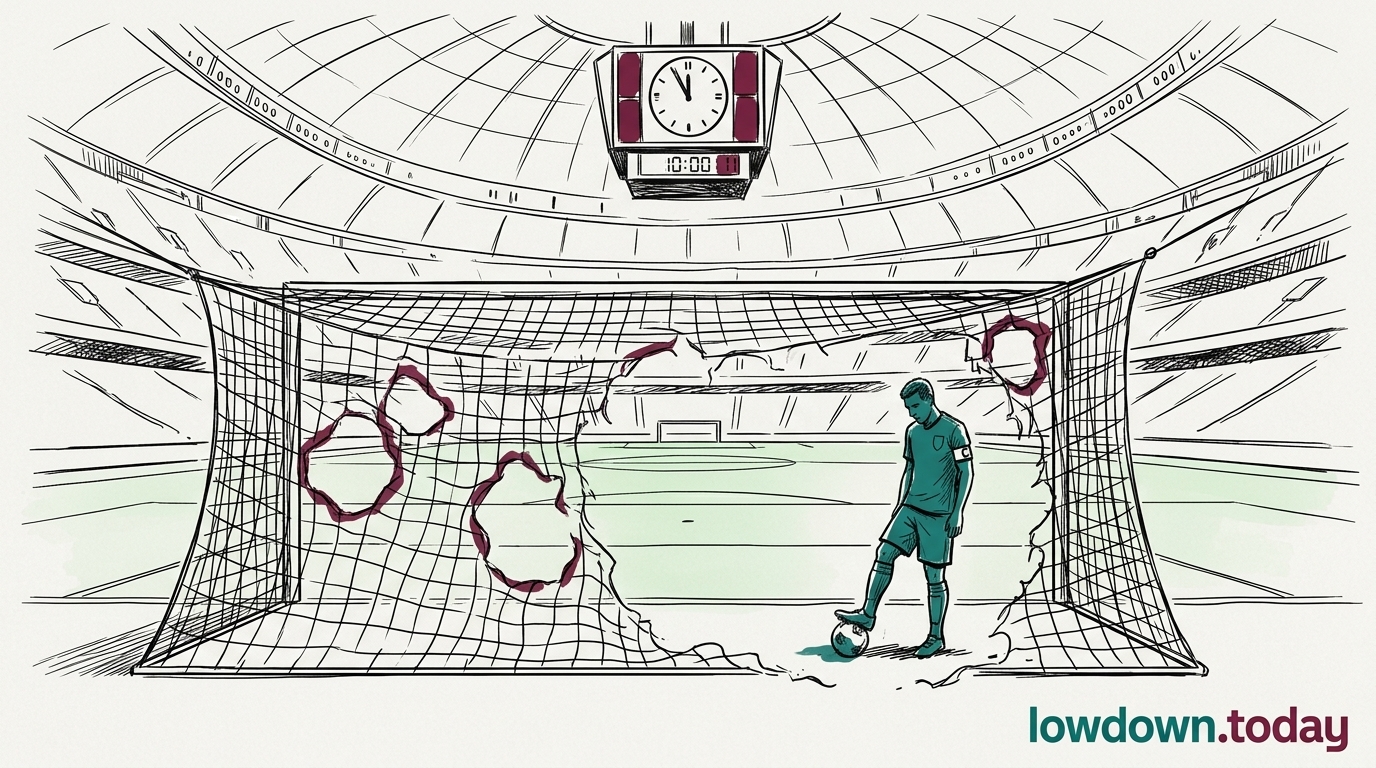
Estadio Azteca is scheduled to reopen on 28 March with a Mexico–Portugal friendly, but the stadium's owner, Emilio Azcárraga, has said publicly he is "not sure" the renovation deadline will be met1. Workers are fitting seats and installing the new red membrane roof around the clock. As of early March, cranes and rubble were still visible at the site2.
Azteca is one of two stadiums in the world to have hosted two World Cup finals — Pelé's Brazil lifted the Jules Rimet trophy there in 1970, and Maradona's Argentina won in 1986. The renovation has been among the most ambitious in the tournament's construction programme: the concrete bowl, built in 1966, required structural reinforcement alongside the cosmetic overhaul. FIFA takes full possession of all tournament stadiums in early May, leaving roughly five weeks between the planned reopening and the handover.
The consequence of failure is specific. The 11 June opening match — Mexico vs South Africa — could be relocated. StadiumDB assessed the opening match as "at risk" as early as February3. Moving that fixture from Azteca would strip Mexico of its centrepiece hosting moment in a tournament it fought to co-host, and it would force FIFA to find an alternative venue with barely a month's notice.
Azteca's problem is distinct from the surface-conversion challenges facing eight US venues, where artificial pitches must be replaced with Hybrid grass after Copa América 2024 failures that left players describing conditions as "like a trampoline." But both feed the same operational question facing a tournament spread across 16 venues in three countries: whether the physical infrastructure will be ready by 11 June. Mexico's stadium is a construction timeline problem; America's are agronomic ones. Neither has margin for further delay.




