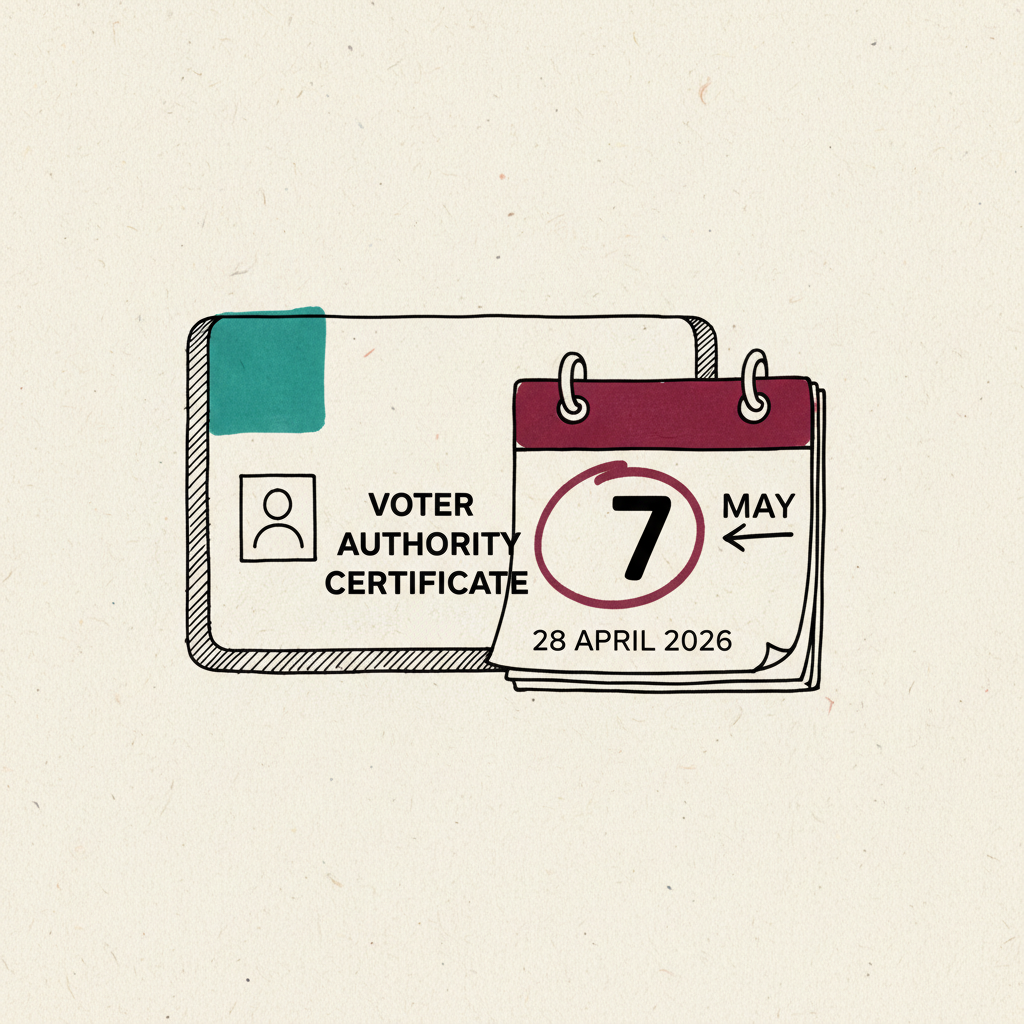
Voter Authority Certificate
Free photo ID for UK voters without a passport or driving licence; Deadline 28 April 2026 to vote on 7 May.
Last refreshed: 15 April 2026 · Appears in 1 active topic
Will the 55% awareness gap on free voter ID translate to disenfranchisement on 7 May?
Timeline for Voter Authority Certificate
Mentioned in: SNP wins 58, below 65-seat trigger
UK Local Elections 2026VAC pace lags; FCA reviews Stack BTC
UK Local Elections 2026Mentioned in: Voter registration closes in seven days
UK Local Elections 2026Electoral Commission: 55% unaware of free ID
UK Local Elections 2026Background
The Voter Authority Certificate is a free photo identification document issued by local councils in England to voters WHO lack qualifying ID under the photo ID requirement introduced by the Elections Act 2022. For the 7 May 2026 elections the VAC application deadline is 28 April 2026.
The Electoral Commission's February 2026 survey of 5,763 people found 55% of voters in affected areas were unaware that free photo ID was available, and only 38% of people without qualifying ID were confident about how to apply. At the 2024 local and mayoral elections, 22,749 certificates were applied for, fewer than the 25,000 recorded at the 2023 locals despite expanded Commission publicity.
Critics argue that the demographic groups most likely to lack qualifying ID, including young voters, recent movers and low-income residents, align more strongly with Labour and The Greens in current polling. The Electoral Commission has targeted its awareness campaign at these groups. Whether the 55% awareness gap converts to disenfranchisement on 7 May will be one of the first quantitative tests of whether polling movement translates to participation.