Universal Quantum
University of Sussex spinout building modular trapped-ion quantum computers.
Universal Quantum announced more than $100 million in Series A funding on 8 October 2026. The Sussex spinout plans to develop its modular quantum computers and expand its research operations, including a centre in Singapore.
Last refreshed: 22 October 2026 · Appears in 1 active topic
Timeline for Universal Quantum
Raised more than $100m in a Series A
UK Startups and Innovation: Universal Quantum's record round opens Singapore labBackground
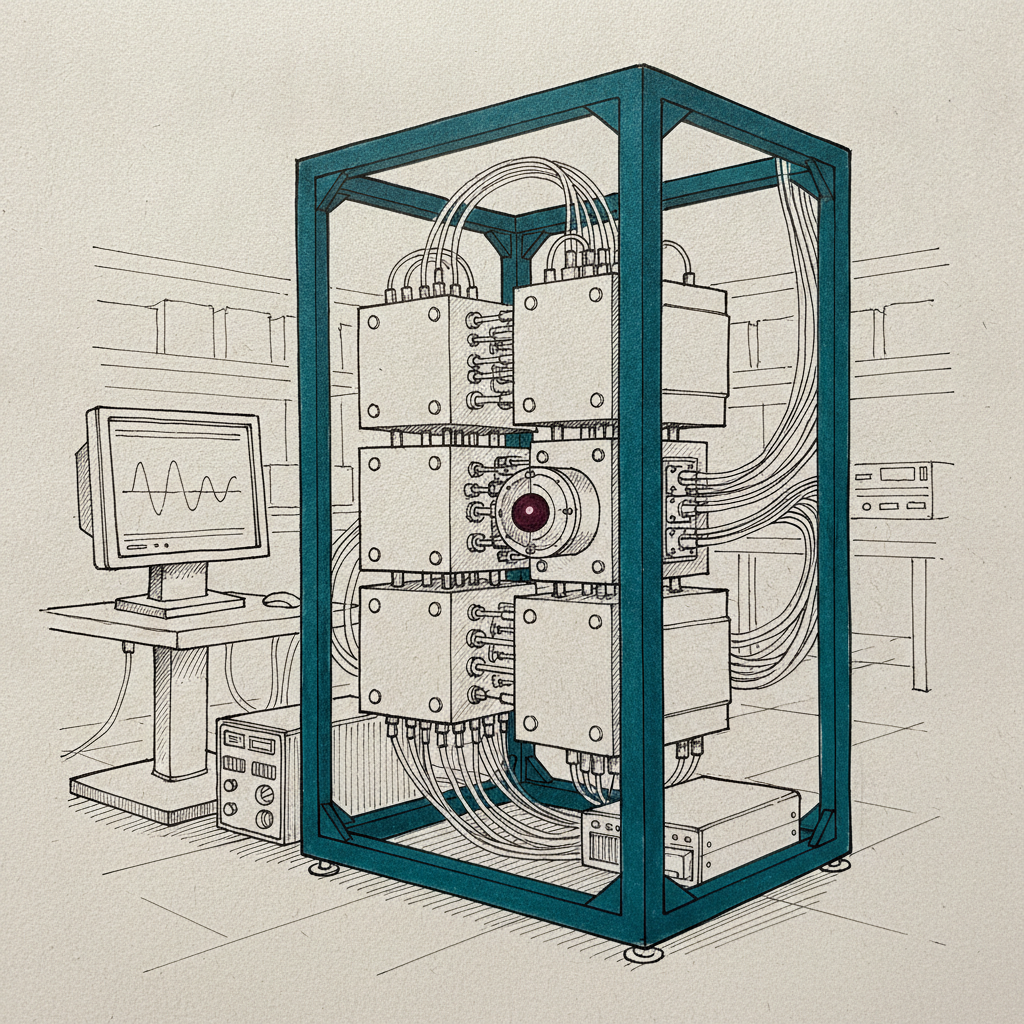
Universal Quantum develops computers based on trapped ions: electrically charged atoms that act as quantum bits. Its approach connects smaller processing modules to form a larger machine. The engineering aim is to build systems that can grow through connected components rather than requiring one increasingly large processor. [Nauta’s technology account](https://www.nautacapital.com/news-insights/Universal-quantum-100m-series-a).
Sebastian Weidt and Winfried Hensinger founded the company in 2018, building on research at the University of Sussex and their work on a large-scale quantum-computing blueprint. Its design combines ion-trap chips, links between modules and the systems controlling them. Those components address the practical problem of turning laboratory quantum operations into larger, manufacturable computers. The company’s university origins remain central to its technical lineage. [University of Sussex](https://www.Sussex.ac.uk/research/centres/Sussex-centre-for-quantum-technologies/news-and-events/news?id=71456).
Universal Quantum funds its international expansion
On 8 October 2026, Universal Quantum announced more than $100 million in Series A financing, co-led by DCVC and Firgun Ventures. For the company, the capital was intended to advance its modular quantum-computing architecture and the engineering needed to assemble larger systems.
The October funding plans included establishing a research and development centre in Singapore and further expansion in the United States, Japan and Germany. These were plans for extending Universal Quantum’s engineering capacity, not evidence that every proposed site had opened. The announcement linked international growth to developing chip arrays and control systems for larger quantum machines.
Who led Universal Quantum's Series A?
What kind of quantum computer does Universal Quantum develop?
How much did Universal Quantum raise?

Written with AI from Lowdown's published reporting. Not individually reviewed by an editor. Updated 22 October 2026. Editorial standards.