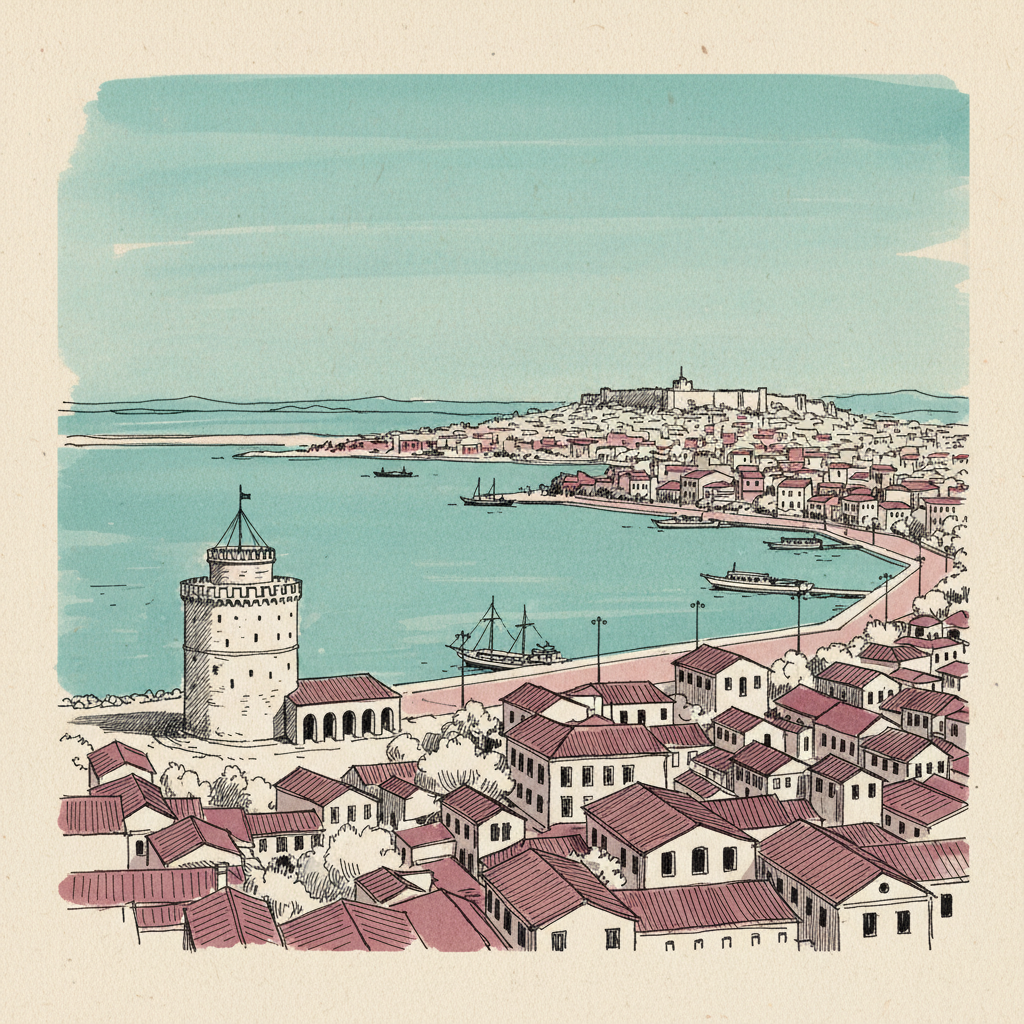
Thessaloniki
Greece's second city; first location outside Athens to receive the STR registration ban in March 2026.
Thessaloniki's historic centre will keep its freeze on new short-let registrations until 31 December 2027, Greek prime minister Kyriakos Mitsotakis announced on 5 September, extending a halt that began on 1 July 2026.
Last refreshed: 3 October 2026 · Appears in 1 active topic
Is Thessaloniki now under the same Airbnb ban as central Athens?
Timeline for Thessaloniki
Faced a registration freeze in its historic centre
Nomads & Communities: Greece plans to keep Athens lets frozenMentioned in: A Greek university buys one sensing UGV
Autonomous Systems: Land & SeaMentioned in: Santorini boat checks find 12 in breach
Nomads & CommunitiesMentioned in: Greece's freezes miss half its nights
Nomads & CommunitiesGreece freezes short-lets in second city
Nomads & CommunitiesBackground
Thessaloniki is Greece's second-largest city and the economic and cultural capital of northern Greece, with about 325,000 people in the municipality and more than one million across the metropolitan area. It hosts Aristotle University of Thessaloniki, Greece's largest university, whose students concentrate demand for rented flats near the campus.
The city is the test of whether Greece's capital-city controls on short lets travel. Its 1st Municipal Community has frozen new registrations since 1 July 2026, and the prime minister announced on 5 September that the freeze would last until the end of 2027.
The controls cover a small part of Greek tourism. Final 2025 figures published on 27 July 2026 counted 38.2 million arrivals and 156.3 million overnight stays. Athens and Thessaloniki, the only cities with registration limits, host roughly a quarter of arrivals between them, while the South Aegean and Crete took 49.3% of overnight stays with no comparable limit.
Thessaloniki's freeze now runs into 2027
Thessaloniki became the first city outside Athens to have new short-let registrations halted. From 1 July 2026 its historic 1st Municipal Community stopped accepting new entries on The National AMAD registry, struck existing ones off on any sale or transfer, and set fines from €20,000 that double on repeat offences. The freeze followed a March ban on transferring licences in the same district.
The halt was due to end on 31 December 2026. On 5 September Mitsotakis announced that it would run until 31 December 2027 in Thessaloniki's historic centre, as in central Athens. The extension rests on that announcement; no ministerial decision formalising it appeared alongside it.