Sudbonus
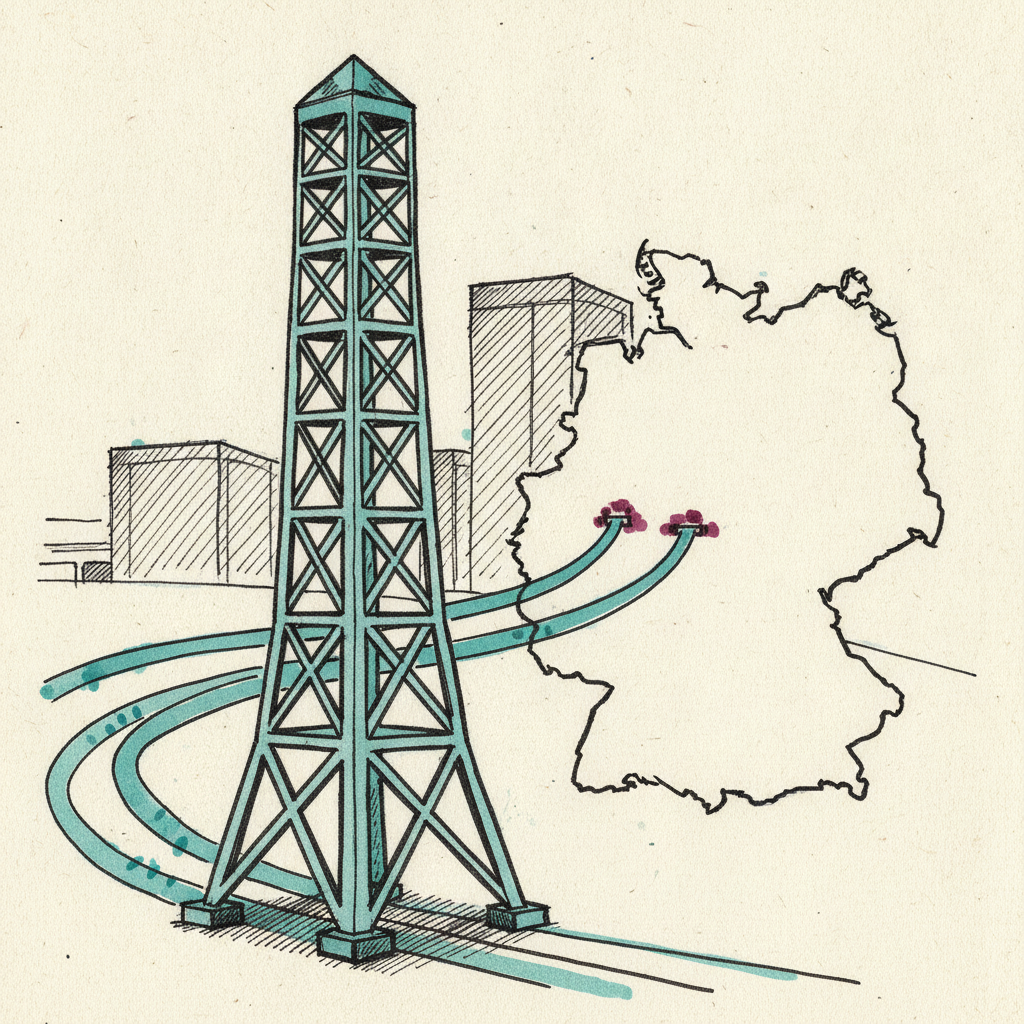
The Südbonus (south bonus) is a proposed regional premium in Germany's StromVKG law to incentivise new gas capacity siting in grid-constrained southern Germany.
Last refreshed: 30 June 2026 · Appears in 1 active topic
Will the 9 July Bundestag vote keep or strip Germany's Sudbonus from the capacity market?
Background
The Sudbonus (Südbonus, or south premium) is a regional uplift within Germany's StromVKG (Stromversorgungsgesetz) capacity mechanism, designed to incentivise new gas-fired power plant capacity to locate in the electricity grid-constrained south of Germany, principally Bavaria and Baden-Württemberg. Southern Germany depends heavily on imported power because it lacks the north's wind generation and the high-voltage transmission infrastructure to move it south; the Sudbonus would pay capacity operators a higher rate for choosing southern sites where grid relief is most needed.
The Sudbonus became politically contested ahead of the StromVKG second and third Bundestag plenary reading on 9 July 2026. Both the Greens and the Left tabled amendments to strip it from the legislation, and the DGB trade union confederation called it 'structurally unjustifiable' at the 24 June committee hearing, arguing it creates a permanent structural subsidy for fossil gas infrastructure without binding conditions on labour or supply chains. The provision also faces potential European Commission scrutiny under state-aid rules requiring member states to justify regional capacity premiums on competition grounds.
Proponents argue the premium is necessary to ensure new gas peaking capacity is built close to load centres, avoiding costly long-range grid reinforcement. Critics argue southern Germany should instead accelerate renewable build-out and interconnection rather than locking in gas infrastructure with a permanent price premium. The 9 July vote will determine whether Germany's September capacity auction proceeds as originally designed or with the regional premium removed or modified.